
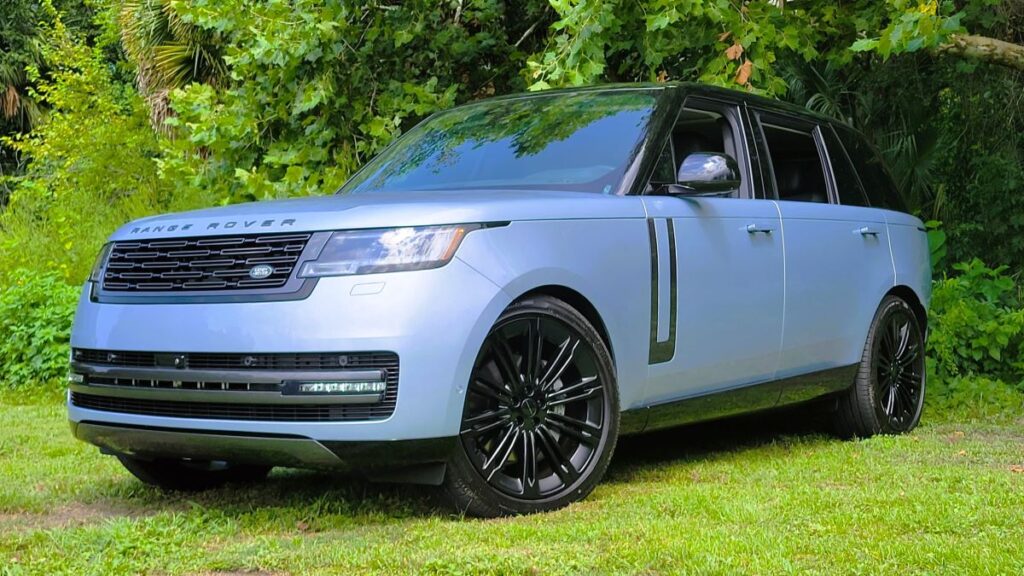


The grass around our fifth-generation 2026 Range Rover SE LWB was often as high as its 24-inch Pirelli radials as we rolled over bumpy soft sand interspersed with gravel piles. Baby pine trees and tufts of unknown greenery that we maneuvered around rose higher than the 2026 model’s rounded Ionian Silver-clad bonnet.
You may say– didn’t we just see a new Range Rover LWB here in evrider.tv’s website? Yes – a 2025 model with much the same level of equipment. But we just got this 2026 model with a young 2,000 miles on the odometer, and went into the legend of Range Rovers – and deeper into the sand of our Florida neighborhoods.
Let’s get it dirty.
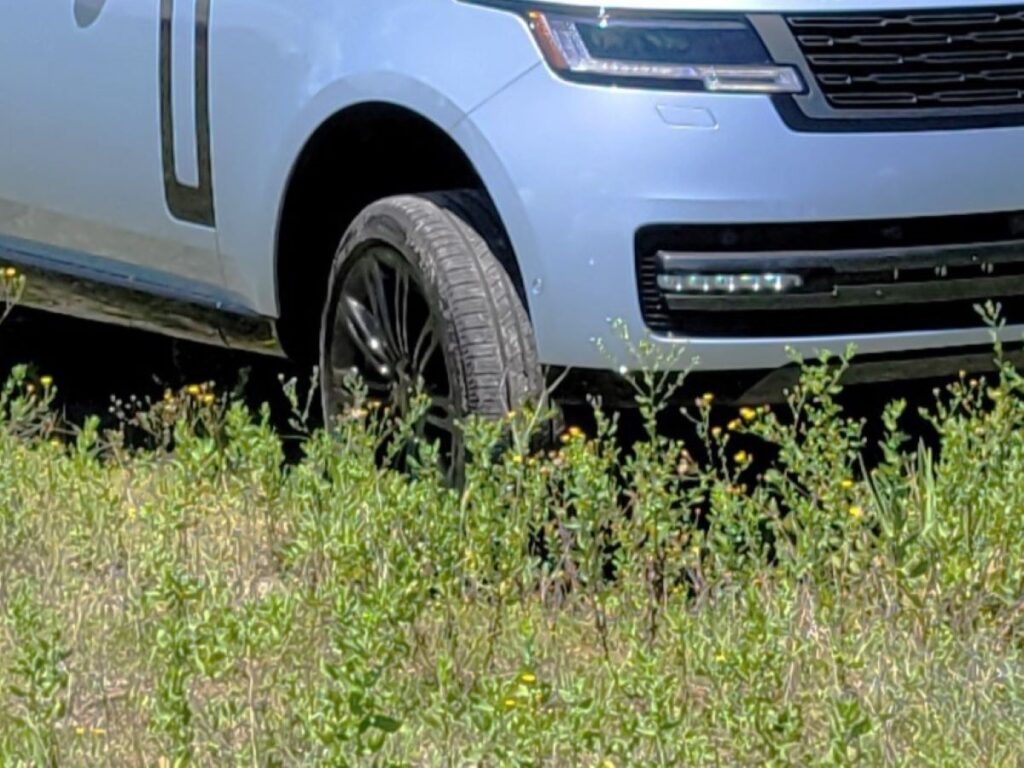
2026 Range Rover SE LWB Has Up To 11.6-inch Ground Clearance
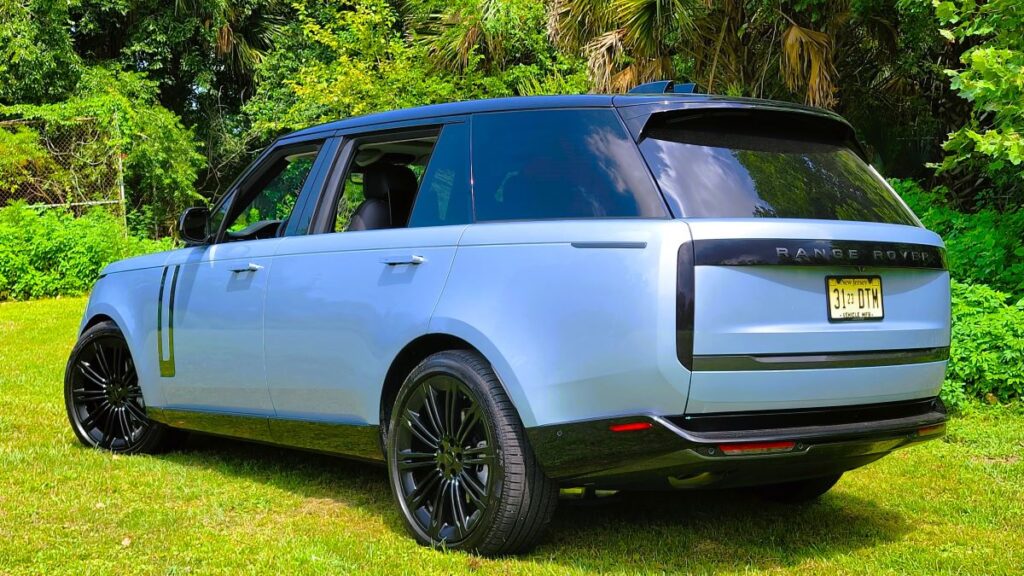
To recap, this Long Wheelbase Range Rover is almost the top of the Land Rover/Range Rover range – 207 inches of aluminum-bodied luxury SUV, its grandpa born in 1970 when the more utilitarian Land Rover company opted to combine the rugged off-road capability of its legendary World War II-born model with a more luxury edge. The pinnacle of that is this Range Rover introduced in 2022, its squareness curved and carved into the slick .29 coefficient of drag you see here, offered in Sport, Short Wheelbase, or this LWB.
This Range Rover can “kneel” to allow owners to more easily ascend into cushy leather seats with a ground clearance of 6.6-inches. Then for trips to Windsor Castle, ground clearance rises to 8.6 inches. But we took this Range Rover deep into a Florida sand scrub rutted with gnarly, bumpy-rooted trees and more. So we tapped in its highest 11.6-inch ground clearance setting via its 13.1-inch touchscreen infotainment display. We needed to get to that electronic wizardry to transform this 7-seat SUV limo into an off-road genius.
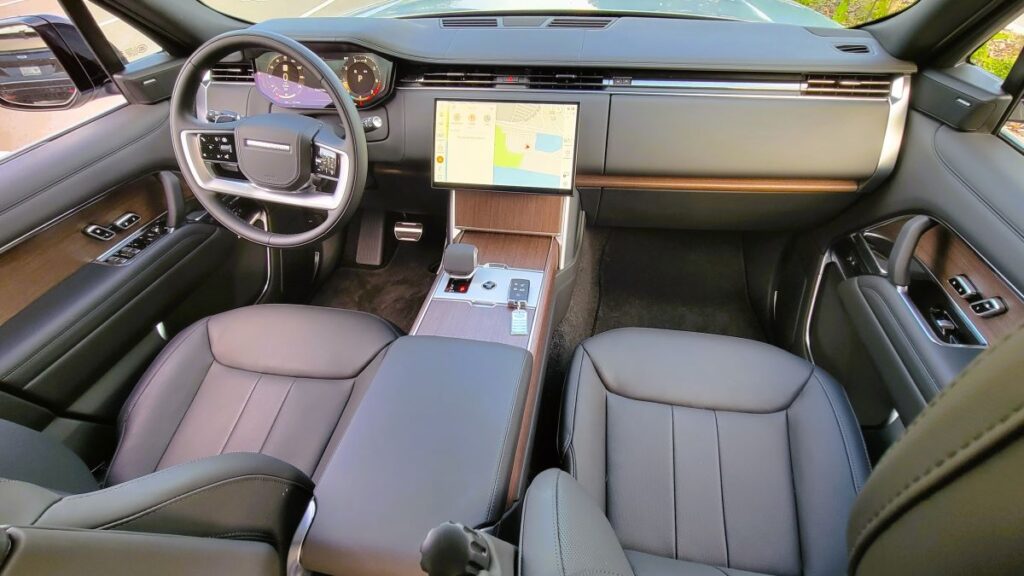
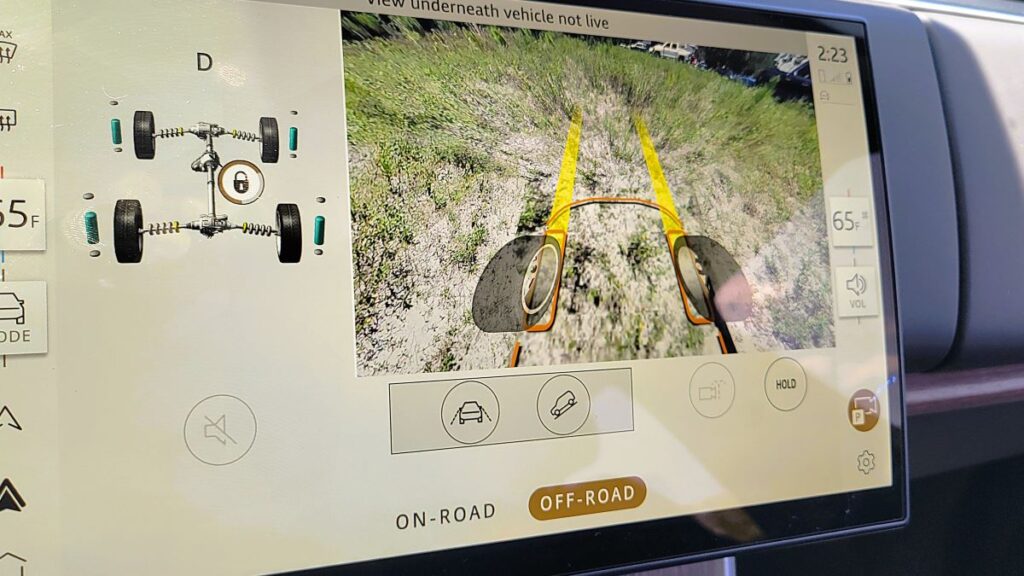
Under the aerodynamic alloy, leather and wood interior are multiple off-road modes for Grass/Gravel/Snow, Mud/Ruts, Sand, Rock Crawl – and a way to configure what you want or need. There is hill descent control that automatically taps brakes to control descent. There’s Wade function to lift it high enough to ford up to 35.4 inches of water without ingesting H₂O. There’s also low range and dual locking differentials, plus a multi-camera system with Ground View that shows a simulation of what’s under the hood via a delayed image from the nose camera so you can “see” what you’re going over.
There are displays for altitude, front and center diff lock status, steering angle, and roll angles. It shows steering angle and hill descent control. None are accessible via good old-fashioned dials and buttons, but instead a touchscreen’s worth of menus and sub-menus.
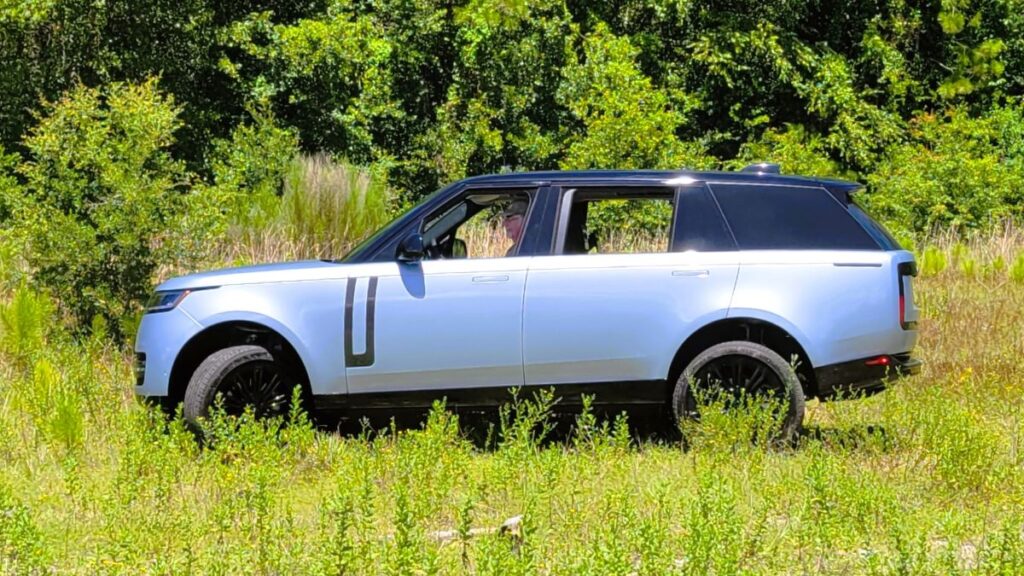
We tapped into the Off-Road mode, then activated Sand mode, eager to test 2026’s upgrades in the Terrain Response system. We flipped the gauge display’s info screen to show steering angle/center differential lock-unlock, then put the Ground View on the center screen to see what was ahead. It is joined by downward angled side mirror cameras to show how close foliage might be getting to the silver flanks.
We nudged the stubby gearshift into Drive and engaged Sand Mode, which backs off throttle response and adjusts Stability Control to allow drive wheels to handle sand better.
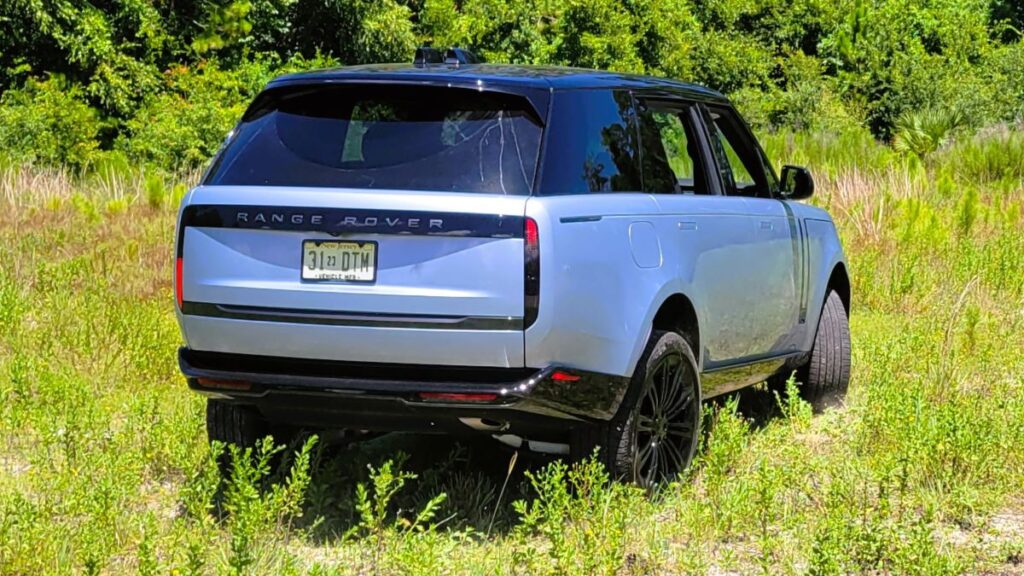
The 5,900-lb. Range Rover’s turbocharged 395-hp inline 6 responded smoothly, and we moved out with no digging in of Pirellis. Off-road and Sand mode kept all four tires working without spinning in the fine stuff, even on some stretches where there was more silica than swaying fronds. Our photos show no sand being kicked up either.
The double wishbone front/multi-link rear suspension with active air suspension smoothed out anthills and ruts, while taking rougher edges off higher mounds and some gravelly bumps. The Range Rover’s body was flex-free, quiet and rigid over the washboard surface.
Then we moved to another typical Florida off-road site. It had narrow sandy dirt trails mixed with muddy dips and very wet conditions on either side. Here, the suspension was a bit busier, with gently damped up and down motion and great traction though the tire-deep puddles.
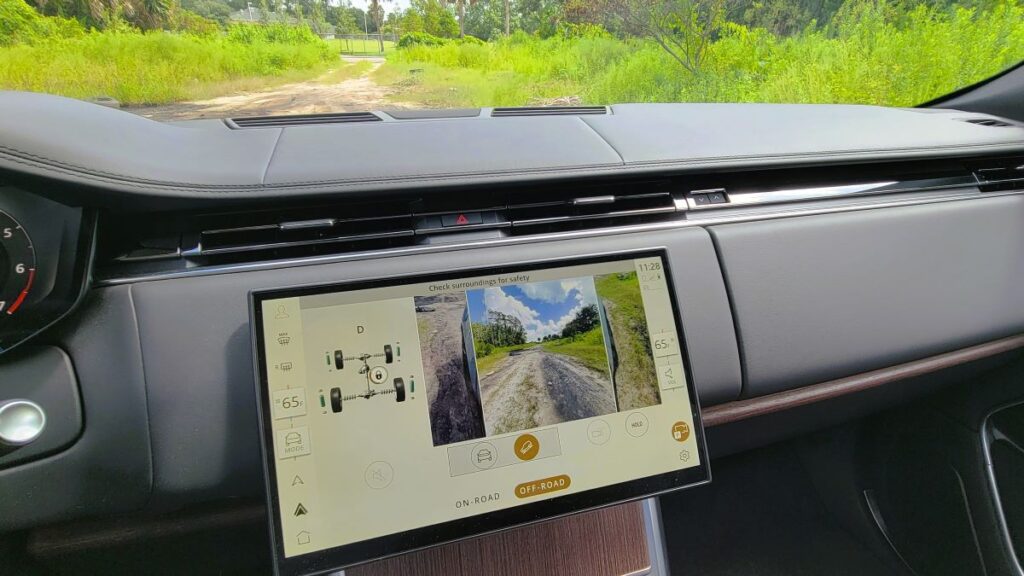
We made good use of the nose camera to eye puddle depth, and side views to make sure the narrow trail’s bushes didn’t scrape. The overhead camera view was a great help, as was the tight tuning radius as we U-turned to get out of dead-end trail.
Despite street-oriented rubber, the Range Rover’s height, allocation of power where needed, electronic air suspension and heritage baked into its luxury meant we never felt like getting stuck was an option.
We did note that Range Rover made evolutionary changes on our 2026 model over the 2025 we tested, including what it calls “a more sophisticated front grille design,” with slimmer gloss black with darker accents, and updated headlight technology. There’s improved aerodynamic elements for better efficiency.
2026 Range Rover SE LWB Interior Has Everything, including Fridge
Inside, our 2026 model’s black stitched leather was joined by matte wood and buff alloy, still elegant, simple and very stylish. The leather seats up front reauire you to tap into menus for heat/cooling, lumbar support and vent positions.
The center console gets more wood and alloy, with an inductive phone charger and USB ports under one timber-clad door, and cup holders under another. A small refrigerator lies under the padded center armrest, while almost hidden buttons open upper and lower glove boxes. It takes too many taps to get into menus, while some touchscreen buttons take multiple taps to input. The station seek button on the steering wheel for the superb Meridian audio system sometimes refused to work. And while there’s a “Hey Range Rover” voice command system, once or twice it just never responded.
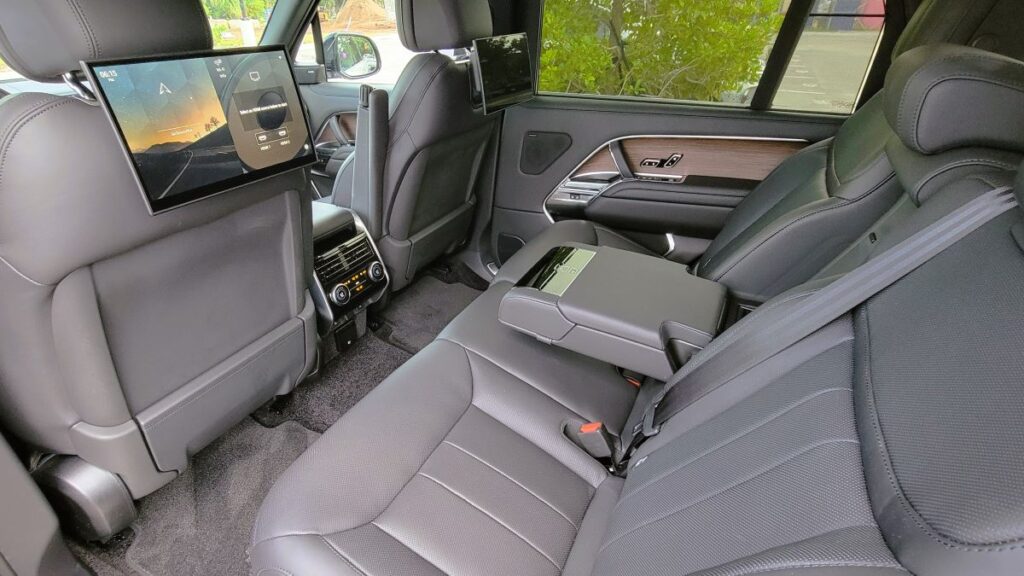
Those long rear doors allow easy access to roomy leather bench seats with outboard heating/cooling and individual screens to stream video. You can power the 60/40 second row forward to get in the third row, with just enough room for two adults between cup holders. A clamshell rear power hatch has a carpeted lower one that becomes a shaded seat.
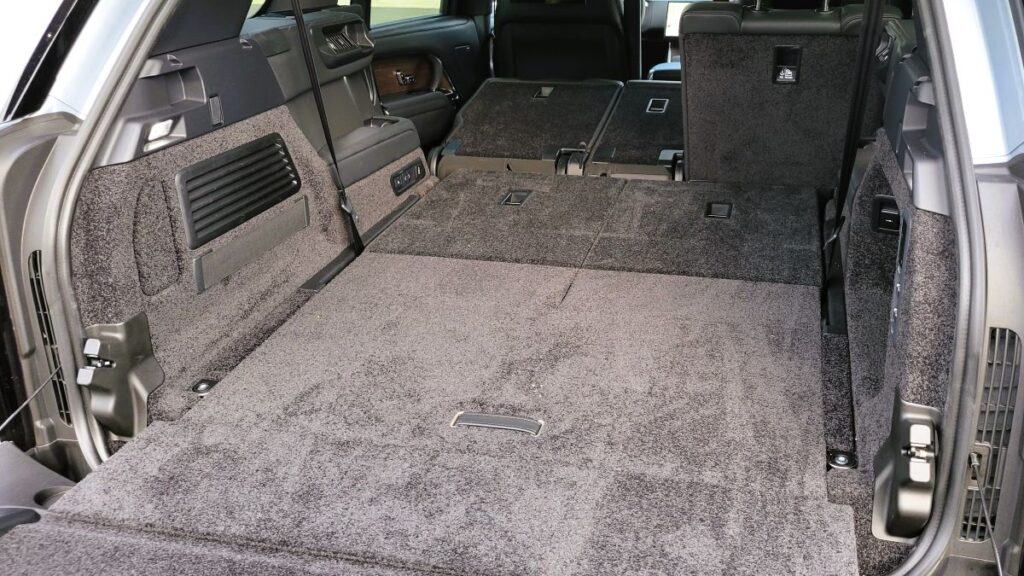
There’s 8.8-cu.ft. of space behind that third row. Power drop that and the second row, and you can haul up to 92.9 cubic feet of stuff. There’s a button in back to lower rear seatbacks for easy loading.
Some say you need its optional turbocharged 4.4-liter V-8 with 523 hp to move out in the bush. But our BMW-sourced, turbocharged 3-liter inline six had an adequate 395 hp, and 406 lb-ft of torque, plus selectable four-wheel-drive, eight-speed automatic transmission with paddle shifters, and Sport shift.
Eco mode starts off more sedately, but passing power was good. Under full throttle, 60 mph arrived in 6.4 seconds. Tap on Dynamic mode with Sport shift, and this 2,000-mile-old Range Rover quickly powered to 60 mph in 5.8 seconds with quick, slick shifts. It felt agile, easily cornering on asphalt as we averaged as high as 22 mpg. To compare, our 2025 model, with 11,000 miles on the clock, saw 60 mph in 6.9 seconds in the Eco setting with the inline 6, and 6.5 seconds and a bit more exhaust snarl in Dynamic mode. That one averaged 19 mpg in mostly Eco.
Like the 2025 model, the electronic air suspension shrugged off high grass. Seriously good approach angles helped when we found a rare Florida molehill. But most of its travel was on highway/suburban roads, where it was quiet, polite and fairly fun in Dynamic setting, with direct steering feel. For 2026, under-skin changes included refinement in the air suspension for improved articulation, improved approach and departure angles, and enhanced hill descent control system, Range Rover says.
The base price of a 2026 Range Rover SE LWB 7-seater is $120,700. Ours had options like: $10,450 Ionian Silver paint; $1,000 black roof; $1,000 black trim package; $3,500 black wheels; and more, for a final price of $148,240.
Bottom line: How nice to find that the plush Range Rover still retains most of the legendary off-road character that made its Land Rover ancestor so good. We didn’t push the last one, but went deeper into stuff than normal with this one and it delivered. It’ll do just fine at the beach or cabin trail.
2026 Range Rover SE LWB 7-Seater Specifications
Vehicle type – 7-passenger luxury all-wheel-drive SUV
Base price – $120,700 (as tested – $148,240)
Engine type – Turbocharged 24-valve DOHC inline 6
Displacement – 3-liter
Horsepower (net) – 395 @ 6,500 rpm
Torque (lb-ft) – 406 @ 2,000 rpm
Transmission – 8-speed automatic with paddle/sport shift
Wheelbase – 125 inches
Overall length – 207 inches
Overall width – 80.6 inches
Height – 73.6 inches
Front headroom – 38.8 inches
Front legroom – 40 inches
Center/rear headroom and legroom: N/A
Ground clearance – 8.5 to 11.1 inches
Cargo capacity – 8 cu. ft./92.9 w/2nd & 3rd row folded
Towing capacity – up to 7,715 lbs.
Curb weight – 5,932 lbs.
Mileage rating – 19 mpg city/24 mpg highway