
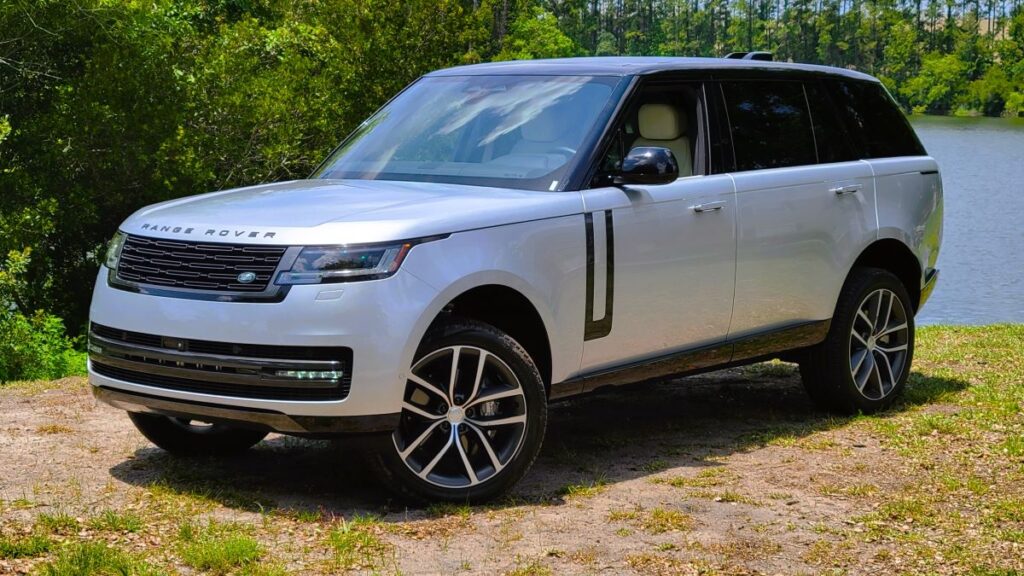


The Queen has arrived. Or maybe this 2025 Range Rover SE LWB is transporting a British rock star to their next show at the Palladium.
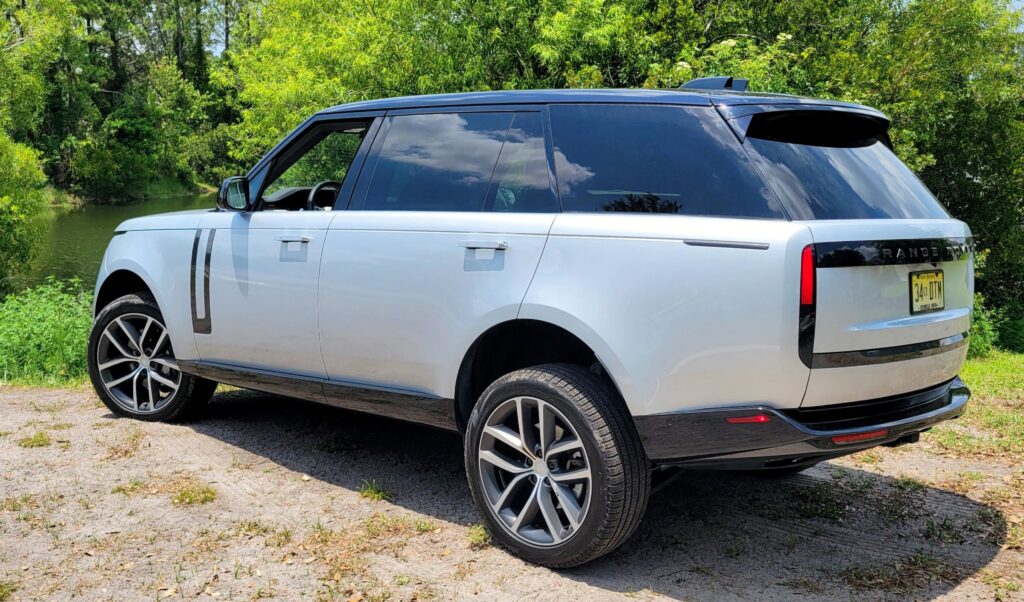
Either way, this long, smooth drink of British SUV is almost the top-tier luxury member of the venerable Land Rover clan. And while a “regular” fifth-generation Range Rover Sport is 199 inches long, this long wheelbase version ranges out to 207 inches.
So let’s arrive in style – to the sandwich shop – supersize my sub, Kevin.
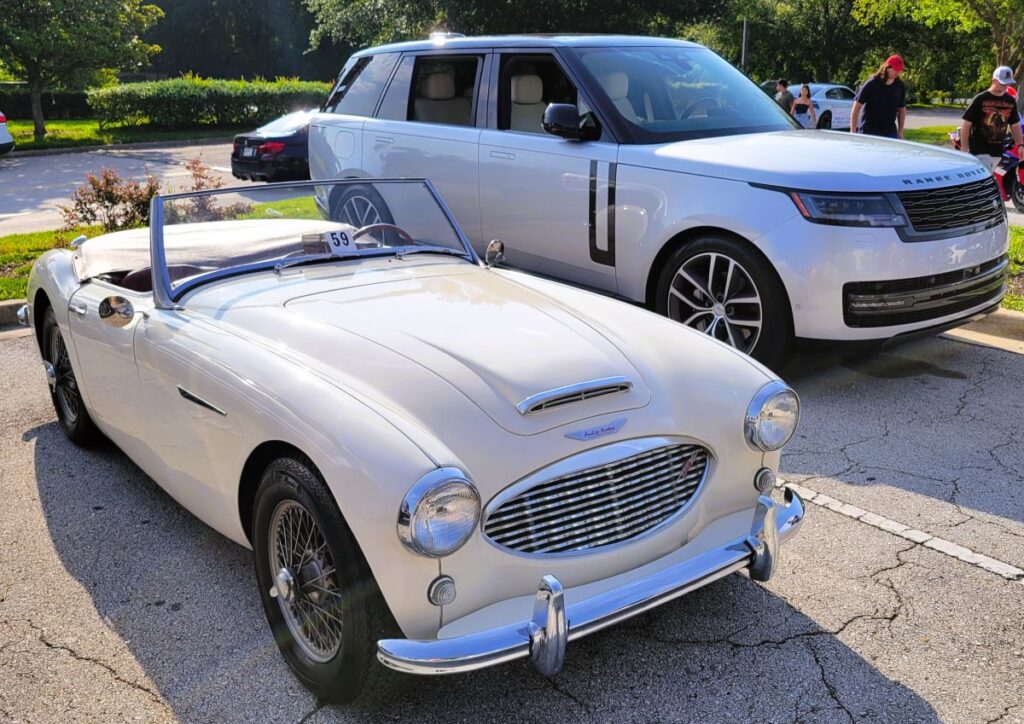
The formula for this sleek aluminum-bodied shape was born in 1970, when the makers of the legendary Land Rover, a utilitarian go-anywhere SUV beloved by military and farmers, decided the world needed that rugged off-road capability combined with the comfort and on-road refinement of a premium sedan.
This fifth-gen Range Rover was introduced in 2022, aero-carving the previous generation into a super-slick, tightly wrapped design with a very slick .29 coefficient of drag. And while there’s a regular wheelbase, and shorter Sport version, this is the queen of the fleet – and it looks it. This is as long as the Cadillac Escalade I tested recently.
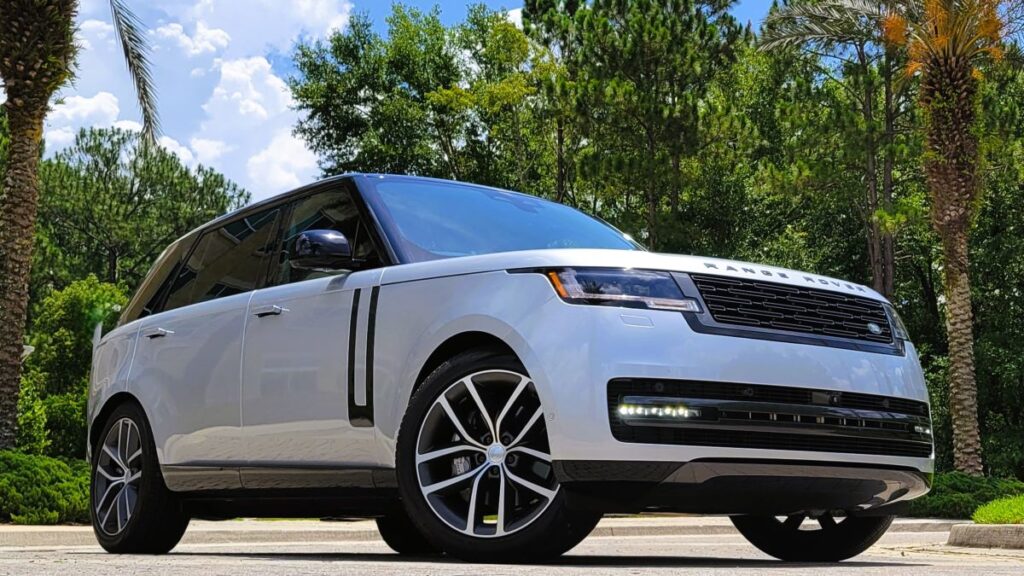
Its distinctive squared-off shape starts with a slim black grille that flows into thinner quad-element LED headlights with DRL slashes that wrap around the corners. They are flush with the clamshell aluminum bonnet, forming design lines that head aft to spear rear fender marker lights.
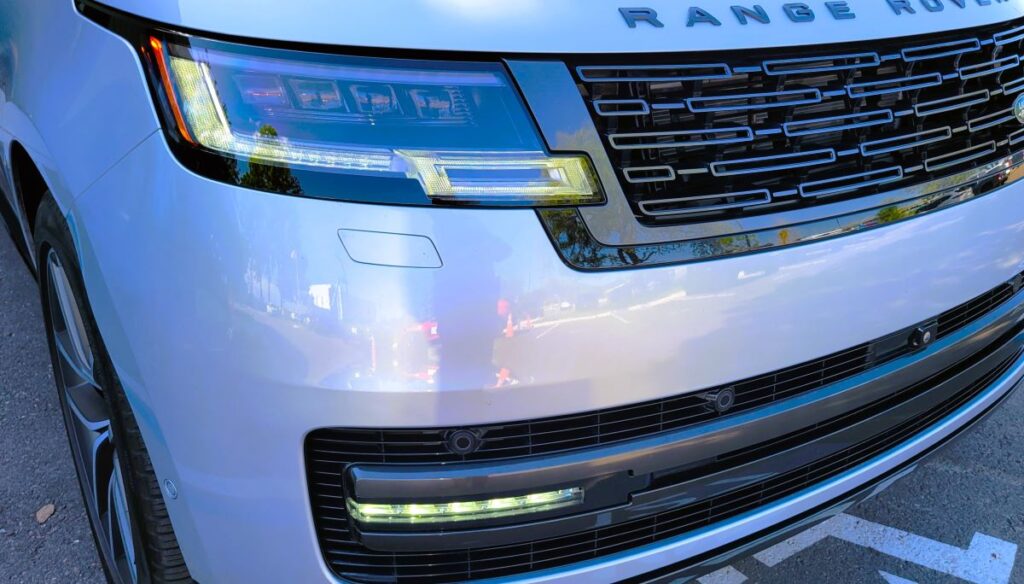
The aggressive black lower grille gets LED fog lights under a chrome strip, and over a simple pewter air dam, on a very short front overhang. The front doors get black accents that look like side intakes over wider black lower door sills. And it’s nicely planted on 24-inch Pirelli radials on 10-spoke alloy wheels.
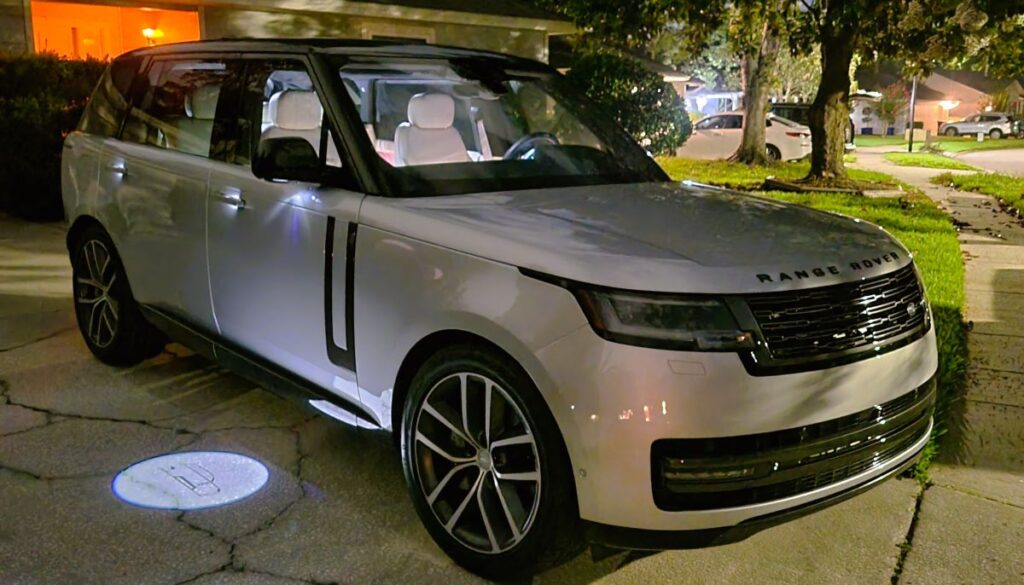
Flush door handles pop out of each door. The lock/unlock button on our driver’s door was a bit loose. Glossy black is the design thrust above the beltline, framing sweptback windscreen, side pillars and mirrors, the latter getting LED repeater turn signals with puddle lights that shine a Range Rover on the driveway. In profile, the Range Rover’s shape gets sleeker as it heads aft. The roofline dips as the beltline rises, tapering a bit to meet a sleek hatchback with long spoiler/shade.
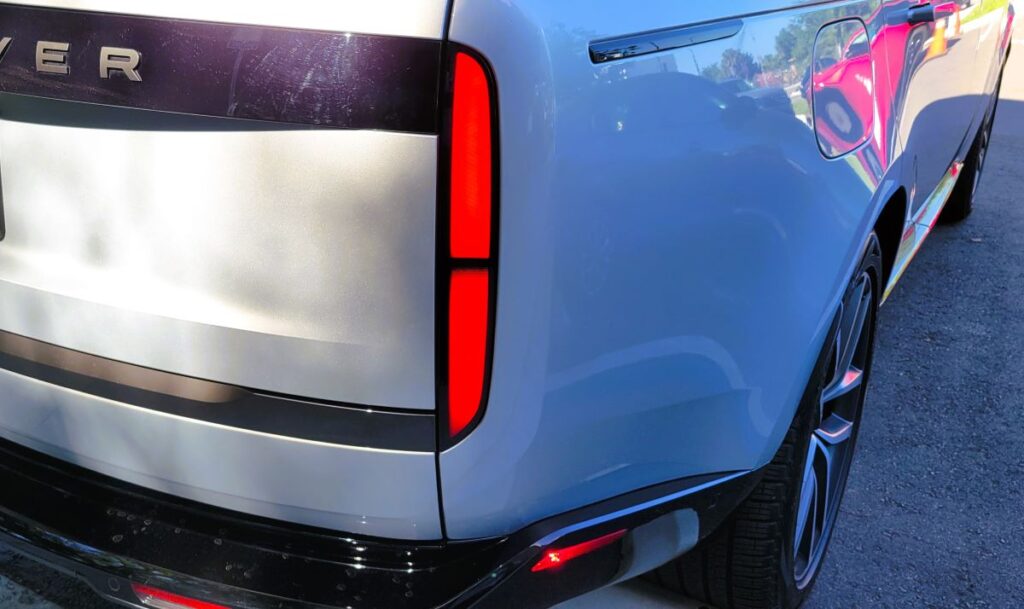
The taillights are slim LED bars at rear fender edges, connected by a glossy bar with “Range Rover” in black, and with the step bumper on the bottom. That bumper gets a tow hitch and tucked-in exhaust tips
Range Rover SE Interior: Luxury-grade Everything, Including Refrigerator
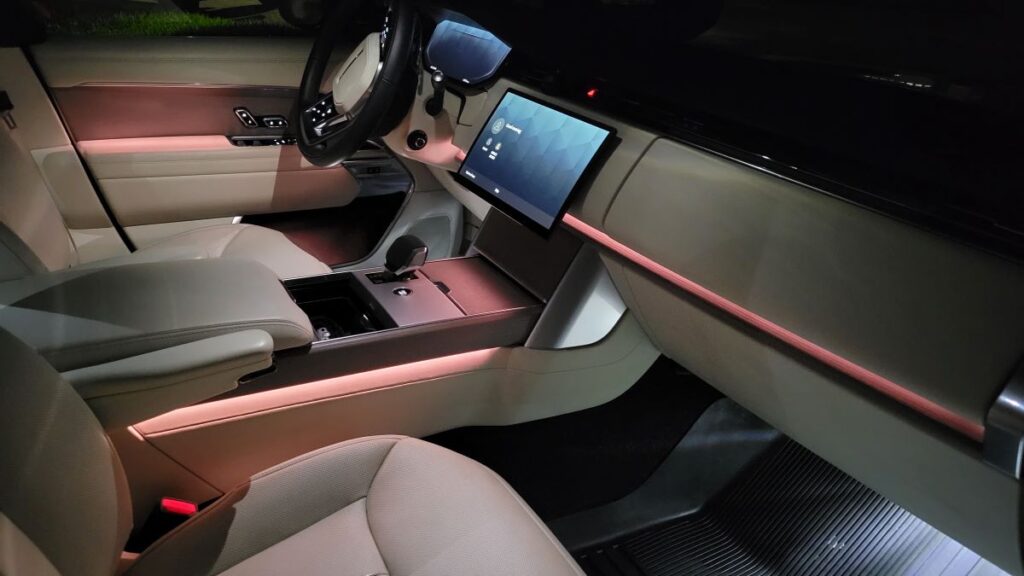
Drop the Range Rover to its entrance/exit ground clearance of 6.6 inches (vs. 8.6 inches normal), and you slide in. “Wow, I’ve never felt such plush” leather seats up front, said a friend. Both get three memory presets, plus heat and ventilation. The dashtop is done in a stitched low-gloss black leather, with a gloss black trim band housing smoked chrome air vents, then white leather over a smoked gray wood. There’s more leather on the lower dash, with accent lighting hither and yon.
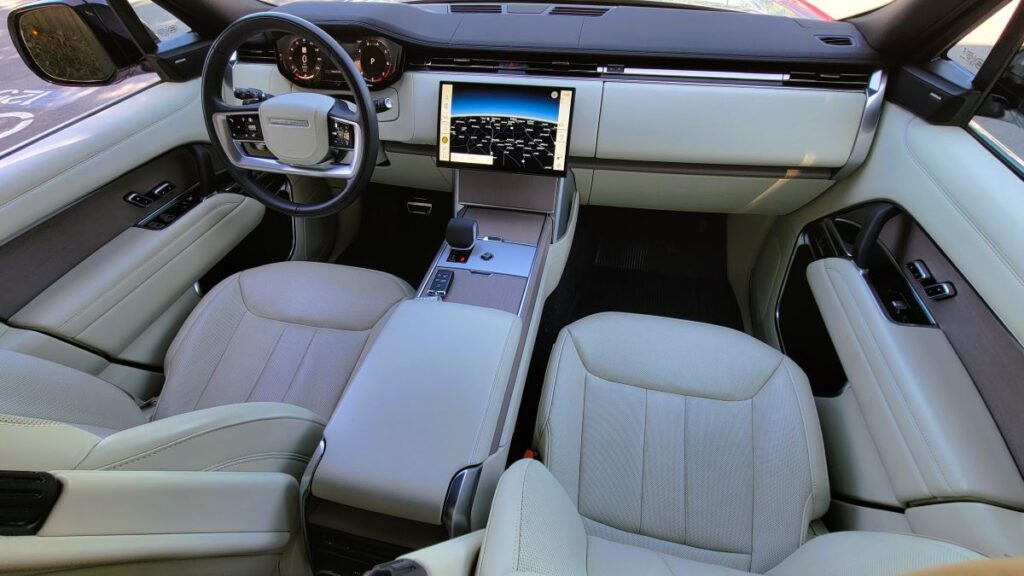
The driver faces a thick leather-clad steering wheel with big alloy paddle shifters in back, and haptic touch buttons in front to handle audio, configurable gauges and cruise control. That gauge display can showcase classic gauges, or a map with speed readout, and more. One issue – the audio info screen in one mode sometimes flicked off, and had to be clicked back again.
There’s no physical buttons anywhere – only that smooth expanse of leather and wood. OK, there’s one to the left of the steering wheel to pop the rear hatch. The rest of the controls are in the high-mounted 13.1-inch touchscreen infotainment display that handles wireless Apple CarPlay and Android Auto, plus navigation, off-road info, surround-view (and other) cameras, climate controls and more.
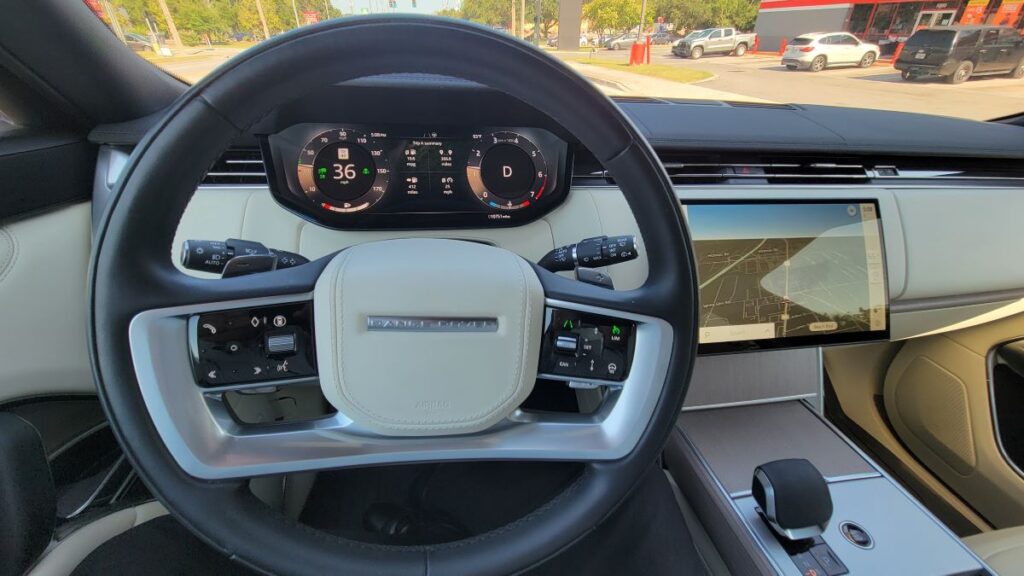
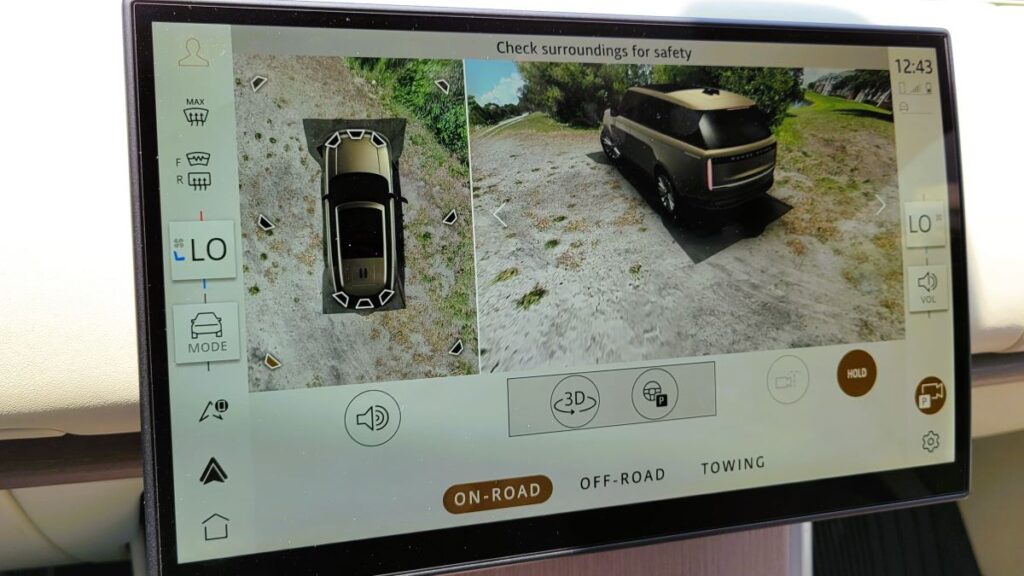
Tap once, then tap deeper into menus for the heated/cooled seats, lumbar support, drive modes, suspension height, off-road modes, 4-wheel-drive status, even a cool “transparent hood” view to see what you are driving over.
Yes, a bit too many taps needed for some things – and to get the full navigation map, you have to tap “Home,” then again to access levels that includes the map. Or just say “Hey Range Rover, and ask. It isn’t super quick, but does access many menus hands-free.
The center console gets more wood and alloy, cup holders under one sliding door. Slide them back for a deep storage area. Under a door in front of the electronic gearshift you find an inductive phone charger, plus USB ports. There’s upper and lower glove boxes, while a small refrigerator lies under the padded center armrest. The front seats even have adjustable center armrests outboard of the center cushion.
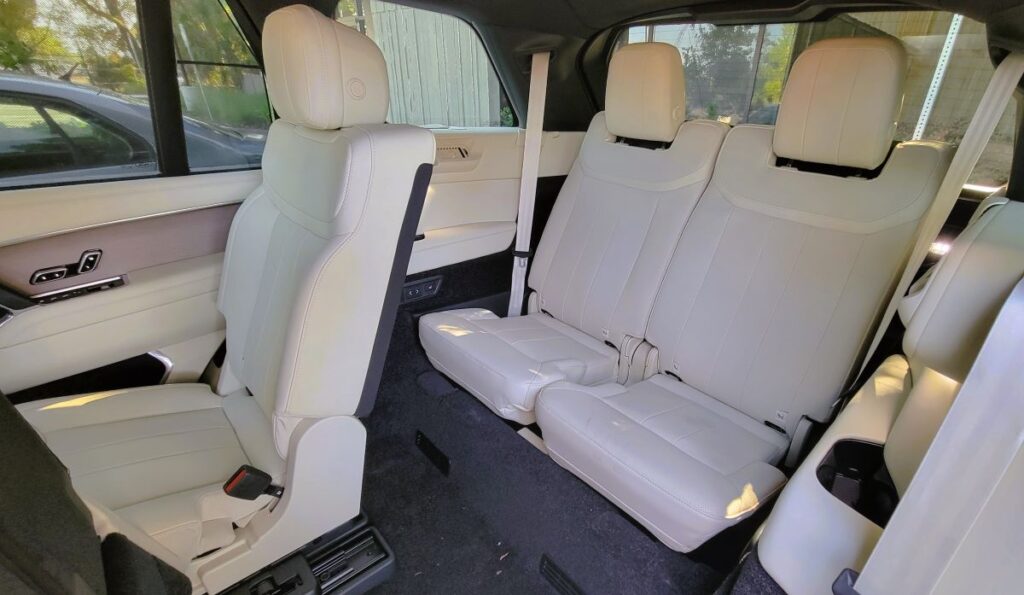
The rear doors are longer than on the short wheelbase Range Rover, allowing access to 60/40 leather bench seats with big fold-down center armrests, plus outboard heating, cooling and A/C adjustments. The added wheelbase means you’ll have limo-like leg room with power side window shades and a long moonroof overhead. And like the front seats, seat-shaped power controls handle adjustments – and have memory presets integrated into the ergonomic controls.
Switches let you adjust leg room to give more to folks in the third row. You can also power the second row forward for easier access to the third row. There’s just-OK head and leg room back there, with more A/C vents and cup holders.
The power rear hatch is a clamshell with a long upper section, and a smaller lower one that forms a handy seat under the shaded upper to watch cricket. A long rubber floor mat covers the floor behind the third row. It’s flat when it’s power folded down. Multiple buttons power raise and lower second and third-row setbacks with one even dropping the tail a bit more to ease loading. Cargo space is 8.7 cubic feet with all three rows in use, or up to 92.9 cubic feet with second and third rows folded (vs. 83.5-cu. ft. in the short wheelbase version).
Range Rover SE Offers 3-Liter Turbo 6 Or V8
Our Range Rover SE LWB can be had with a twin-turbocharged 4.4-liter V-8, or our 3-liter turbo inline six with 395 hp, and a nice 406 lb-ft of torque at 2,000 to 5,000 rpm. Both remain BMW-sourced, the engine swathed in plastic.
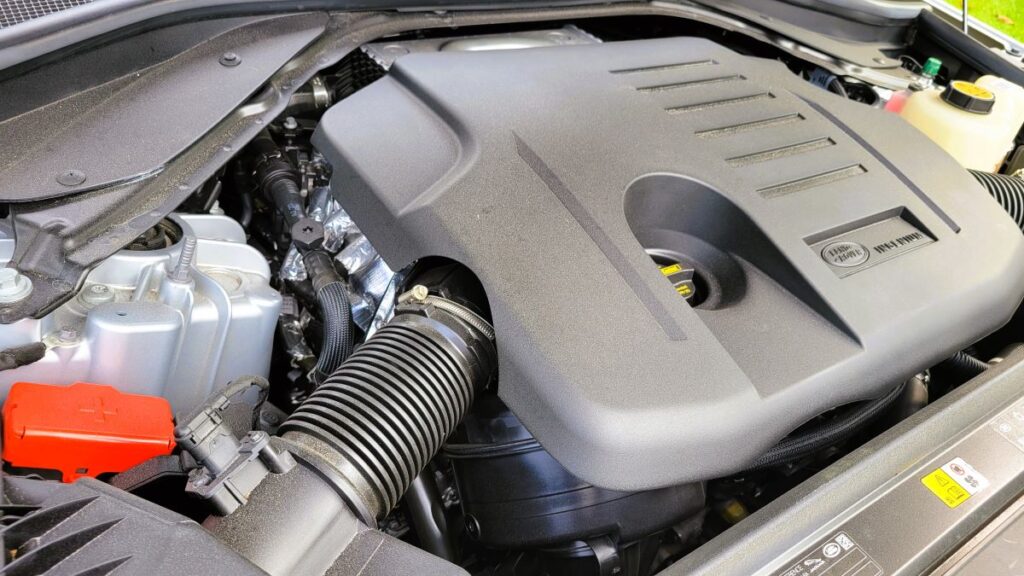
There’s a selectable four-wheel-drive system, and eight-speed automatic transmission with paddle shifters and a Sport shift option. You have electronic air suspension, which drops it down for ease of entry; sets it at 8.6 inches of ground clearance for daily running; or up to 11.6 inches in its highest for offroad terrain.
Tapping the Drive Mode screen to select Comfort sees air suspension and throttle set for a comfortable ride and acceleration. Dynamic goes for full engine power, stiffer suspension and sharper shifts and steering. Eco backs off on throttle mapping and climate control to maximize fuel efficiency, while Auto uses vehicle sensors to read the road and select drive parameters.
We set Eco – it resets to Auto when you turn the Range Rover off – and the 5,600-lb. SUV launches briskly enough to hit 60 mph in 6.9 seconds, with clean but unrushed shifts.
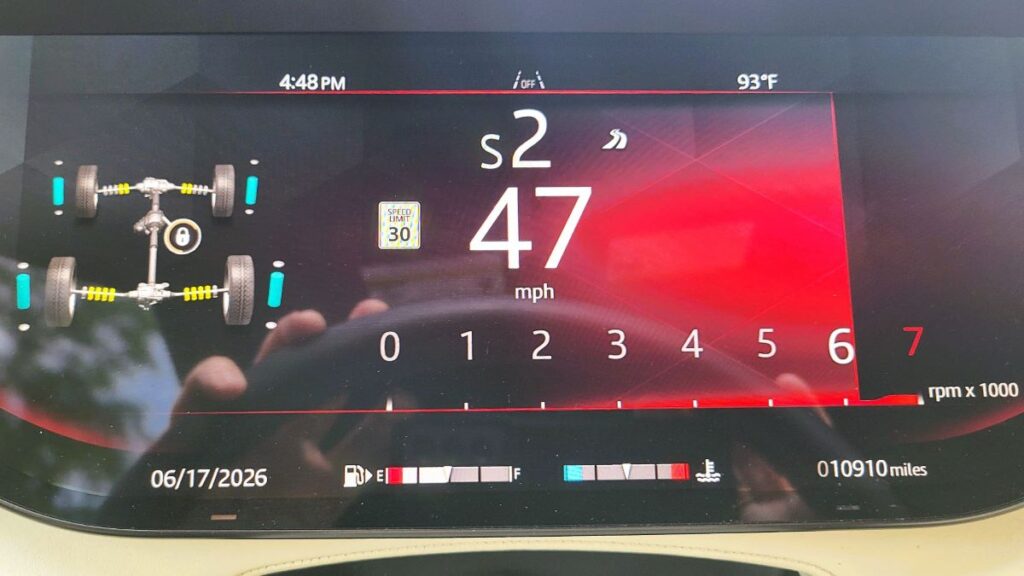
Setting Dynamic also changes the gauge to a digital speedometer with bar graph tach. I added a 4-wheel-drive torque split/suspension firmness info box on one side. Slapping the gearshift into Sport mode saw our 11,000-mile-old SUV launch with more alacrity to hit 60 mph in 6.5 seconds with sharper shifts, suspension and steering feel and a bit more exhaust excitement. Driven in a mix of Eco and Auto on mostly highways, we averaged 19 mpg. And it can tow up to 7,450 lbs.
For comparison, a 2026 Range Rover Sport SE Dynamic we tested – smaller and with a turbocharged 4.4-liter V-8 with 523 hp – hit 60 mph in 4.6 second and got as high as 22 mpg.
Every Land Rover/Range Rover I have taken off road always keeps as many tires on the ground as possible when going over rough terrain. That’s because of a front and rear independent multi-link suspension with automatic air suspension that keeps every wheel in touch with dirt. There’s also active roll control, and active differential with torque vectoring by braking.
There’s multiple off-road modes for Grass/Gravel/Snow, Mud/Ruts, Sand, Rock Crawl and Configurable. You just have to delve into some menus to get those. There is a Wade function to lift its skirts so it can go through up to 35.4 inches of water.
There’s also low range, hill descent and dual locking differentials, plus a multi-camera system with Ground View, that shows a simulation of what’s under the hood via a delayed image of the nose camera, so you can “see” what you’re going over. There are displays for altitude, front and center diff lock status, steering angle, and roll angles. It also shows steering angle and hill descent control.
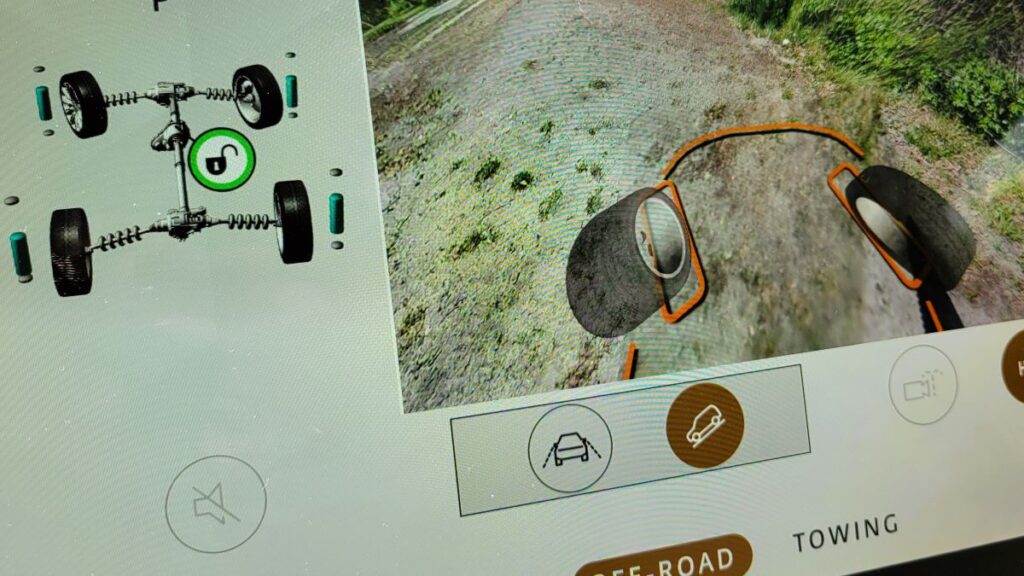
OK, in Florida you won’t find many rocks, but we had a pine forest with lots of roots and dips, so we set grass/gravel, which activated the Ground View with front wheel animation and 4-wheel-drive articulation and differential setting, and dove in.
The ride was comfortable but not mushy as we went over tall, exposed roots, through pine straw-strewn dips, and sandy stretches. The Range Rover just kept on keeping on, with no issues, no head tossing from any bumps, and a quiet ride. Going down a gully, traction was solid, all four tires on deck, as the screen showed a steep few degrees of incline.
On the asphalt, the ride was plush in Comfort Mode, swallowing speed bumps with no head bob afterward, and smoothing out bad pavement. In Dynamic mode, it firmed up with a nice buffering at rebound. In corners and expressway ramps, there was a bit of body roll, but this long Range Rover was neutral, shifting power as needed to the wheels that needed it. Push harder in longer, tighter turns, and a hint of understeer showed, but very controllable. The power steering had a precise if slightly overboosted feel in Comfort mode, tightening up but still a bit remote in Dynamic mode. Despite its length, the turning radius was tight enough. And with 15.7-inch front/14.5-inch rear disc brakes, there was decent pedal feel and real bite, with some nose dive but good control on hard braking from 60 mph, and no real fade after some repeated use.
Safety systems include emergency braking.
The base price of a Range Rover LWB is $117,200. Our SE had lots of options like: $2,400 24-inch alloy wheels, $1,200 tow package; $1,000 Comfort Pack with cabin air purifier, refrigerator and more; $1,000 clack trim package; $740 black roof; $650 walnut interior accents and more, for a final price of $128,695.
Bottom line: It’s plush and capable on and off-road, quiet and comfy everywhere, and quick enough to glide you to West Palm or Wa-Wa.
2025 Range Rover SE LWB 7-Seater Specifications
Vehicle type – 7-passenger luxury all-wheel-drive SUV
Base price – $117,200 (as tested – $128,695)
Engine type – Turbocharged 24-valve DOHC inline 6
Displacement – 3-liter
Horsepower (net) – 395 @ 6,500 rpm
Torque (lb-ft) – 406 @ 2,000 rpm
Transmission – 8-speed automatic with paddle/sport shift
Wheelbase – 125 inches
Overall length – 207 inches
Overall width – 80.6 inches
Height – 73.6 inches
Front headroom – 38.8 inches
Front legroom – 40 inches
Center/rear headroom and legroom: N/A
Ground clearance – 8.5 to 11.1 inches
Cargo capacity – 8 cu. ft./92.9 w/2nd & 3rd row folded
Towing capacity – up to 7,715 lbs.
Curb weight – 5,932 lbs.
Mileage rating – 19 mpg city/24 mpg highway