


Bolt, we hardly knew you!

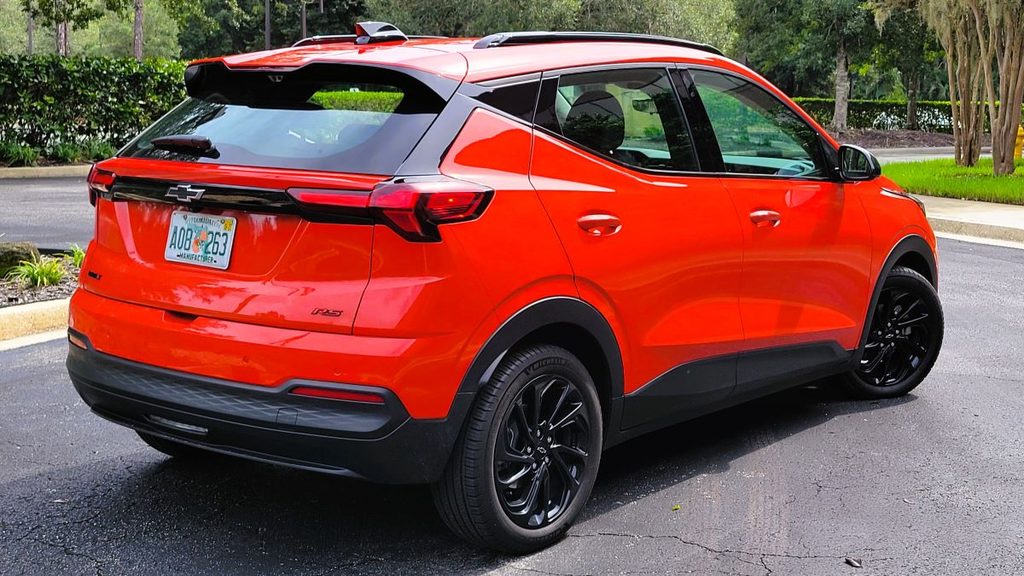
GM pulled the plug on the original Chevrolet Bolt in 2023, and it stayed gone until they redesigned – and heavily updated – this second-generation model you see here – a Habanero Orange 2027 Chevrolet Bolt RS.
‘But just months after it was introduced, it appears that this 2027 model’s lifespan will end about midway through that year, apparently to make room for domestic production of gas-powered crossovers.
So this Bolt came out of the blue, and heads back that way soon.
Just over 62,000 of the first-gen Bolts were sold in 2023 as its production ceased for the first time. Now this second-gen version has seen way over 17,000 sold from January to September, showing it has some power as a very inexpensive EV.
That first Chevrolet Bolt – not Volt, which was the name of the company’s plug-in hybrid sedan – was a cute crossover with 200 hp funneled to its front-wheel drive. It was a 163.2-inch-long 5-door atop a 102.4-inch wheelbase, a bit wedgy in shape with a smooth pointed nose.
For this second-gen revival, there’s a 210-hp EV system on GM’s Ultium platform with a 262-mile EPA-estimated range and a sleek NACS port for Tesla Supercharger access. It’s still front wheel drive. But it is a bit bigger – 169.6 inches long atop a 105.3-inch wheelbase.
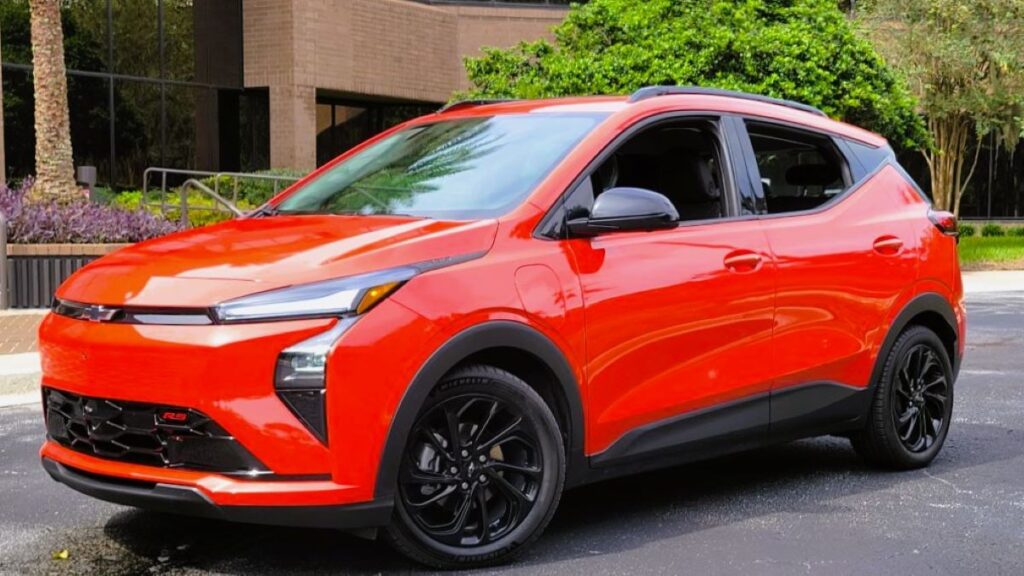
The second-gen model’s design leaps off the first-gen’s after its mid-cycle redesign, aligning its looks with other Chevrolet crossovers. And in this one’s case, lots of folks commented about its orange paint.

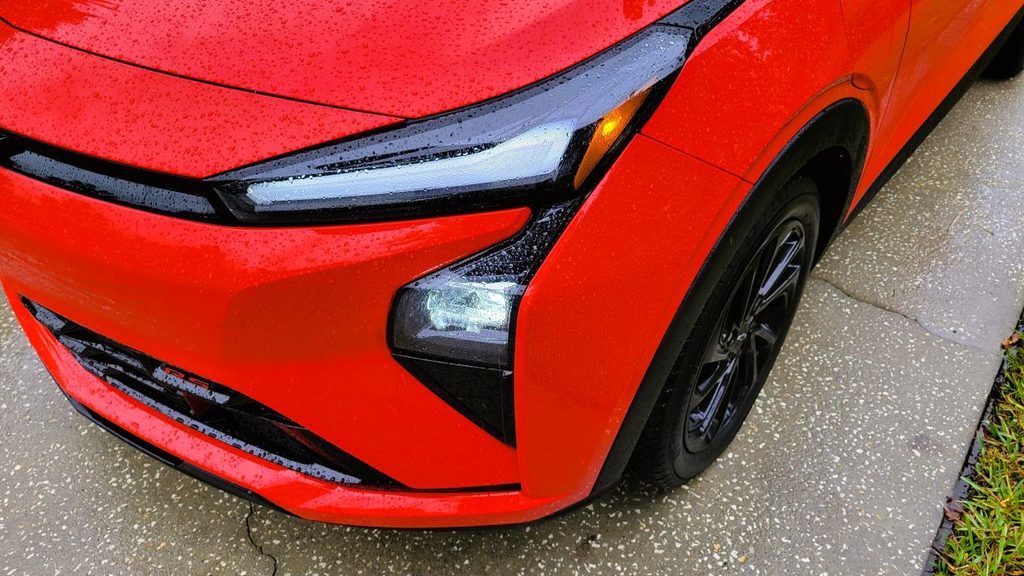
A slim faux grille connects slit LED DRLs whose design lines slide into the fenders. The word BOLT is incised into the gloss black – and down into vents with the headlights. The nose gets a faceted bumper over lower intake with air dam and pseudo-offroad-like lower cladding. It’s a bit more aggressive than the first-gen, with more edginess and familiar black accents around the wheels and side sills.
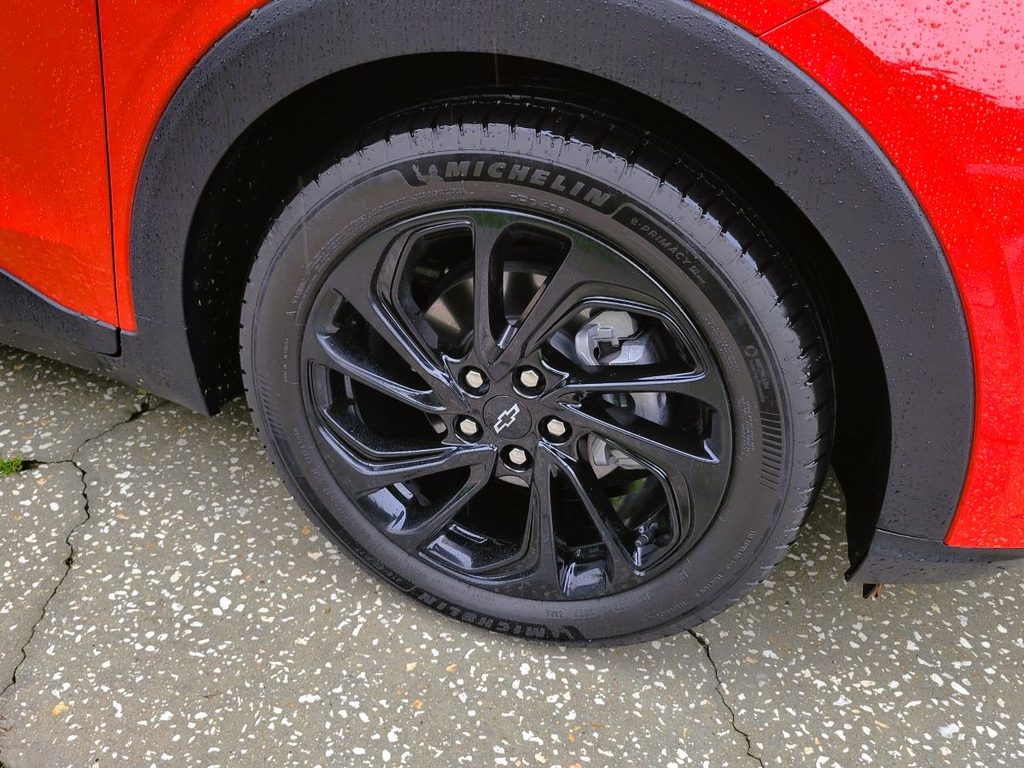
The overall wedge shape with round roof is similar to the revised version of the first-gen model that left us back when. But this model’s lower window sill line rises more quickly on the rear doors, meeting the descending roofline with black accents in between. The tail, with distinct LED lights connected by black, looks good under the high rear window under roof spoiler. It all rides on 10 spoke alloy wheels on P215/50R17-inch Michelin rubber.
In our test car’s orange paint, the Bolt looks perky and ready to ride – just about the right size for the entry-level U.S. EV market, with hatchback crossover competition limited to the latest Nissan Leaf and Volvo EX30, or the 16-inch longer Tesla Model 3 compact sedan. Oh, BTW – I took it to my local Caffeine & Octane cruise-in, where I saw some folks snapping photos of it.
2027 Bolt’s Versatile Interior Delivers On Comfort, Practicality
Taking a page from the simple-yet-versatile hard plastic interior of the compact Ford Maverick pickup, Chevy used the time off between Gen-1 and Gen-2 of the Bolt to freshen up the dashboard into a very usable-yet-clean redesign – that’s also hard plastic. But it’s got many handy features and is very well assembled, with not a creak from anything when we pass over a speed bump.
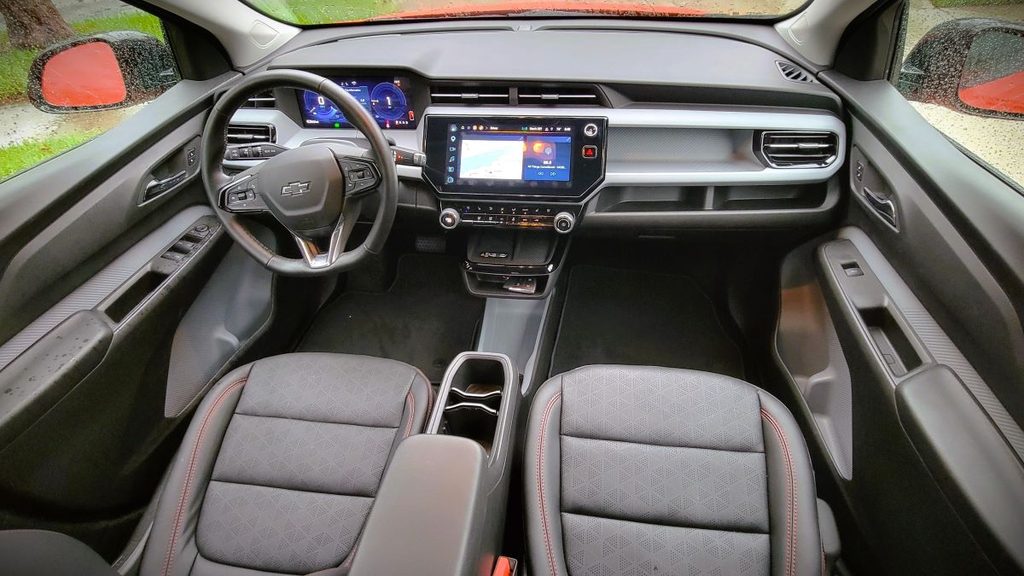
Yes, the black and gray design loses the smoother, slightly shinier look of the 2023 version. But settling into the flat, yet comfortable driver’s seat in the 2027 Bolt shows an efficient use of hard plastics around you that do not look bargain basement.
The only soft points are the armrests on the doors, and between the seats. The dashboard’s center section houses a red-lit passenger nook with some ribbed texture, that ribbing extending into the plastic door inserts that also get accent lighting. The color can be changed.
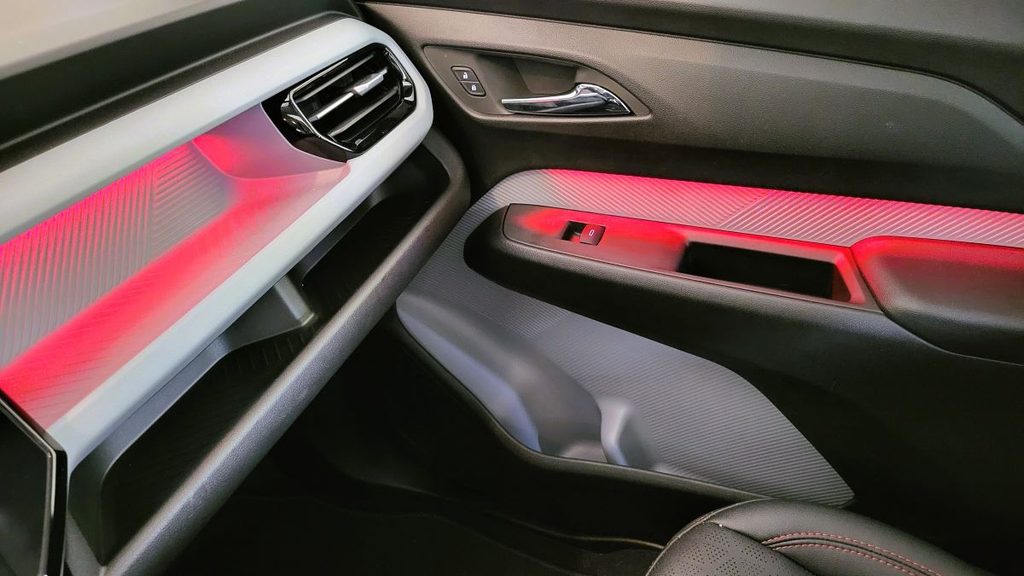
There’s two more nooks over a glovebox. There’s a small shelf under the dash center, with inductive phone charger as well. And along with red stitching, an embossed “RS” in the head restraints.
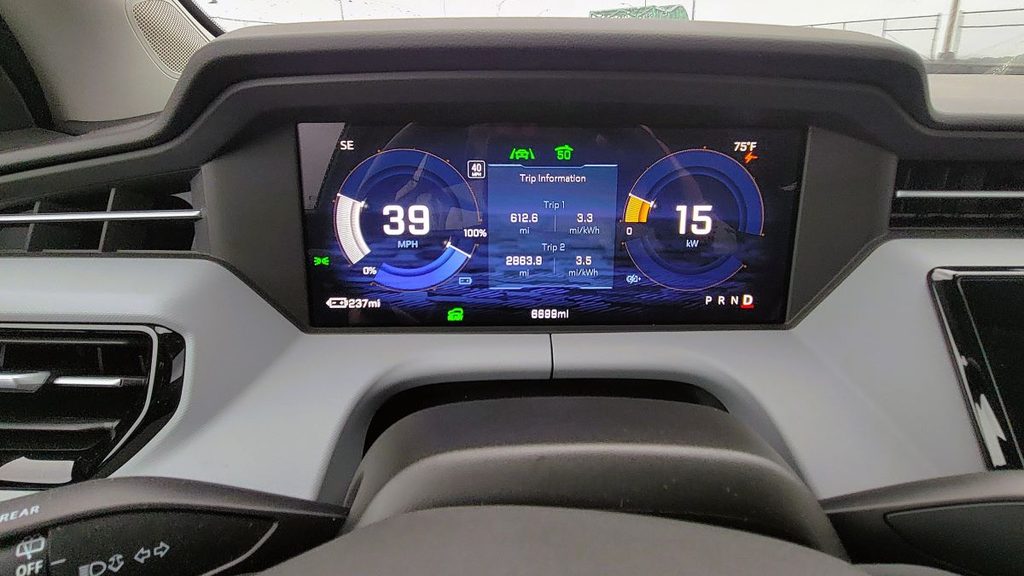
The driver has a 3-spoke steering wheel, about the only inside design kept from 2023 until now. It’s got the usual phone, audio and cruise controls on it. The right thumbwheel also has a way to change the 11-inch digital dash design from one or two gauges with configurable info screens; or a map; or just a simple design. The 1-gauge version does show percent of battery charge left under a big central charge/power graph with digital speedometer, which is my favorite.
More Chevrolet Coverage (story continues below)
GMC Sierra AT4 EV Goes The Distance

2026 Chevrolet Tahoe High Country: Comfy Family Hauler

2026 Gas Equinox Ups Its Game With Redesign

2027 Chevy Bolt Attempts To Tackle EV Affordability

Chevy Suburban Raises Bar For 2025
Chevy Colorado ZR2 Bison Easily Handles Rough Stuff
An 11.3-inch center screen, angled back a bit too much so there’s some high-noon glare. It hosts the infotainment system with Google built-in.
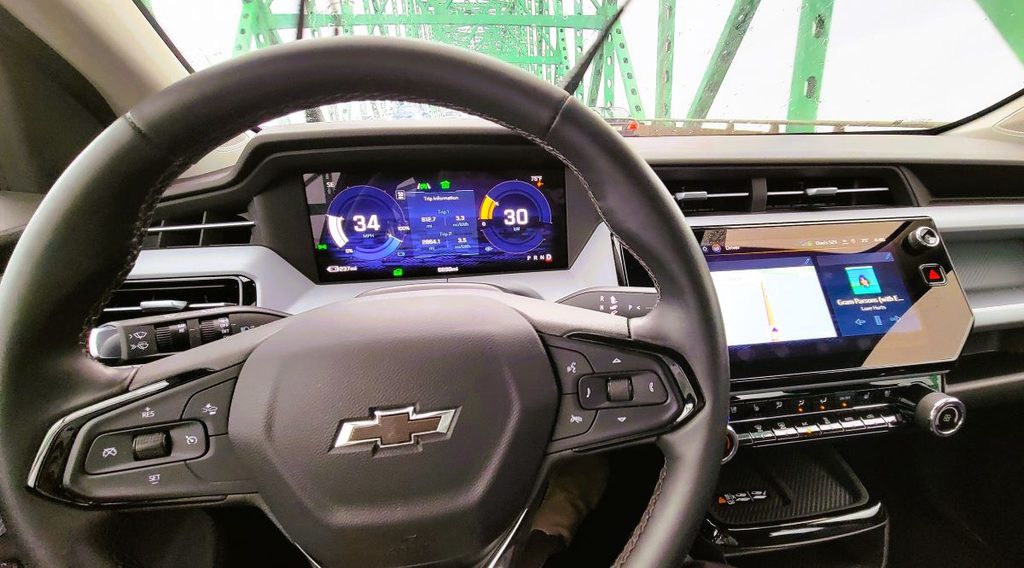
That means it runs Google Maps, Google Assistant, and apps from the Google Play store. But like most GM EVs now, it does not support Apple CarPlay or Android Auto. It does have a volume knob on the screen, and fan/temperature knobs and climate control buttons below. It’s also missing HD Radio.
That said, things like manual operation of the headlights and drive modes still need a tap or two into infotainment screen menus – sigh.
The center console is more hard plastic, but there’s storage space down low with a cupholder, plus dual cup holders above on the slightly high center armrest – with USB ports and more storage inside.
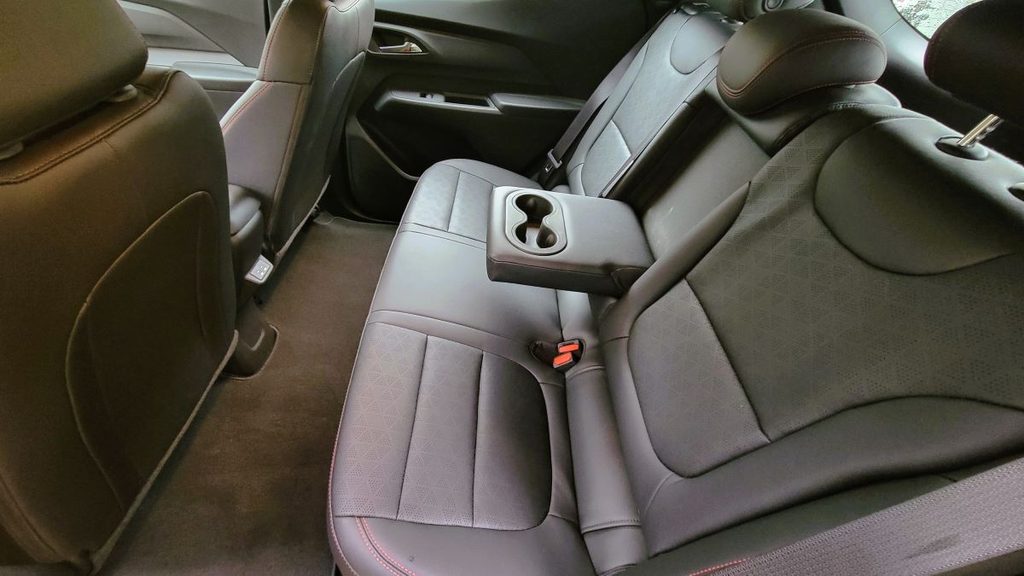
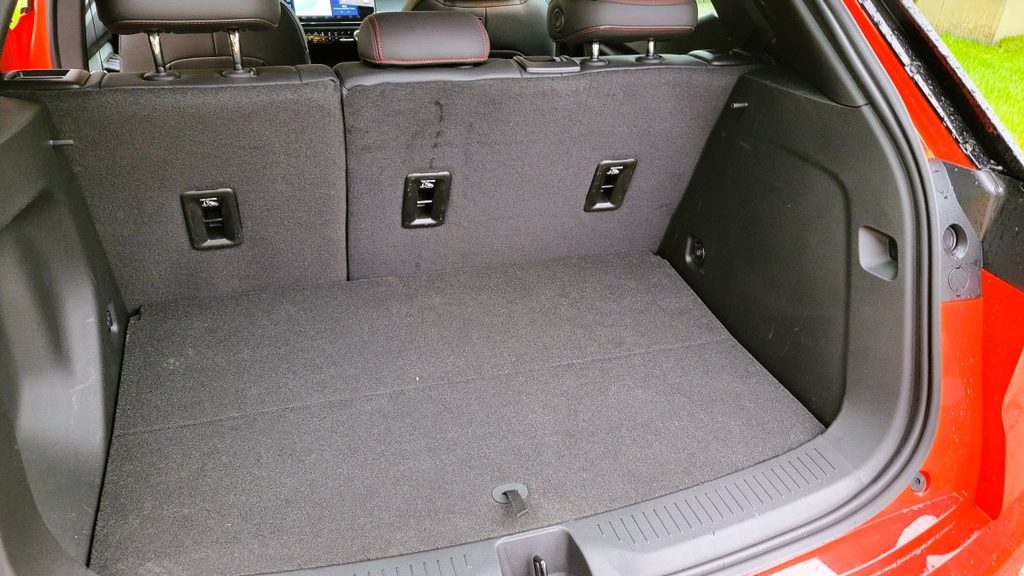
The rear bench seat is an easy slide in, with decent head and leg room, plus fold-down armrest with cup holders and dual USBs – but no rear air vents. Under a rear hatch that opens high enough to clear my head, there’s over 16 cubic feet of cargo space, expanding to 56.3 cubic feet with the 60/40 rear seatbacks folded down.
Despite batteries underneath, there’s a deep storage area under the rear floor, which is perfect for holding a charging cable, towels and such.
The Bolt RS has black leatherette seats, only the driver’s with power adjustment; both up front with cooling and heat. There’s also a backup camera, basic lane-keep, smart cruise control, digital displays, inductive phone charger, cooled front seats, camera rear-view mirror, a solid sound system, a sunroof and more.
It’s a well-equipped economy EV. And it’s darn well built, with solid control action and nary a body quiver over rougher roads.

2027 Bolt Delivers More Performance, Economy Than Many Subcompacts
Compact gas crossovers that are about the Bolt’s size offer moderate power – think the Tracker with turbocharged 1.2-liter three-cylinder engine and 137 hp
But the Bolt uses a 65-kWh lithium iron phosphate battery pack powering a single permanent-magnet front-wheel-drive electric motor shared with other GM EVs like the Equinox EV. There’s no funk, instead you’ll find electronics and fluids. The motor is integrated into a front-wheel-drive drive unit that connects to the front axles via drive shafts
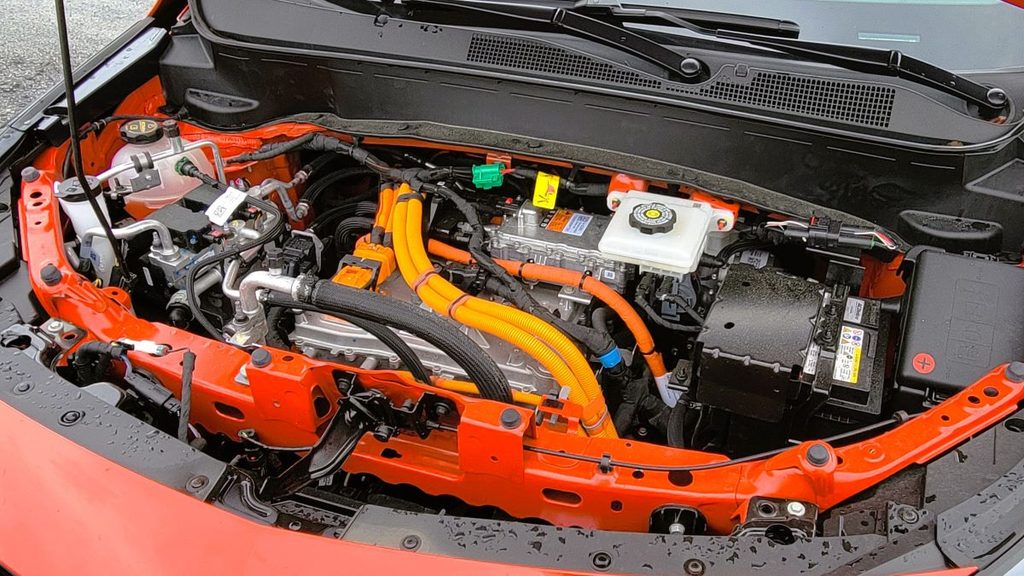
That means 210 hp and 169 lb-ft of torque, and the 2027 Bolt now has a sleeker Native NACS (North American Charging Standard) port and charging cable that fits a Tesla Supercharger for many more places to zap up. The port will handle up to 150 kW DC fast charging, taking about 25 minutes to go from 10% to 80% charge.
Level 2 Home/Public Charging (240V/up to 11.5 kW) takes up to 8 hours, adding 25 to 35 miles of range per hour. Using Level 1 (120 volt) takes about 50 hours for a full charge. Chevrolet says it can gain about 4 miles of range per hour off a regular household outlet. So with 56% charge, or a 142-mile range left one afternoon, I plugged it in at my home’s 120-volt/Level 1 garage outlet.
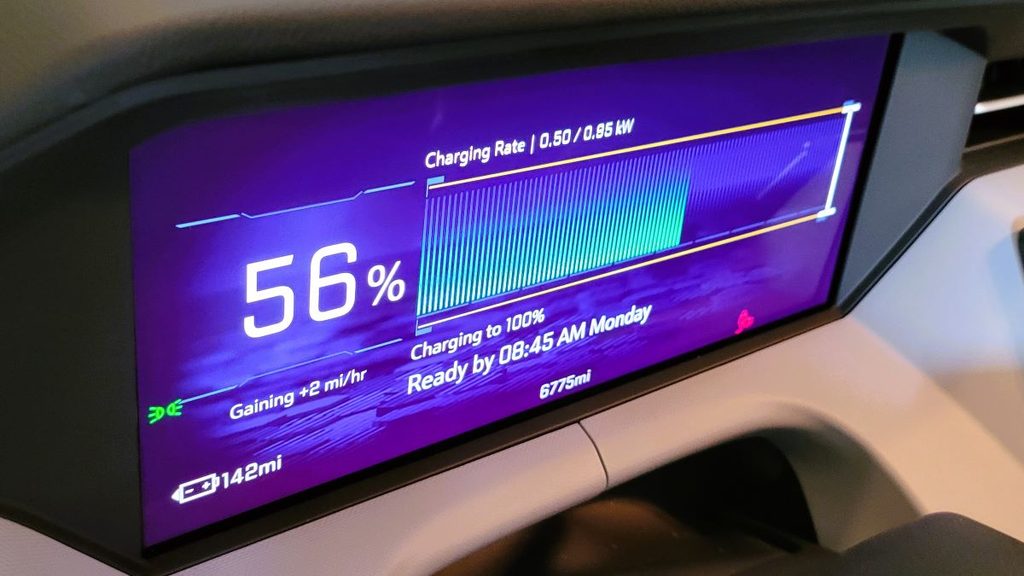
When I unplugged it 20 hours later, it showed 76% charged, with 201 miles range. The gauge display indicated it would gain 2 miles of range per hour. FYI – it fit my 40-year-old home’s garage perfectly, with lots of room to spare.
Now let’s put that juice to work.
First, new GM EVs do not have a start/stop button – just get in and tap the brake pedal, and it comes to life, preset to Normal drive mode, which backs off on throttle and steering firmness. It isn’t slow – the Bolt launches moderately, picks up steam and hits 60 mph in a near-silent 7 seconds – quick enough for daily use. There’s immediate passing power in Normal mode. We stayed in Normal most days. One day, we saw 23 miles of driving use up 25 miles of range, with percent charge going from 87% to 78%.
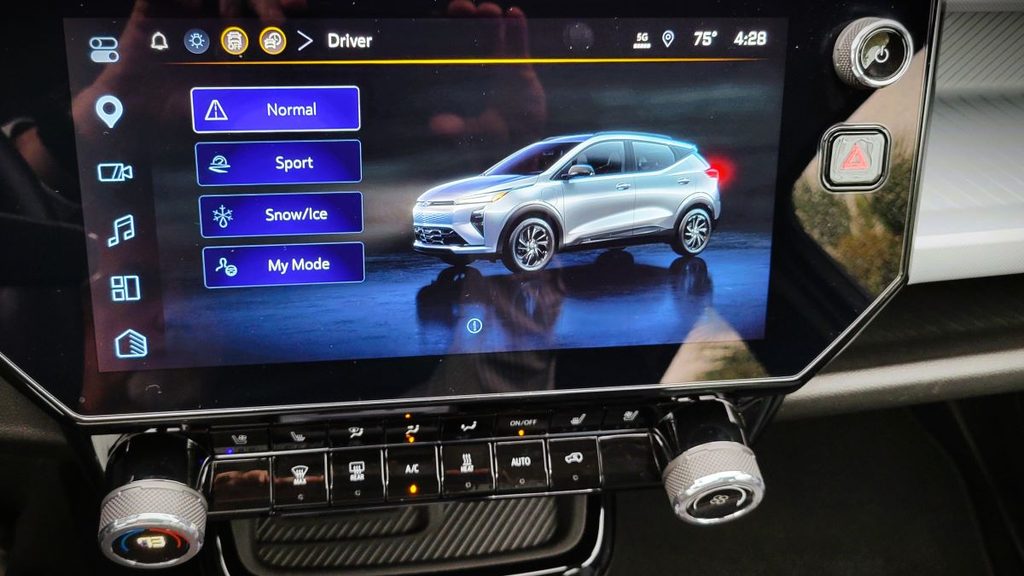
There’s also Snow and Sport modes, as well as one to preset throttle and steering response. Go into the center screen and tap in Sport in the Mode menu, and there’s a surge of power as the battery gives more to the motor. It was apparent on launch – quicker at throttle tip-in en route to 60 mph in 6.4 seconds, a hint more EV motor whir as we went. Passing power was improved, a hint of torque steer if you change lanes while depressing the right pedal harder.
This 3,807-lb. EV has an independent MacPherson strut-type front/torsion beam rear suspension with coil springs, simple but effective. The overall ride was just fine – tight enough for confident handling, yet with some suppleness to handle bumps. Speed bumps just came and went with one suspension compression and no harsh rebound.
Yes, it’s an RS – sorta sporty – but it’s no Camaro. The decreasing radius on-ramps near me showed the Bolt stayed neutral and connected as we accelerated onto interstates, where EV torque smoothly assisted merging. Cruising around corners showed no body roll and neutral handling.
When you drive it more athletically, there’s some economy car understeer and some body roll, but all controllable and not dramatic. In other words, it’s fine, fairly agile and easy to drive and park.
The power steering had decent road feel, and maybe a bit more assist than I liked. But it is a precise rack with tight turning radius, and did gain some road feel in Sport mode, although it felt a bit artificial. Our 6,900-mile-old crossover’s 11-inch front/10-inch rear disc brakes sound a bit small, but this is a fairly light EV.
The pedal had a progressive feel, with only an occasional harder initial bite that some EV regenerative brakes offer. There was a bit of nose dive and some ABS action at full pedal from 60 mph, but no fade. And with regen braking set on maximum, the motor turned generator immediately upon backing off the throttle, bringing us to a stop as needed – it was my go-to mode daily.
The lane-keep system did gently nudge us back when needed, with buzzers in the seat bottom to alert the driver to that line as well as curbs we might be backing in to. The smart cruise worked just fine.
FYI – to turn it off, just open the driver’s door with the classic drive stalk in “Park” – leaving you with big bar graph showing remaining EV range. But if you don’t trust it, Chevy also included an off icon in the touchscreen.
The base 2027 Bolt LT has a starting price o $28,995 , while the RS starts at $31,600 with few options – $1,495 dual-panel moonroof; and $1,195 tech package with surround-view and rearview cameras, inductive phone charger and rear pedestrian/traffic sign alert. Final price as tested – $35,685.
Bottom line: The 2027 Bolt RS is the right size and the right price for an EV that does everything you might need, looks pretty cool doing it, and has the power and almost enough range to work. For my commute, the Bolt could live charger-free for two weeks.
2027 Chevrolet Bolt RS EV specifications – sub-compact 5-passenger crossover
Base price – $31,600 ($35,685 as tested)
Motor type –Single permanent-magnet front-wheel-drive electric motor powered by 65-kWh lithium iron phosphate battery pack
Horsepower (net) – 210 hp
Torque (lb-ft) – 169 lb-ft
Transmission – none – direct drive
Wheelbase – 105.3 inches
Overall length – 169.5 inches
Overall width – 69.7 inches w/out mirrors
Height – 63.8 inches
Front headroom – 40 inches
Front legroom – 44.2 inches
Rear headroom – 37.8 inches
Rear legroom – 39.1 inches
Cargo capacity – 16 cu. ft./56.3 cubic feet w/rear seat folded
Ground clearance – 5.5 inches.
Mileage rating – 120 MPGe combined