


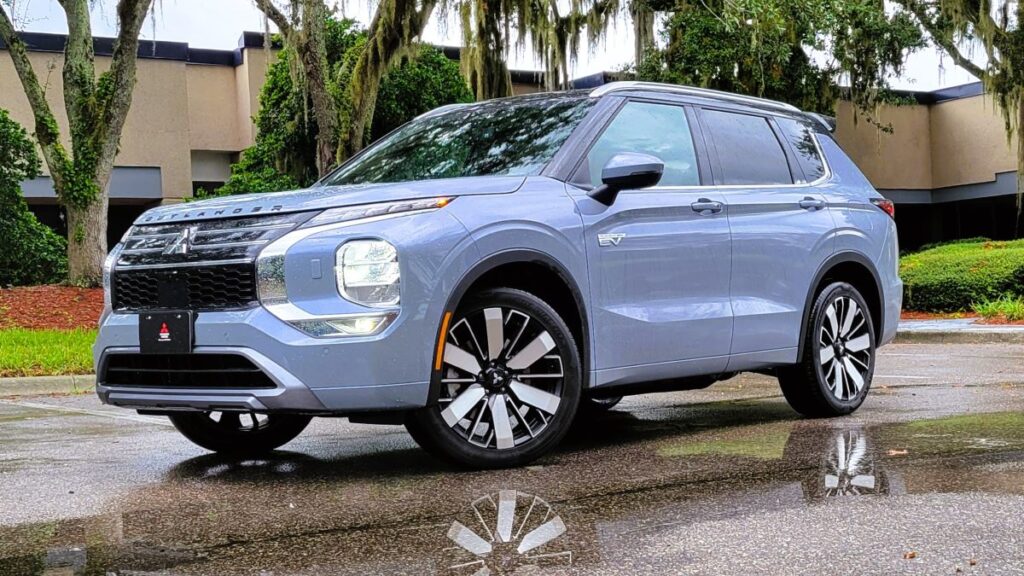
Mitsubishi, thy name is Outlander. And you have a face few will forget – aggressive and sculpted; sleek yet neatly laced with chrome.

The Outlander is not a household name, the company sold just under 40,000 nationwide in 2025, and just over 45,000 in 2024. Introduced in 2003 in the U.S., its second generation came in 2005, the third-gen in 2012, and this fourth-gen in 2020. This plug-in hybrid was revealed in 2022 with a significant battery upgrade for 2026, and shares its core with the Nissan Rogue.
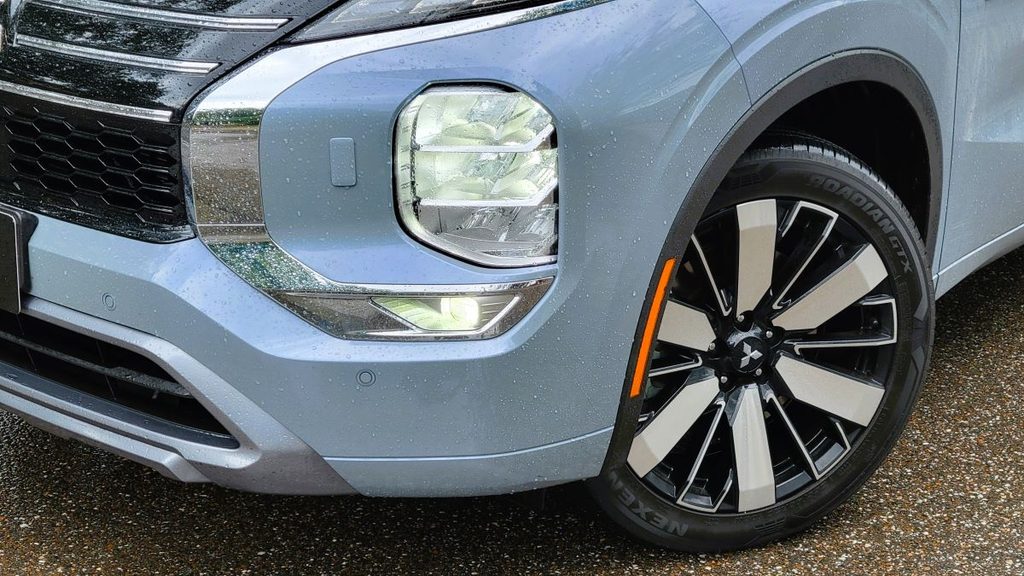
Mitsubishi has always had an intriguing design esthetic for its vehicles, and this crossover has a unique look that got a slight refresh this year of the 2022 design. There’s tweaked front and rear bumpers under new LED lighting, with a smooth upper grille. Design lines flow off headlight trailing edges, down upper flanks to spear LED taillights.
From The Archive: 2023 Mitsubishi Outlander Road Test And Review
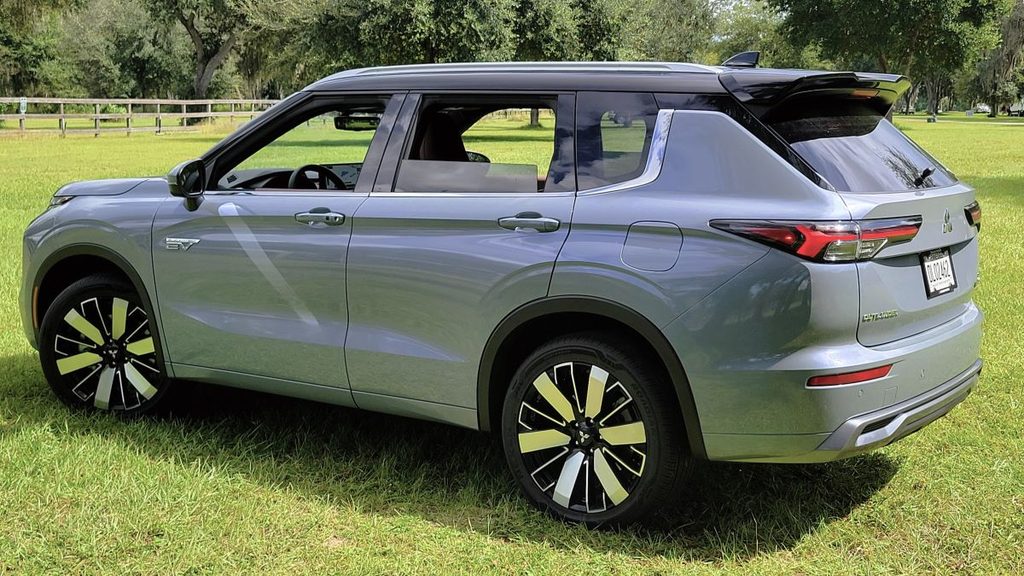
Chrome accents flared rocker panels, while low black cargo rails outline the roof. Side mirrors go 2-tone black and gray. Gently flared fenders frame 6-spoke brushed alloy and black wheels wearing 20-inch Nexen Rodian rubber that nicely fill gently flared fenders with contrasting darker gray flares.
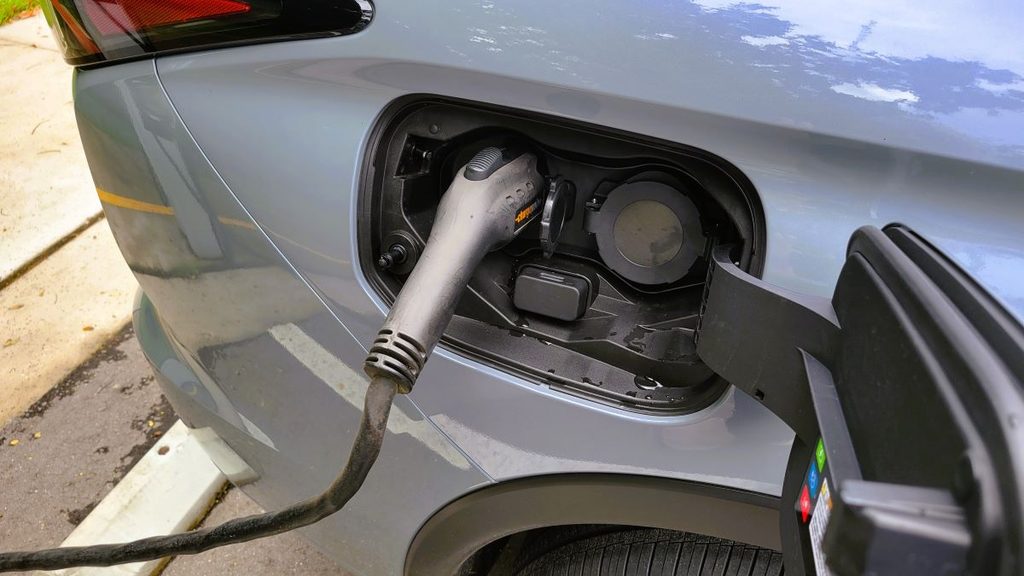
The only hint that it’s a plug-in hybrid is a second “gas” cap at the rear passenger side for the two sockets.
Since the Nissan Rogue and Outlander share their platform, gas engine and 106.5-inch wheelbase – as well as Mitsubishi’s PHEV tech – there’s not much difference in the exterior design other than some accent replacements. They both look handsome.
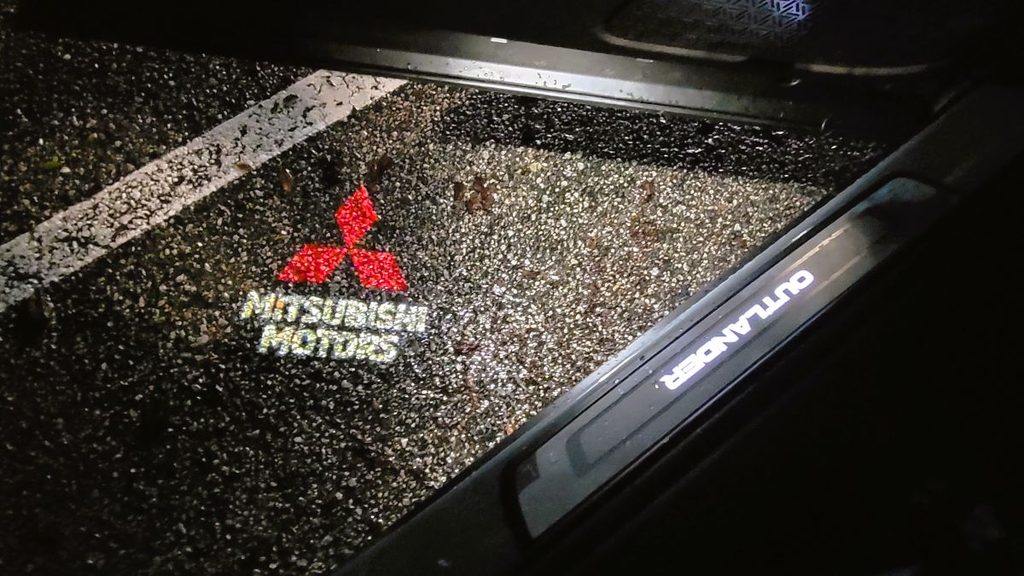
The Moonstone Gray Metallic paint had a nice glow in the sun, accented by that black roof. And the side mirrors project a nifty Mitsubishi star on the ground to light your nighttime way.
Mitsubishi Outlander SEL PHEV Gets Interior Upgrade For 2026
The interior design of the Outlander is close to the Rogue’s as well. And for 2026, the Outlander’s interior also got an upgrade in tech in the makeover, making it a nice place to occupy, at least in the first two rows of this compact crossover.
Quilted brown leather greets you upon sliding into a comfortable driver’s seat with dual memory presents, plus heat, cooling and basic massage. The thick leather-wrapped steering wheel is manually adjustable, with a paddle behind to set regenerative braking levels.
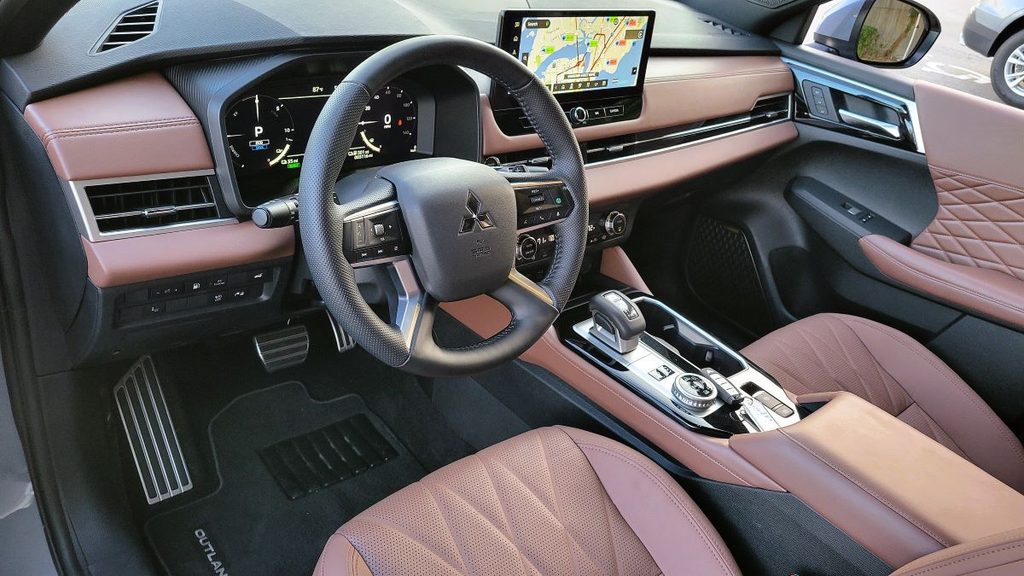
The padded black-over-brown dashboard gets stitching and some carbon fiber-look plastic on the cowling, shading the full digital dashboard and its configurable center section panel with audio, map, trip and more.
Then comes a change – a 12.3-inch wide center touchscreen for navigation, audio and other needs, with central volume knob and basic menu button below. That is a few inches bigger than before the 2026 tweaking, with less physical buttons. There’s wireless Apple CarPlay and Android Auto, but no HD Radio.
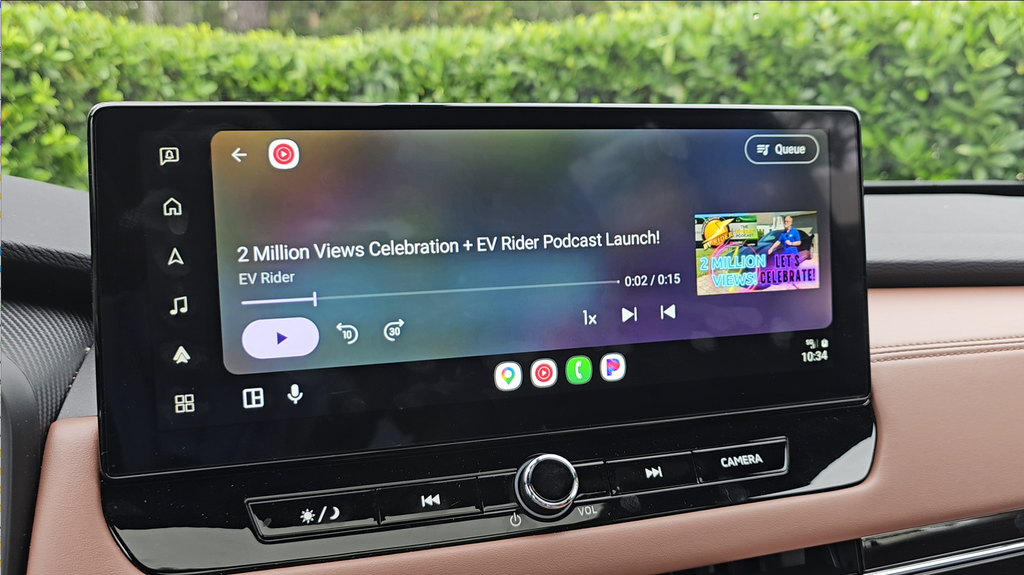
Not much else has changed and that’s fine – the 3-zone climate control panel below has big buttons that are easy to use. There’s an inductive phone charge spot at the head of the center console, with padded sides.
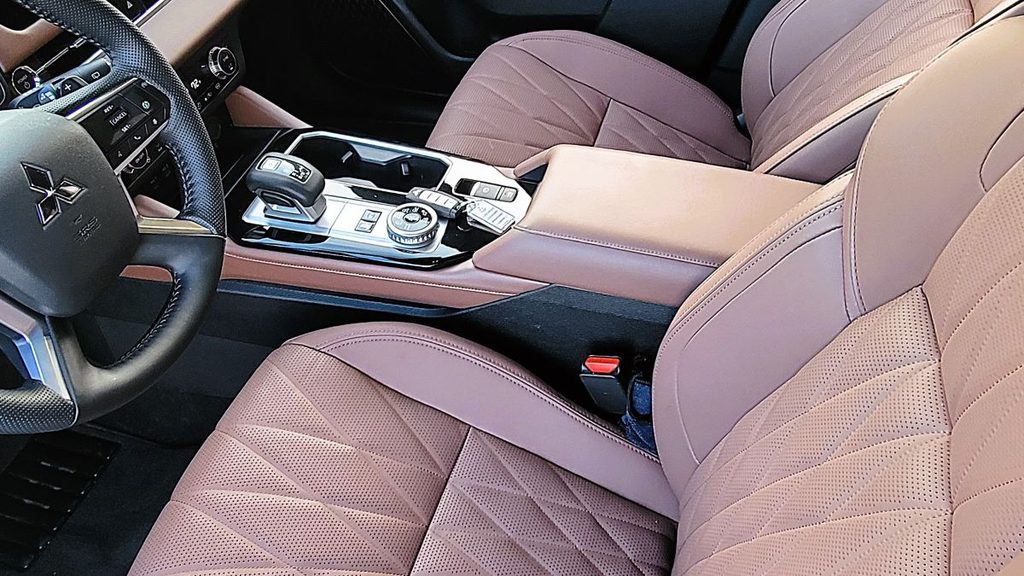
The second row seats slide fore and aft for leg room needs, and the outboard seats have a bit of recline adjustment. There are rear a/c vents with temperature adjustment, and outboard heat.
And yes, there is a third row with tall head restraints that do block some rear view mirror views – or you could use the video camera view, which is just fine.
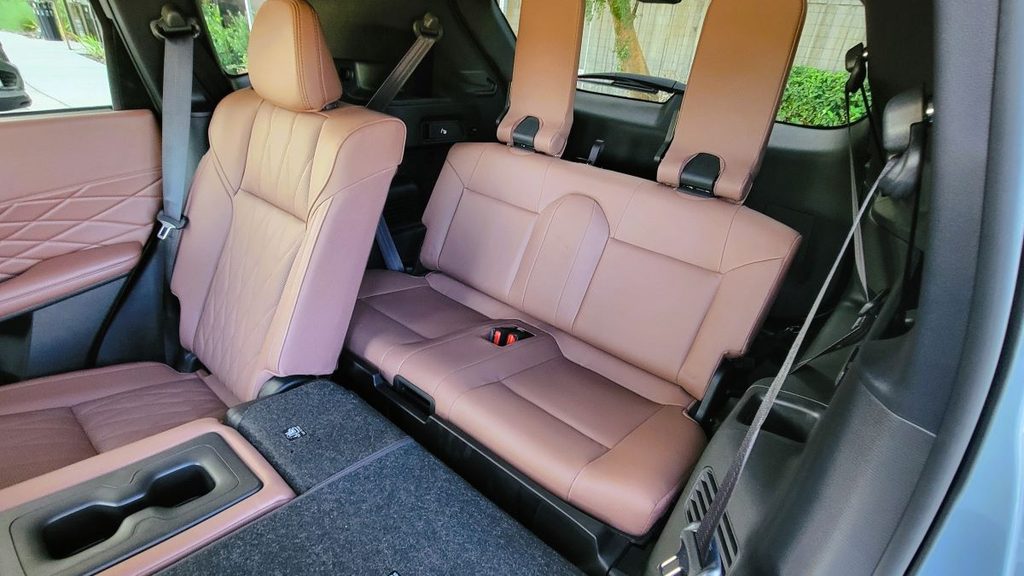
Despite the second row’s fore/after adjustments, there’s minimal third-row leg room.
See the video review at the top of this post for a demonstration of the third-row flips open.
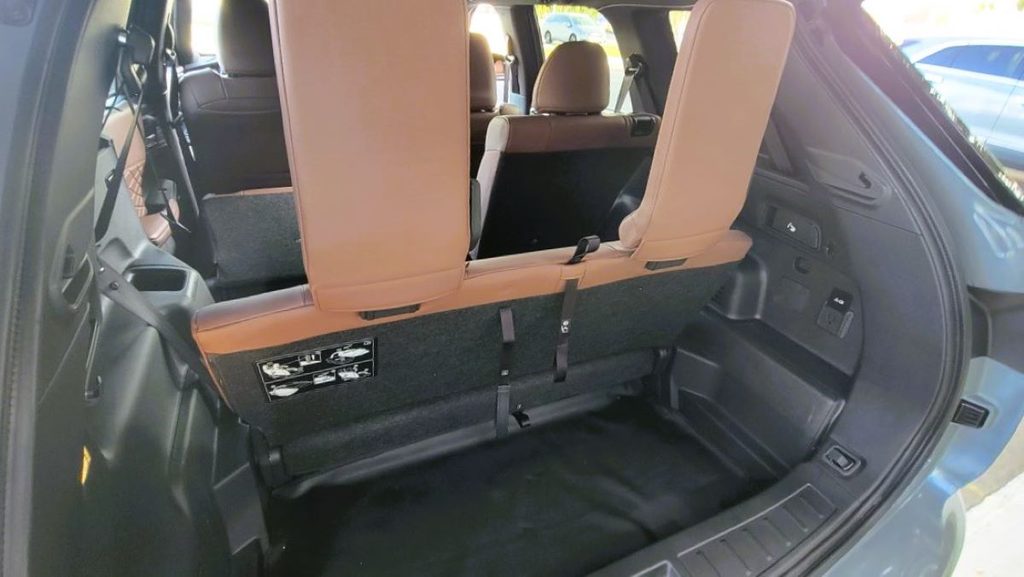
Unless you absoltuely need the extra seats to haul some kids, it’s better to fold the third row flat into the rear floor, and expand the 30.4-cu.ft. to 62.8-cu.ft. via 60/40 split rear seatbacks. The rear hatch is power operated and cleared my head, but there’s no hands-free option.
For those cross-shopping the Rogue, the Nissan only offers two row of seats, vs. the Outlander’s three.
2026 Mitsubishi Outlander PHEV Includes Plenty Of Drive Modes
The 2026 Outlander PHEV gets a 2.4-liter inline 4 with a very modest 131-hp by itself, or a more torque-filled 297-hp when combined with a new 22.7 kWh Lithium-ion battery/85 kW front/100 kW rear AC synchronous permanent-magnet electric motors. This model weighs about 500 lbs. more than the first-gen.
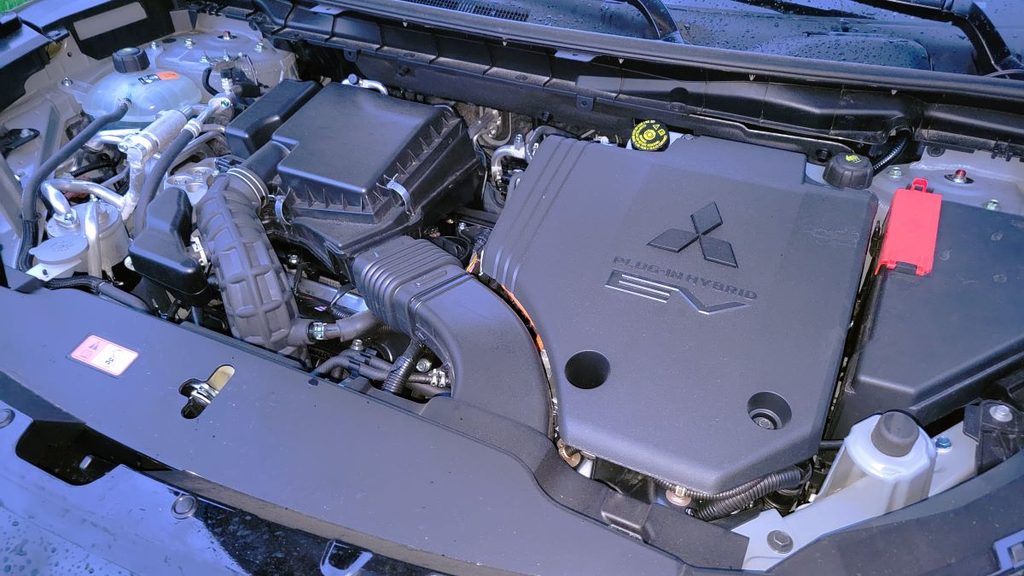
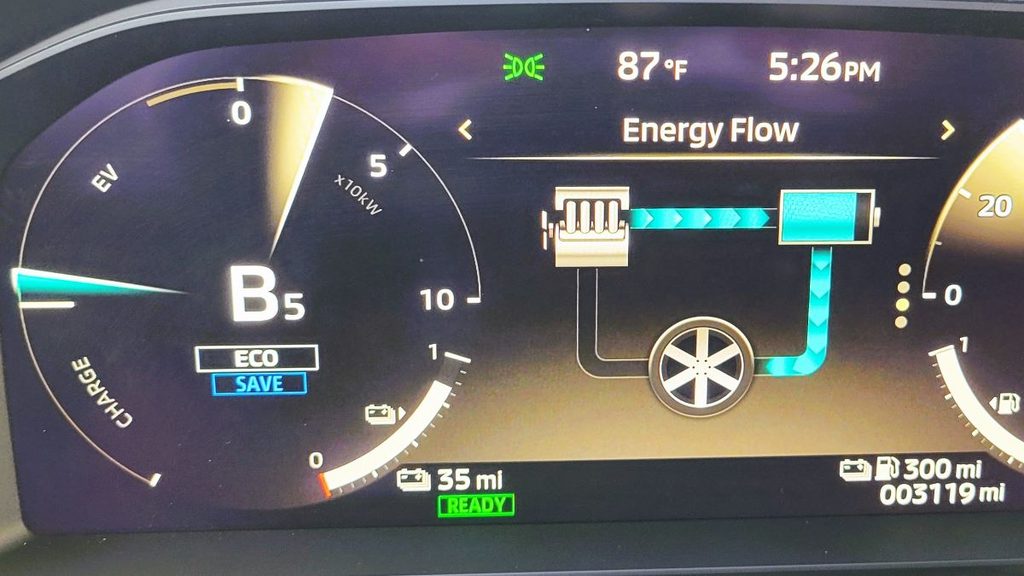
There’s no automatic gearbox – the Outlander PHEV using a single-speed direct-drive transaxle like most pure EVs. And this gas engine spins up to power the electric motors – you can see this on the drive mode display. Power flow lines go straight to a generator, then the drive wheel icon. Or it can tie directly to the front wheels as needed, again visible on the center screen.
You have choices on how to mix, match or delete gas or EV. There’s Normal, which lets EV and gas engine work together as needed; EV Priority, which goes electric as long as the battery charge permits. You can go for Save Mode, which let’s you preserve EV-only power for later. Or you can let the drivetrain recharge itself. Another way to do that is with with the regen brake paddles.
Unlike some EVs, the highest setting does not invoke full regenerative braking once the accelerator is lifted, so you can’t 1-pedal drive and get a full stop. But it was nice to use to decelerate into a turn, and I did see some EV range returned, or not drop, while driving in Eco mode with the highest regen setting.
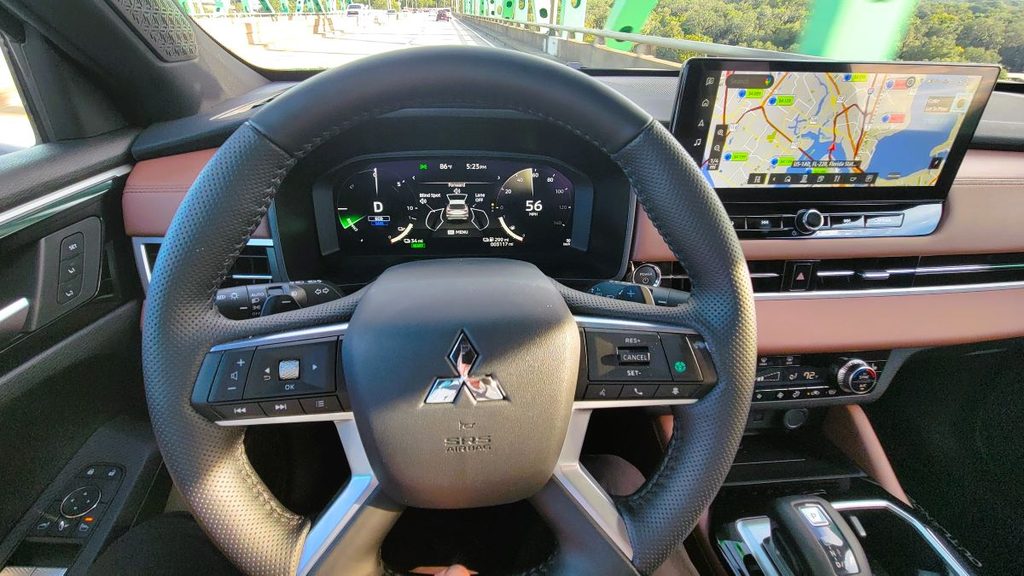
Then there’s my favorite: Charge Mode, which lets the gas engine act as a generator to recharge the battery while driving. On my 7-mile commute home, with full regen braking and set in Eco mode with battery save, the Outlander gained five miles of range.
Press the accelerator to pass, and the gas engine will rev up and stay there to generate power to pass and feed the battery – all electric powered by the generator, which runs more quietly to continue charging the battery when stopped.
Then there’s a S-AWC Terrain & Performance Mode dial. There’s Normal, Eco, Power; and Tarma, which delivers sharper steering and acceleration for dry road performance. Off-road modes are Gravel, Snow and Mud. But every time you turn the Outlander back on, you have to reset your EV, Drive and regen braking modes since it presets to Normal.
In Eco mode, launch was pretty strong with 60 mph in 6.4 seconds. Acceleration is linear as an electric motor initiates, joined by a gas engine that increases its rpms to generate power. Power mode saw a quicker launch as EV – front and rear motor – and gas combined immediately – 60 mph came in 6.1 seconds. The gas engine revved and stayed there as we moved out with full generation for the electric motors.
The 2022 version I tested hit 60 mph in 8.9 seconds in Eco mode, and 8.7 seconds in Sport mode.
EV-only mode (Eco and full regen too) was just fine for daily driving, with linear acceleration and acceptable passing power. It was quiet with just a hint of electric motor and tires noise. Foot to the floor, the gas generator did not join in, as some PHEVs do. And we did notice that with regen braking on, we held range for a while, even gaining one or two more over our 7-mile stop-n-go commute.
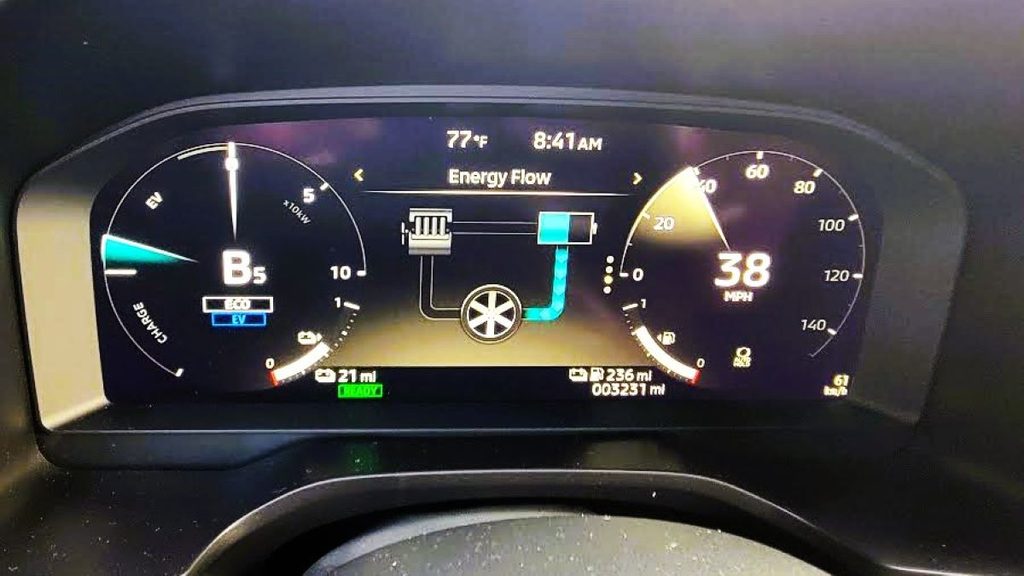
According to Mitsubishi, a 2026 Outlander PHEV can do up to 45 miles on battery alone, a 7-mile gain over the 2025 model due to its new 22.7 kWh lithium-ion battery and an updated two-row battery cooling system. Leave the Outlander in the drive modes that use EV and gas engine, and Mitsubishi estimates 420 miles of total range – impressive for a 4,872-lb. crossover with a 14-gallon gas tank, a tad smaller this year due to the larger battery pack.
That boils down to 73 MPGe combined with gas and EV joining hands, or 27 mpg when you purposely take the EV out and run on gas alone. We saw as high as 31 mpg, dropping to 27 mpg during our test.
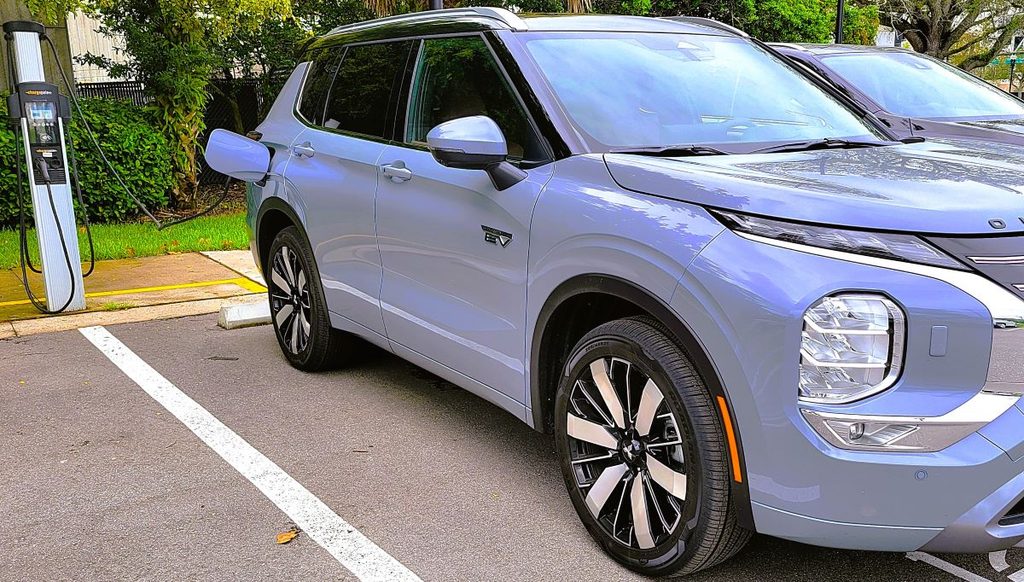
With 13 miles of electric range showing one day, we plugged in to our office’s Level 2 (240 volt) outlet, and reached 32 miles of range after three hours – $1.91 to charge. Mitsubishi says household 120-volt outlet can achieve a zero to full charge in just over 16 hours; using a Level 2 drops that full charge time to about 6.5 hours, where it twice showed 49 miles after full Level 2 charges. We had the SEL trim with the outdated CHAdeMO DC fast-charger input (Level 3), that Mitsubishi says zero to 80% charge takes about a half hour.
CHAdeMO charging stalls, which were never popular in the U.S., are being phased out as more stations switch to the new U.S. NACS charging standard.
The PHEV rides on a retuned-for-2026 MacPherson strut front/multi-link rear suspension with stabilizer bars. The result is a comfortable ride on the road, with a bit of body roll in turns. The regen brake system lets you slow for corner entry, like a downshift. But there’s understeer if any athletic moves are made in turns, controllable, but there when any corner is pushed.
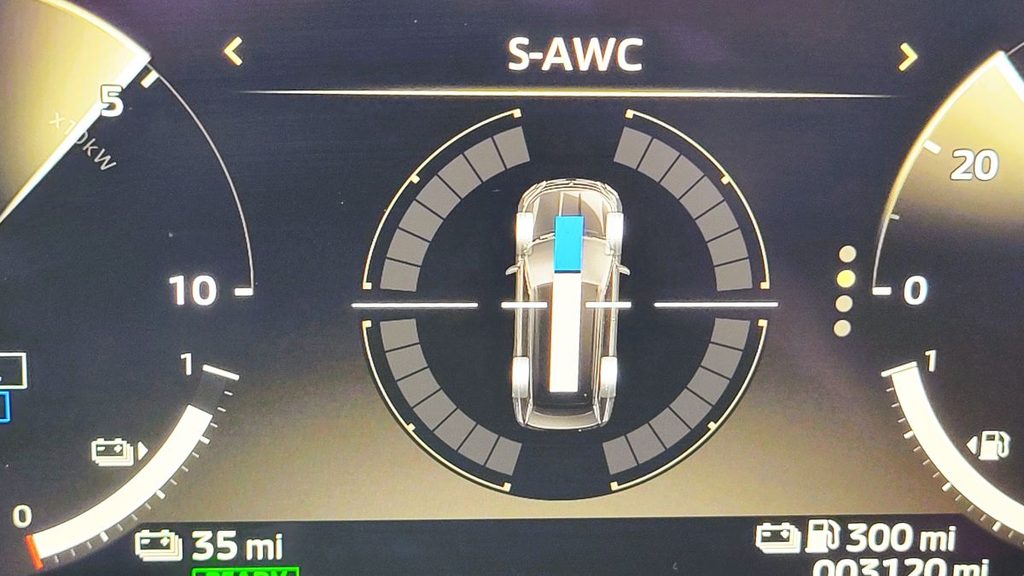
The all-wheel-drive display shows steering angle as well as front/rear power distribution, the rear coming online when you demand power on the straight or curve. The 13.8-inch front/13-inch rear disc brakes had a nice bite after a bit of pedal travel in our 3,200-mile test vehicle, with no fade after some repeated use, and a bit of nose dive. And the retuned-for-2026 power steering was direct but somewhat numb in feel in Eco mode, stiffening up in Sport mode, with a tight turning radius.
Overall, as we faced some torrential rain due to a nor-easter during a few days of our test, the all-wheel-drive system delivered good traction with no slippage. That said, during one gully-washer, the rear wiper blade flew off when working against the deluge. We don’t know if it was previously damaged before EV Rider received it, or if it was a manufacturing defect.
And after a week of driving, we found the Outlander PHEV was extremely frugal, with usable EV range when fully charged.
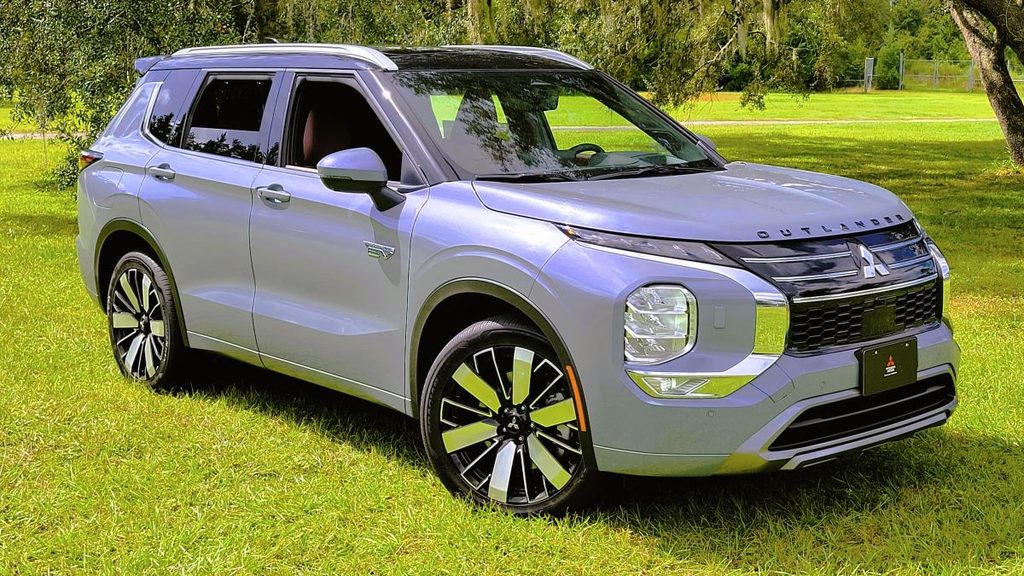
The base 2026 Mitsubishi Outlander S PHEV starts at $43,245, our SEL PHEV starts at $48,945, with $5,635 in options including the $3,850 SEL Premium Package with that quilted Brick Brown semi-aniline leather, head-up display, Yamaha sound system, digital rear view mirror and massaging seats; $795 black roof and a few other options for a final $56,375 price.
Bottom line: Luxurious, quiet, comfortable and very fuel efficient, with usable EV range – a contender with serious room..
2026 Mitsubishi Outlander SEL PHEV Specifications
Vehicle type – 4-door, 7-seat all-wheel-drive plug-in hybrid crossover utility wagon
Base price – $48,945 ($56,375 as tested)
Engine type – MIVEC DOHC, 16-valve, 4-cylinder w/dual DC motors and 22.7 kWh Lithium-ion battery pack/355 volts
Displacement – 2.4 liters
Horsepower (net) – 131 @ 5,000 rpm gas, or a combined 297-hp
Torque (lb-ft) – 144 @ 4,300 rpm gas
Wheelbase – 105.1 inches
Height – 71.6 inches
Overall length – 185.8 inches
Overall width – 84.4 inches
Height – 68 inches
Ground clearance – 7.8 inches
Front headroom – 40.6 inches
Front legroom – 40.9 inches
Middle headroom – 39.1 inches
Middle legroom – 37.6 inches
Rear row head and leg room – not available
Cargo capacity – 30.4 cu. ft./6.2.8 w/2nd row folded
Towing capacity: up to 1,500 lbs.
Curb weight – 4,872 lbs.
Fuel capacity – 14 gallons
Mileage rating – 27 mpg gas/73 MPGe combined gas-electric