


Time sure does fly when you’re having fun. Hard to believe, but I’ve already owned my Zero Motorcycles SR/F for just about seven years. It was built in September 2019.

Related: 2027 Zero Motorcycles Lineup, including Street Legal XE and Project Ventura
Zero SR/F BMU Failure: Diagnosis, Towing, and Repair Details
When I did my last SR/F check-in, I’m sorry to say it wasn’t working. At the time, Zero’s preliminary diagnosis was that the Battery Management Unit (BMU) might have failed, and that turned out to be the case. I filed a goodwill request with Zero to have my SR/F towed about 200 miles to the Zero dealer in Tampa, since RideNow Jacksonville dropped the brand and said they would no longer perform Zero-specific service on my bike, despite me buying it from them new in 2019.
First off, a shout-out to Zero and Xtreme Powersports in Tampa for their help in getting my Zero back on the road. And for those who are going to ask, I paid for the part and installation labor, while in this specific case, Zero graciously picked up the transport cost as a one-time-only courtesy.
What some owners may not realize is that Zero can often make a preliminary diagnosis by looking at the bike’s log files. They’re available to any owner by opening Zero’s app, downloading them from the bike, and emailing them to Zero’s support team.
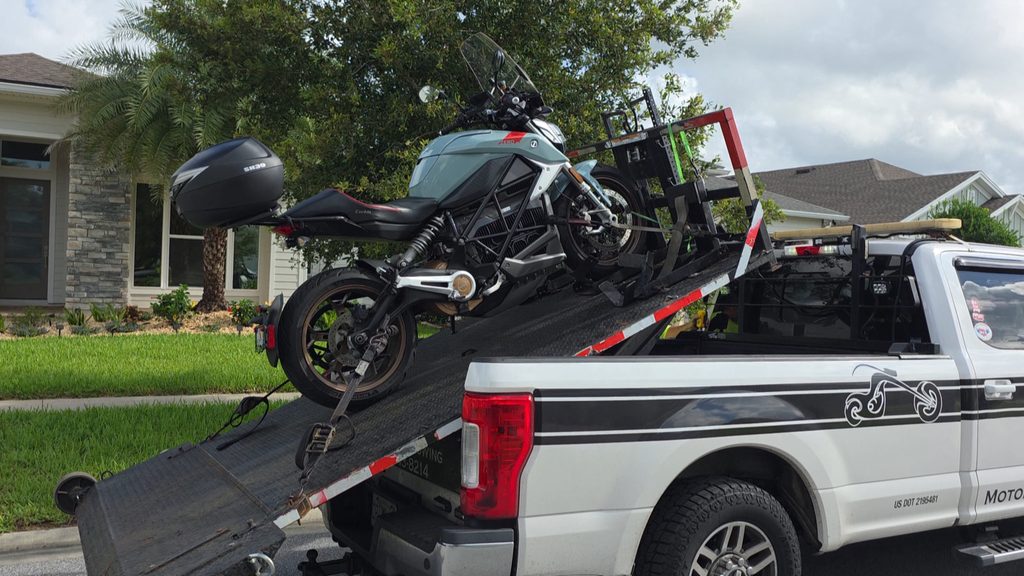
I can definitely recommend Extreme Powersports. They were very helpful and professional throughout the process and returned my Zero freshly washed. The reason for the BMU failure is unknown. It was only two years old, since it had already been replaced when Zero did a warranty battery pack swap about two years ago. To see the details on that and watch the previous SR/F reviews I’ve done, see the videos in the bottom half of this post.
The good news is my Zero has been performing flawlessly since it was returned. It crossed over the 30,000-mile mark about a month ago. Thankfully, despite sitting for a few months at its previously indicated 54% state of charge when the BMU failed, its range and battery health appear to be excellent.
While in Tampa, I also had the dealer do a brake fluid change. I had also replaced the 12-volt accessory battery while I was trying to troubleshoot what had gone wrong before Zero narrowed it down to the BMU. Since that 12v battery was seven years old, I figured ruling it out as a possible cause of trouble was worth it either way.
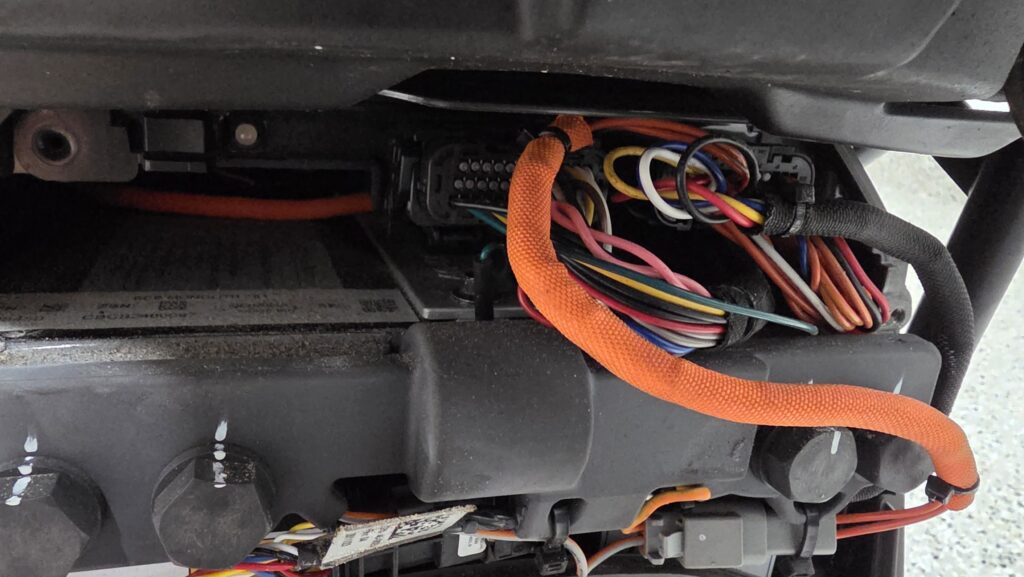
One thing that apparently stopped working right at the seven-year mark is the bike’s cellular connection. I’m guessing—although I don’t know—that my bike’s included cell service for remotely checking the bike must have finally expired. The bike’s Bluetooth app connection, for firmware updates and such, still works fine.
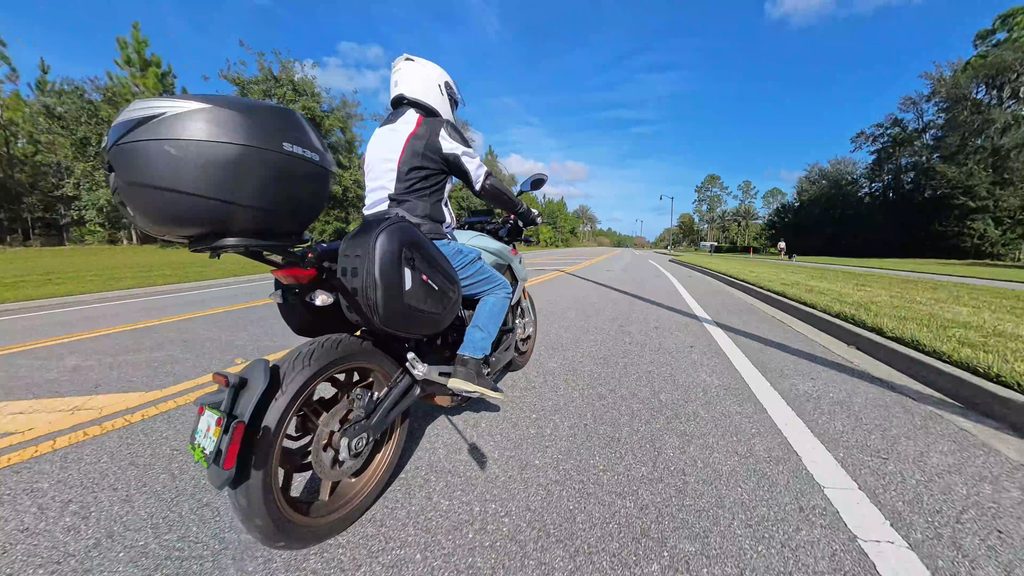
I bought my Zero SR/F here in Jacksonville, FL, in December of 2019. Hard to believe I’ve already owned the motorcycle for just about seven years. It was manufactured back in September of 2019 in California.
SR/F Vs. Kawasaki Vulcan 900 Classic LT
In my 30-plus years of motorcycling, this has been my favorite bike. Other bikes I’ve owned: three different Kawasakis—all of them variations of the Vulcan. My last Vulcan was a 900 Classic LT. I also own a Yamaha Tracer 9 GT+, and previously have owned a Zero SR, Suzuki Intruder, Honda Rebel, and a Suzuki Burgman.
Looking Ahead to 2027: DC Fast Charging and New Zero Models
Talking about Zero as a company itself, I’m pretty excited about the way things are going. So much of the industry has been struggling when it comes to electric motorcycles. Energica, the Italian brand, recently emerged from bankruptcy and is still trying to regain its footing here in the United States. LiveWire is also struggling, with Harley-Davidson announcing it will no longer fund LiveWire losses, meaning Harley’s electric brand is in jeopardy.
The flip side to all that bad news is Zero seems to be firing on all cylinders (to use a gas analogy. What I mean by that is 2027 is – in my opinion – what could be Zero’s big breakout year. We’ve previously talked about Zero adding DC fast charging to the SR/F and the other S-line and DSR/X models. Perhaps most encouraging is that Zero is setting itself up for success in the low end of the market, which is likely where the real sales growth will be.
The XE is becoming street-legal here in the United States for 2027, and an all-new Zero is debuting for 2027. Project Ventura is a supermoto-inspired street bike concept that Zero expects to put into production in 2027 for a summer release.
Previous Zero SR/F Reviews
With both of those bikes coming in under $10,000, Zero is going after what I consider to be the heart of the market and setting itself up for the future. Because let’s face it: most people can’t afford a $20,000 or higher motorcycle. If you’re going to get young riders for the future, it’s critical that you break into that $5,000 to $10,000 category. And Zero is finally doing that in a truly meaningful way. I think that may well be what saves the day for Zero.
The fact that I’ve got seven years and 30,000-plus miles on my SR/F certainly proves the viability of an electric motorcycle. If you were to go on Cycle Trader here in the United States and look at used bikes, many of them have less than 20,000 miles on their odometers.
In my opinion, in terms of usability, Zero is about to overcome one of the final obstacles in terms of EV ownership, and that’s DC fast charging. That really, to me, changes the game. By opening up DC charging, the old range-anxiety argument is pretty much put to rest given how robust the DC charging infrastructure has become—of course, in addition to the existing AC charging infrastructure.
And if you’re not doing interstate travel, the bigger Zeros really can do 140 miles in the real world. That’s not a pipe dream. If you’re doing basically between 45 and 55 miles per hour—140 miles is obtainable on these bikes. And even on the interstate, you can go 100 miles at a stretch.

While some may say that’s not enough, some gas motorcycles aren’t doing much more than that. For example, a buddy of mine that I ride with—he’s got an Indian Scout. When we’re out riding, he’s usually asking to stop for gas at about the same time I’m looking to charge. Now, obviously, there are gasoline motorcycles that can do hundreds of miles at a stretch, but even there, that’s not going to be an advantage they hold, I don’t think, for much longer as solid-state batteries get closer to production.
In fact, I wonder if we might see an announcement from Zero when it debuts DC fast charging about going to the latest and greatest Farasis semi-solid-state pack. We’ll have to wait and see on that—Zero has not made any kind of announcement, so that’s just speculation on my part.
Anyway, the bottom line: I’m looking forward to many more miles on my Zero, and I’m really looking forward to seeing how the DC fast-charge situation plays out, especially if Zero were to introduce any other improvements at the same time. Personally, the one I’m most interested in is the SR/S. To me, that is the perfect sport-touring motorcycle once DC fast charging is added, especially with the available SHAD hard cases.
Post your comments or questions here.
So what do you guys think? Is Zero on the right track? Are electric motorcycles about to turn the corner, or is what’s happening to LiveWire and Energica in Zero’s future? Do you think Zero has got it beat? I mean, they are in 40-plus countries; they seem to be doing pretty well in that regard. Of course, us U.S. owners have also watched Zero retrench, losing some U.S. dealers, but at the same time, with new lower cost models coming out, I think there’s a good chance we might see a dealer expansion. I’ve got to believe for powersports dealers, when they see those sub-$10,000 bikes hitting, they may be more likely to pick up the line again.
As I start my eighth year with the SR/F, EV motorcycling still feels like the future.