


This week on EV Rider, I’m pulling out on my very first long-distance road trip, going from Jacksonville, FL, up to Delaware on I-95. I hope you’ll come along for the ride by watching the video at the top of this post. But if you don’t have time, here’s a transcript:
And here we can see South of the Border as we get ready to leave South Carolina and enter North Carolina.
I’m doing my very first Supercharge here in Virginia. So far, charging has been flawless since I left Delaware—no hitches whatsoever. Actually, this is my second Tesla charge because I also used a Tesla Destination Charger when I stopped last night at the hotel I stayed at.
After more than 1,800 miles on mostly interstates, I arrived home with an average of three miles per kilowatt-hour. I started my trip with an estimated 277 miles of range. The short story? The EV Scat Pack turned out to be more economical than I had anticipated. It came through with flying colors.
More Dodge Charger EV Coverage (video transcript continues below)
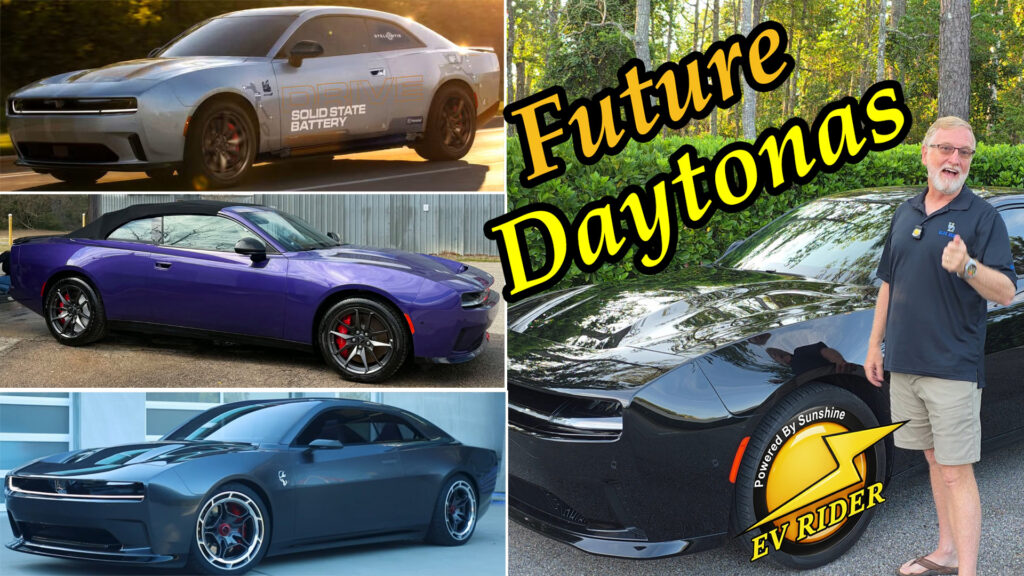
What’s Ahead For Charger Daytona EV Development
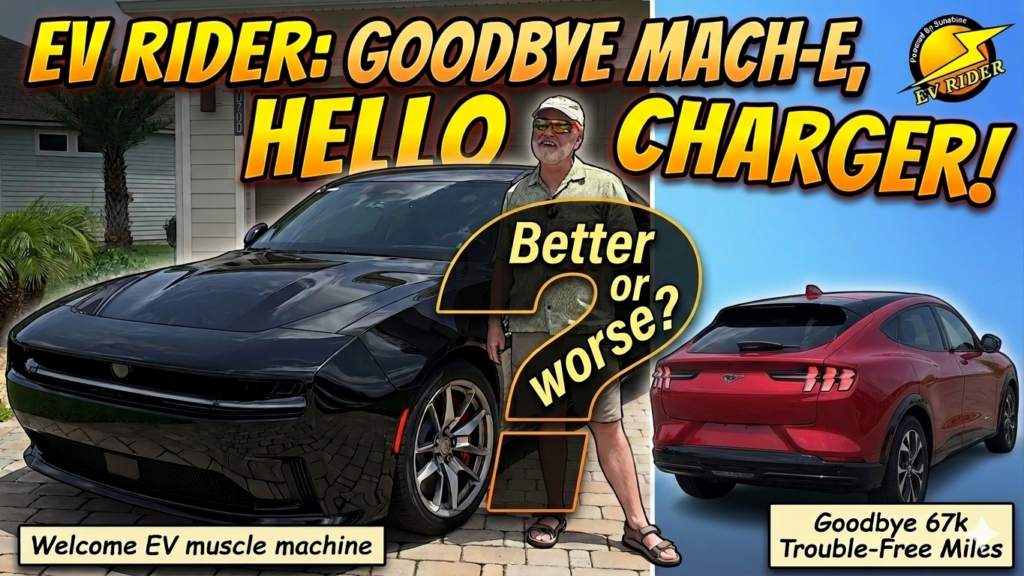
EV Swap: Mustang Mach-E To Charger Daytona
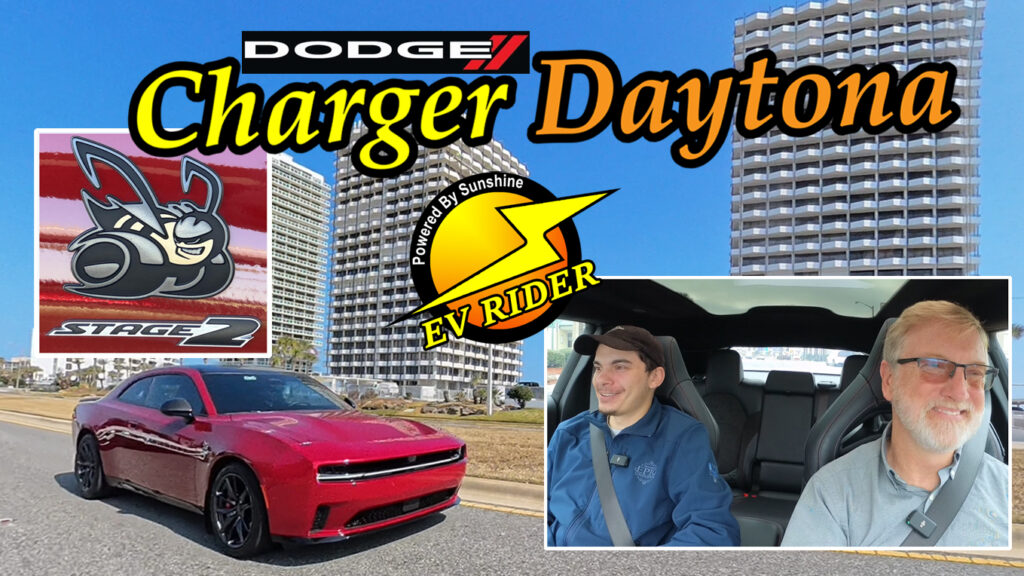
Long-Term Owner Review: Charger Daytona Scat Pack

Drop Top Customs Developing Dodge Charger EV Convertible
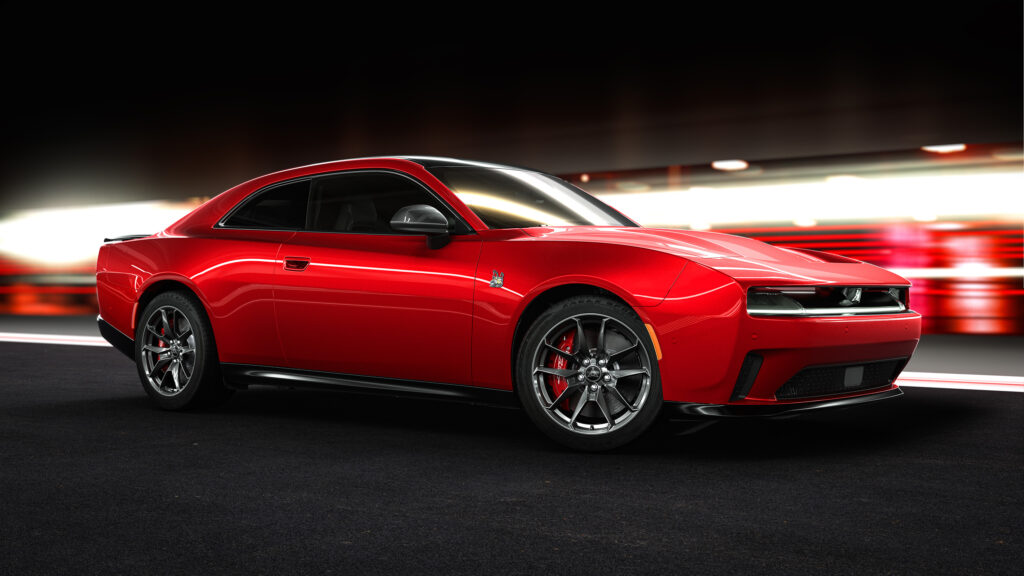
Production Dodge Charger EV Unveiled With Full Specs

2024 Dodge Charger Daytona EV Convertible Announced
Of course, anyone who has driven up and down the I-95 corridor knows speeds are all over the place. It may be just 10 miles per hour in some congested urban areas, while in some rural areas, the speed of traffic might be moving at 80 miles per hour.
I used the Charger’s Eco Mode for interstate travel and Auto Mode when on secondary roads. Eco Mode relaxes the throttle and keeps the front motor shut down in most cases, while Auto Mode activates the regen paddles and is quicker to fire up the front motor when accelerating. The regen paddles, which I used whenever I wasn’t using driving assist, likely also helped with raising my trip average.
So, based on my trip in high summer, it looks like the Charger Scat Pack EV is good for roughly 245 miles of interstate travel in a mix of rural and urban conditions.
Charging speed also worked as expected, with my Charger seeing a brief peak speed of 201 kilowatts during a stop. In most cases, it ramped up to the expected 178 to 180 kilowatts and settled into the 170s for the first 10 minutes or so before gradually ramping down. At one point, I did see speeds drop to 48 kilowatts before ramping back up again into the 120s—likely to cool the battery, since I had been driving hundreds of miles in 95-degree weather.
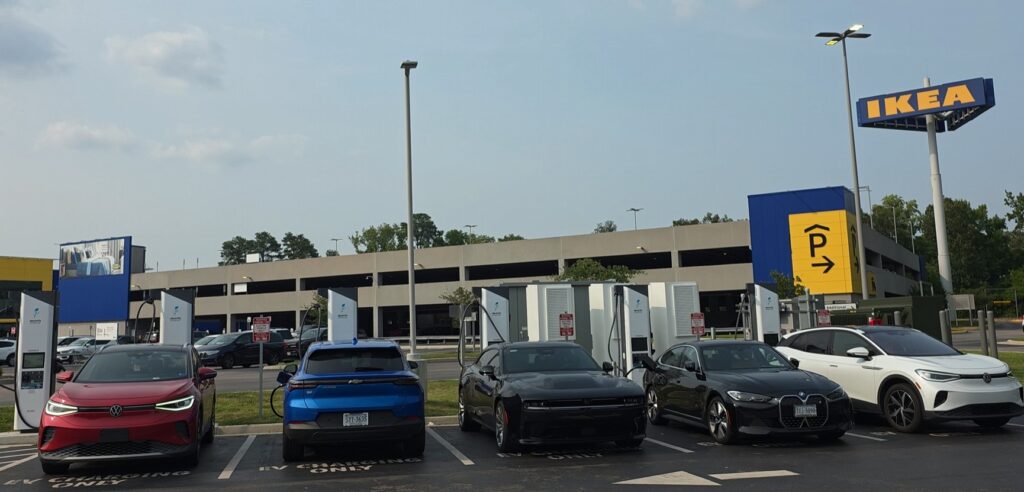
I used a variety of charging companies during my trip, including Electrify America, ChargePoint, Ionna, Tesla, and Rivian. I had good experiences with three exceptions: a Blink charger at a Royal Farms in Rehoboth Beach, Delaware, malfunctioned, forcing me to go a few extra blocks to a nearby Wawa Tesla Supercharger. At my Walterboro, South Carolina stop, the Electrify America was full.
So, rather than wait, I went about 50 miles down the road for what would be the final charge of the trip. For some reason, during that stop, Rivian kicked me off at 40% charge and again at 70% charge. Given that didn’t happen at the other stations, Gemini AI’s best guess is that the Rivian charger hit its thermal limit and shut down.
Since I was too busy enjoying friends, I didn’t shoot much video on this trip, but I do want to give my friends, Bill and Kim, a shout-out for hosting me.
So, the bottom line is: the Charger is a very comfortable grand tourer, with its high-back, heated, and ventilated bucket seats, which have just about every conceivable adjustment you can think of. That, combined with adaptive cruise control and lane keep assist, made for a relaxed ride, especially in traffic slowdowns.
For all you Charger Daytona owners out there, please be sure to subscribe to EV Rider because I’ll be continuing to bring you my personal experiences with Dodge’s first production EV. And if you enjoyed this episode, please be sure to give it a like and maybe even hit that notification bell so you never miss an episode of EV Rider.
Thanks so much for watching, and we’ll see you again soon!