


Fifty years ago, Cadillac entered the record books with the longest production car ever – the 252.2-inch Fleetwood 75.
This was a 9-passenger sedan powered by an 8.2-liter V-8 atop a 130.5-inch wheelbase – factory-built, not a limousine done by a coach builder. Cadillac made 7,500 of them during its 1974 – 1976 production run – quite a car, according to this cool video by HotCars.
Alas, other than Cadillac’s current CT4 and CT5, and the $300,000-plus Celestiq EV hyper-lux model, there are no long, lethally-luxurious Cadillac sedans around anymore. The last Fleetwood was made in 1996. But you can experience a modern, (almost as) long and very luxurious 7-passenger Cadillac with lots of power, prestige (look at red carpet events) and more tech than any Fleetwood 75 ever experienced with the latest Escalade.
And in this case, it’s the ultimate gas-powered luxury version of the Cadillac SUV – the Escalade Platinum Sport.
We also have had the luxury – pun intended – of testing a 2025 Escalade ESV Sport Platinum in mid-2025, right after its mid-cycle refresh. EV Rider also experienced it EV stablemate, the Escalade IQ. And late last year, we drove the most top-tier, all-wheel-drive long-wheelbase gas version – the 227-inch-long Escalade ESV Platinum Sport.
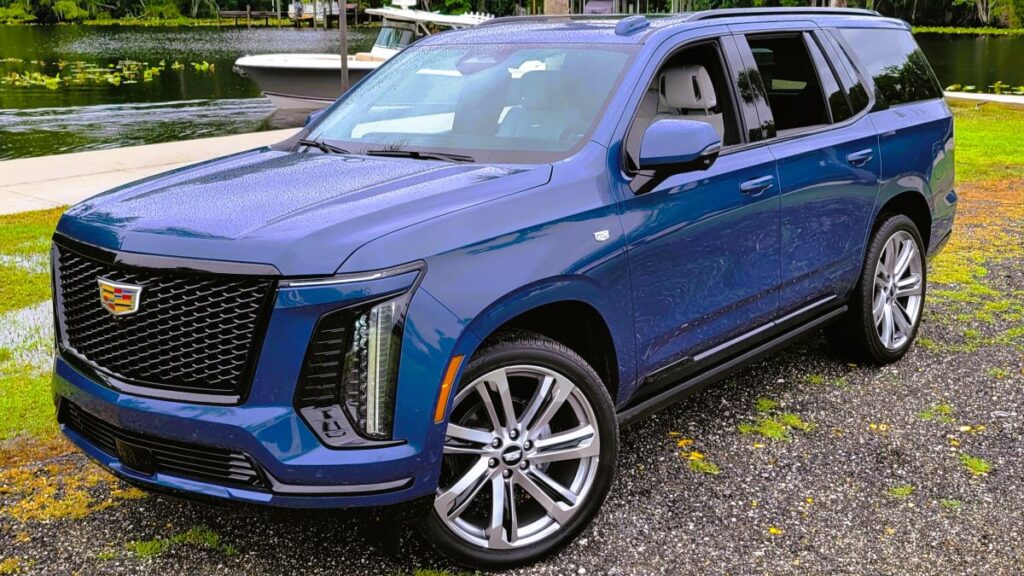
Now we have the 211.9-inch-long Escalade Platinum Sport. It gets a 6.2-liter V-8 under its bonnet, and the highest-tech interior this side of Cadillac’s CT5 V Blackwing. This fifth-generation luxury wagon has that mid-season refresh’s high-tech interior, plus some. And like the Chevrolet Suburban and GMC Yukon XL, it has 4-wheel-drive.
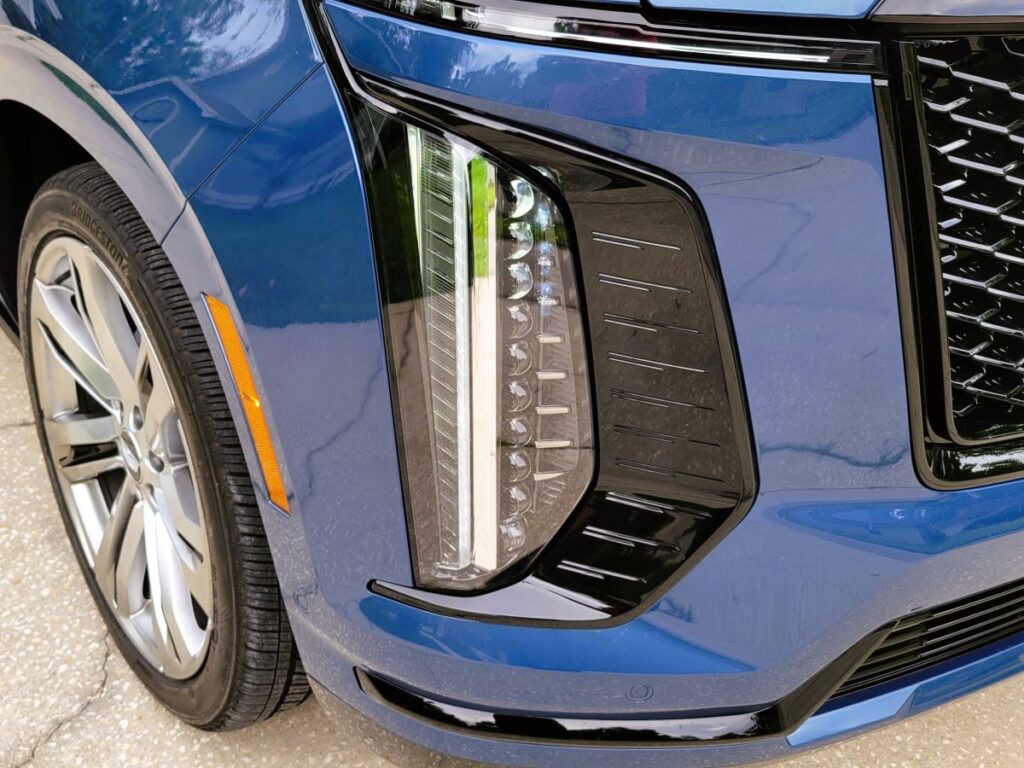
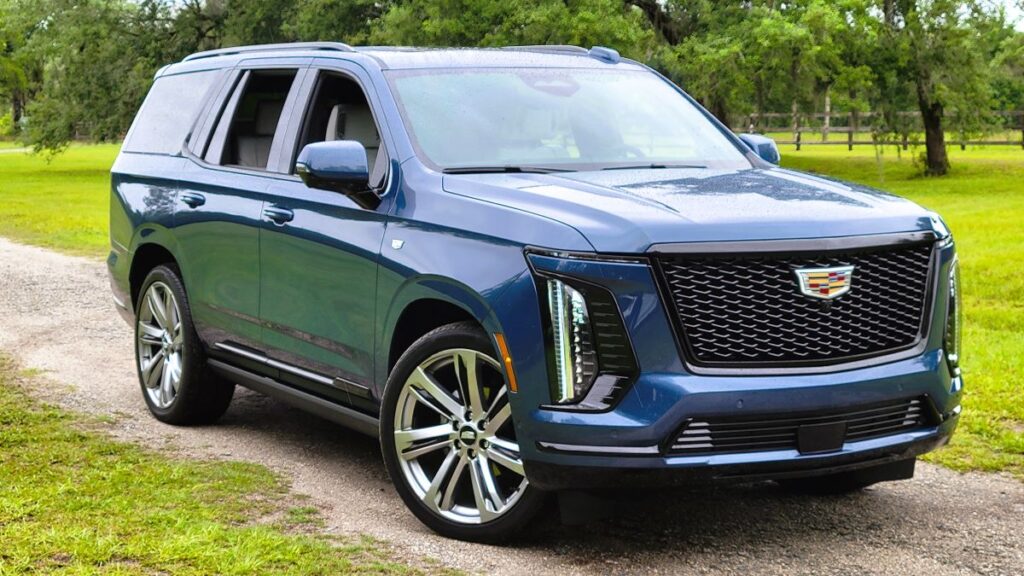
Done in Deep Sea Metallic, our Escalade starts with familiar light blade LED DRLs flanking a big, Sport Platinum-specific black shield-shaped grille, the central Cadillac badge glowing at night. There are stacks of vertical multi-element LED headlights, living in intake-shaped inserts. There’s a low center intake on the angular blunt nose, thin black blade accents wrapping into the sides over a lower air dam.
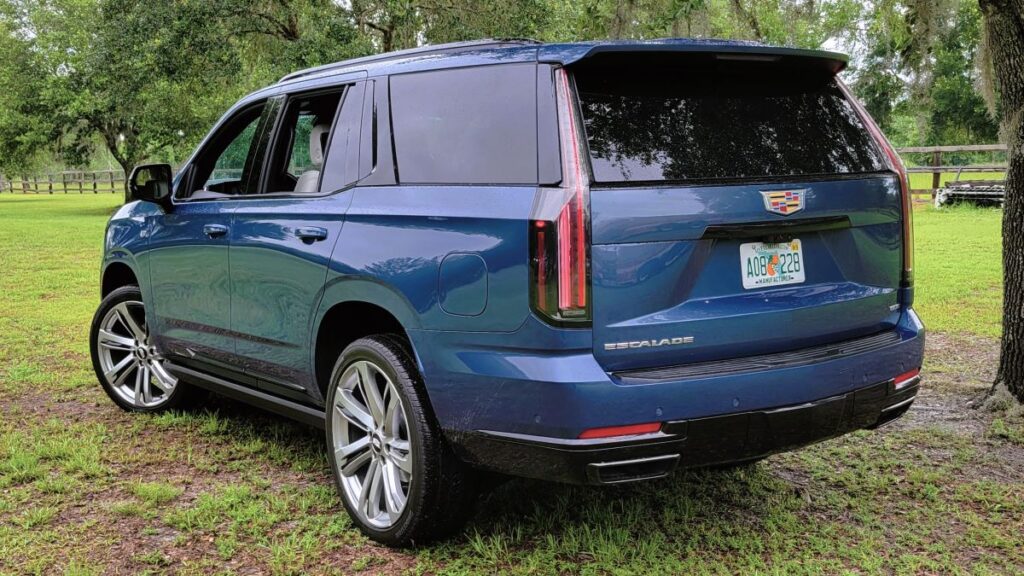
Unlike bespoke Cadillacs of old, there’s some shared architecture – fenders and doors are basically like GM’s cousins, the GMC Yukon and Chevrolet Suburban, roof included. But inside the flat-edged fender flares are 24-inch Bridgestone Alenza rubber on 15-spoke alloy wheels. Black accents lower sill slashes, tucked-in power running boards and side window pillars.
The roofline is formally squarish, with black side trim and slim roof rack. In back, LED light blades flow into D-pillars, framing a step bumper over twin rectangular exhaust tips in gloss black. There’s steel fenders, but lighter aluminum hood and doors.
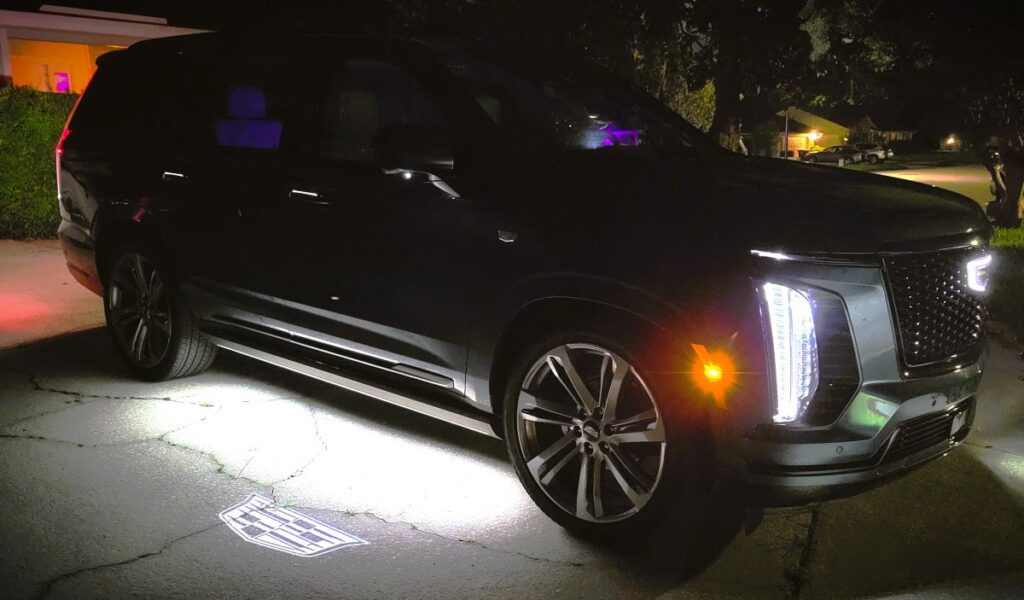
It’s an impressive looking SUV with serious glamour at night –light blades glow as you approach, Cadillac shields projected on the ground. But as edgy and chiseled as it looks, it might not be as elegant looking – in its boxy way – as the longer Escalade ESV.
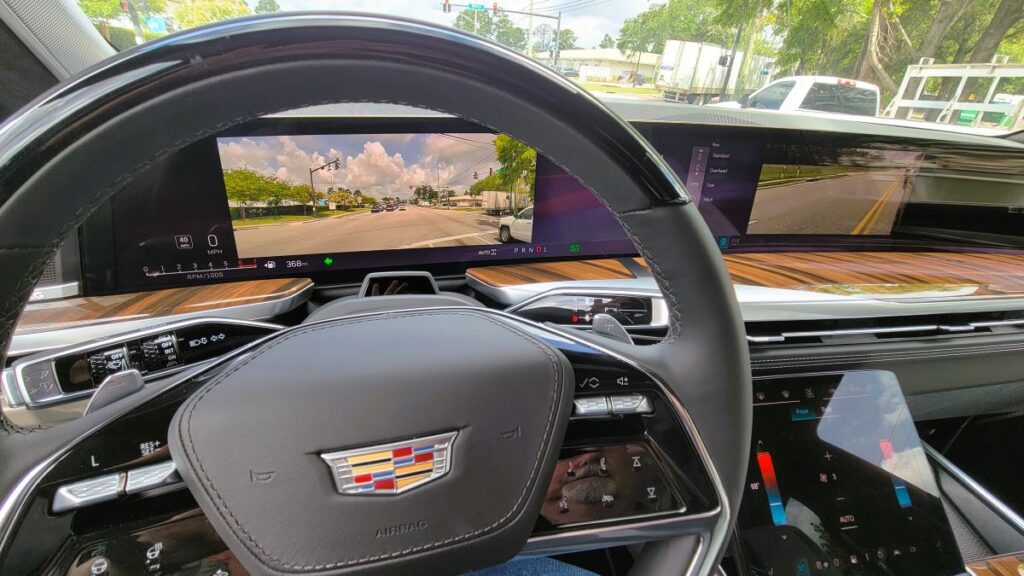
I told friends what I was piloting, and one said, “Is that the one with the wide-screen dashboard?”
Why yes, it is – 55 inches wide.
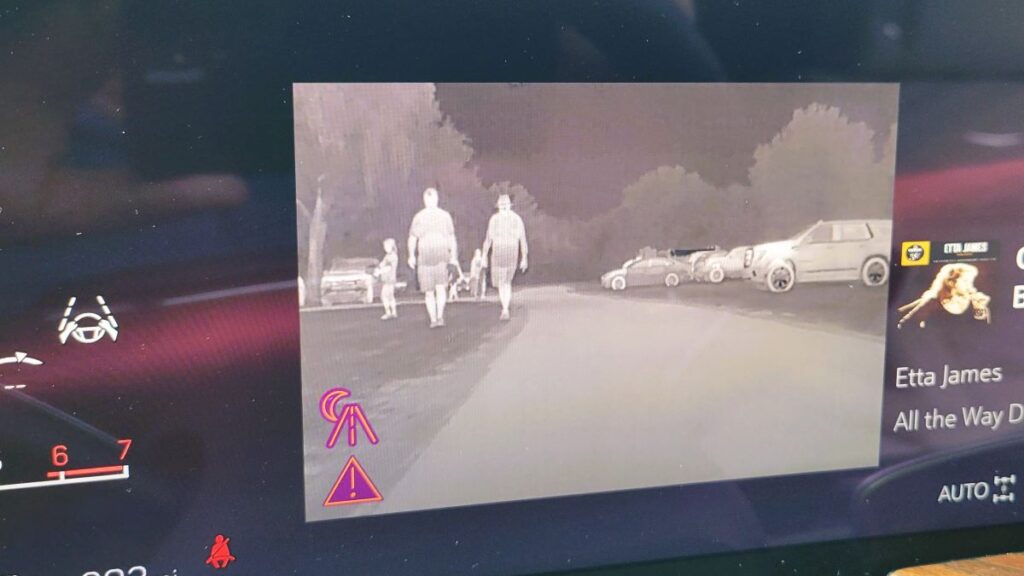
There’s a configurable high-res gauge cluster visible through a power-adjustable steering wheel that’s got haptic touch buttons to handle that screen. It can range from map to safety systems, or widescreen nose camera, Night Vision image, even basic drive info.
That flows into a center touchscreen section with driver information, then infotainment – navigation, audio, blind spot cameras when a turn signal is tapped, backup/overhead view for parking, etc. And there’s only smooth black as it flows into a 20-inch front-passenger touchscreen that allows streaming and internet browsing, equipped with privacy filters so the driver can’t see it.
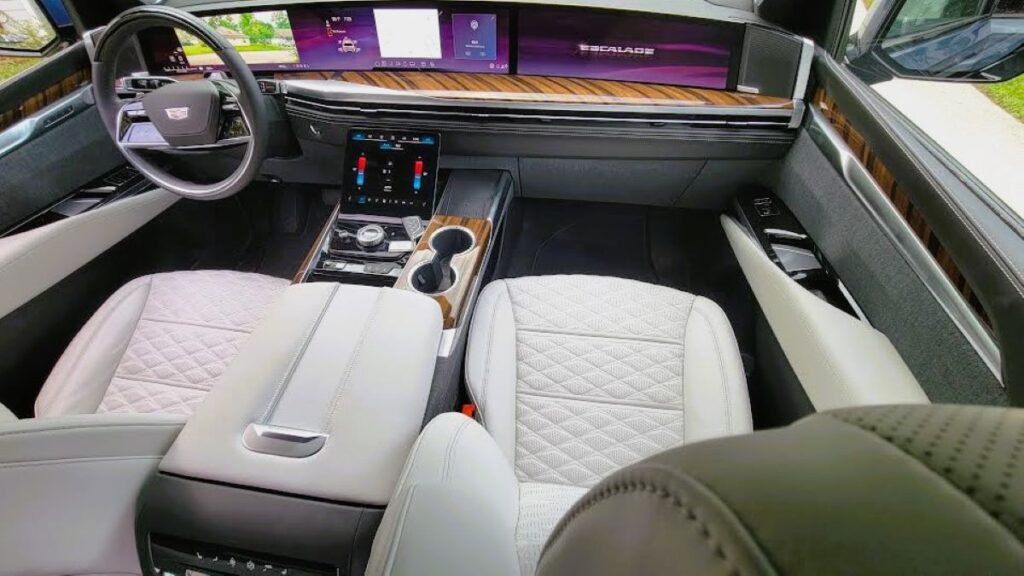
For comparison, the Lincoln Navigator’s widescreen measures 40 inches from dashtop speaker to speaker; the Celestiq’s is 55 inches wide; and the Mercedes-Benz EQS SUV/Sedan is 6 inches in width.
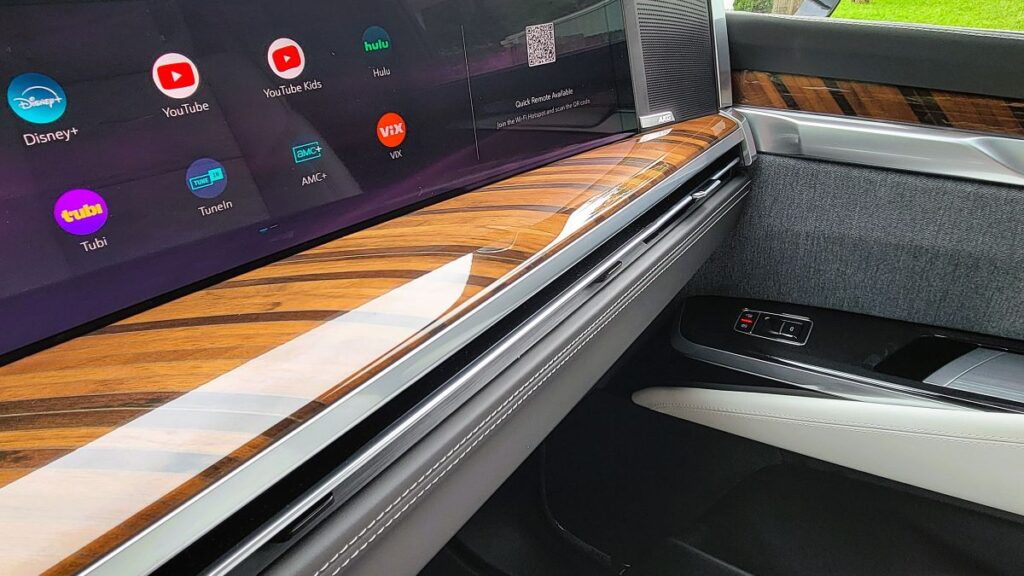
We may be in an SUV with Suburban infrastructure, but you’d be hard-pressed to see any Chevy here. Stitched leather and perforated alloy AKG speaker grilles accent the sweeping design, a wide polished slab of wood at the base, accented with buff silver.
Under the sweep of air vents, more stitched black leather. Door panels get wood and alloy trim, plus a unique gray tweed insert over stitched white leather – the tweed also covers the lower dash, disguising the basic plastic seen in Suburbans.
The plush white semi-aniline leather seats get quilted inserts with V-shaped alloy accents in upper seatbacks, plus cooling, heat and massage, and dual memory presets for the driver. All four doors are power operated – brush a finger on the touchscreen at the head of the center console, and they hands-free open and shut – sensors look out for cars nearby and stop them as needed.
There are no physical controls on the sweeping upper dashboard, only touchscreen controls, although some things like headlights or massage are a menu or two down.
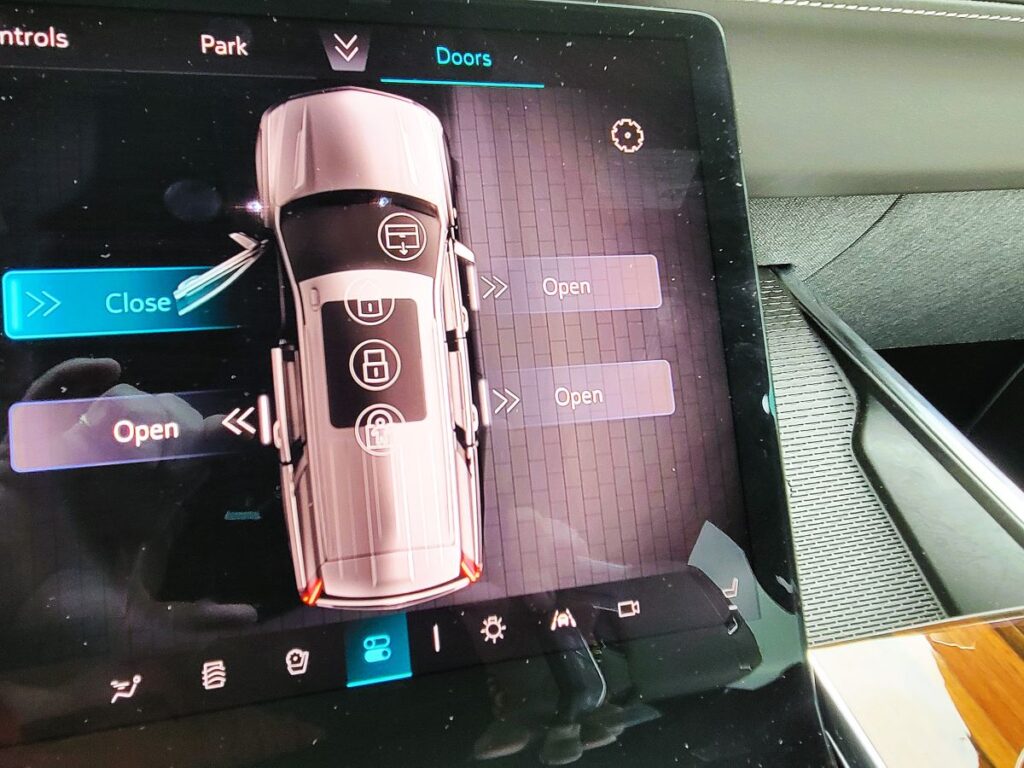
More tweed accents the sides of the center console, where there’s a volume knob for a superb 42-speaker AKG Studio Reference audio system with front head restraint speakers. There’s a knurled steel main menu twist/tap control and basic buttons for auto-engine on/off and auto-hold braking. Then more stitched leather with a buff silver “ESCALADE” crest accents the center armrest which hides deep storage and USB ports – the phone inductive charger is next to the lower screen, which also handles climate control along with power door
That center console touchscreen also handles climate control and seat massage, as well as the power door open/close function, auto-high beam, auto-park assist, universal remotes, even the power side steps. But again, some functions require two or more dives into menus to do things, like adjusting cooled seats, or opening the glovebox.
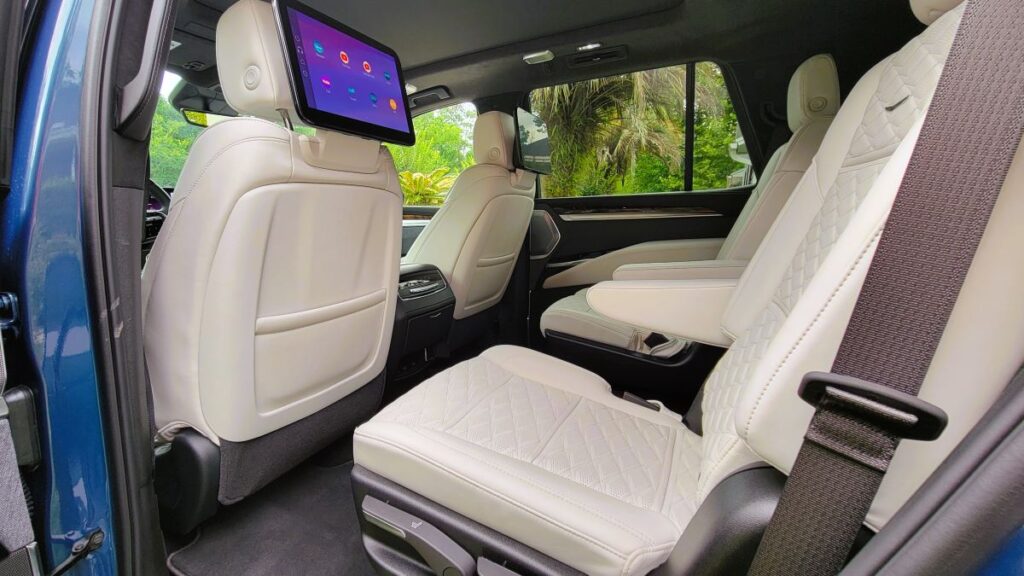
Comfy captain’s chairs with center armrests occupy the second row of this luxury jet on wheels, facing dual 12.6-inch touchscreens with access to streaming content, games or the web, same as the front passenger screen. The Escalade has Wireless Apple CarPlay and Android Auto, plus Wi-Fi Hotspot , but no HD Radio. Those center row seats have heat, cooling and massage.
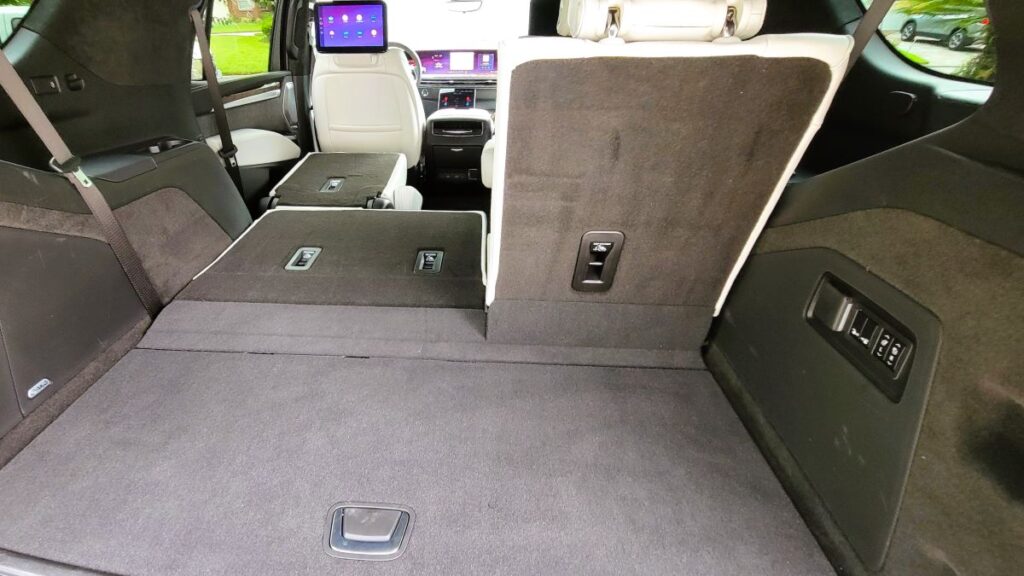
There’s plenty of room between them to get to a decent-size third-row bench seat with room for two, maybe three adults in a pinch. The center seats do adjust to add rear leg room. Aft of the third row is 25.5-cubic-feet of space; or use buttons back there to drop the 60/40 split third row seatbacks for 72.9 cubic feet of space; or fold second row seatbacks to get a flat 120.5 cubic feet of space. Yes, that’s less than the longer Escalade ESV’s 41.5/94.1/142.2 cubic feet space respectively – you lose an inch or so of legroom in back too. But our Escalade has a shorter (120.9- vs. 134.1-inch) wheelbase, thus is 15 inches tidier to park.
Nice news – the Escalade’s rear window pops open for quick loading of small stuff, or the whole tailgate powers up if needed.
This shorter Escalade is 6,014 lbs. of blue SUV; 174 pounds less than the ESV we tested. So with 420-hp and a healthy 460 lb-ft of torque funneled to all or rear wheels only via a 10-speed automatic, it’s quicker than its longer brother.
With drive mode set for Tour (there’s also halfway hidden buttons for Sport, Tow/Haul, Off-Road and My Mode), in rear-wheel-drive, we saw 60 mph in 6 seconds. Set to Sport, the Escalade made a mellow bellow from its exhaust en route to 60 in a quick 5.5 seconds upshifts are quick. It can handle 1,580 pounds of people and cargo, and tow 8,100 pounds of stuff. A Low Mode button on the steering wheel allows for manual paddle shifting, and it did it fine, holding gears unless you punched it hard, when it downshifted. It returned between 13 and 16 mpg, the latter on cruise-control highways.
To compare, the long ESV did 60 mph in 6.5 seconds in rear-wheel/Tour; and 5.2 seconds in Sport mode/auto AWD, netting about 16 mpg.
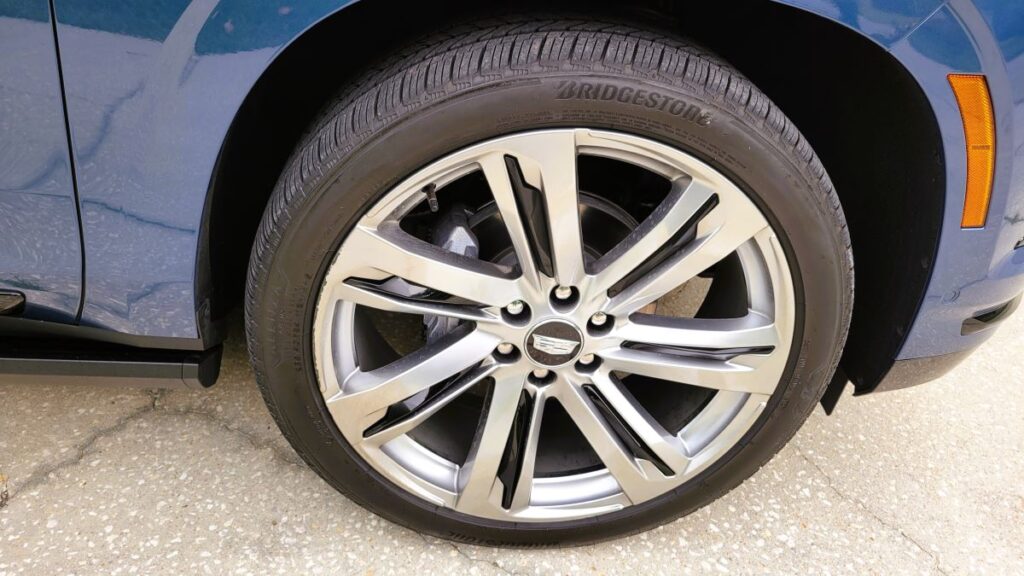
It has an independent suspension up front, multilink in back, plus coil-over shocks, stabilizer bars, adaptive suspension and magnetic ride control reading the road and altering shock absorber rates. The result is composed and quiet at speed, barring some tire noise. It’s smooth but just taut enough in Tour mode with quick bump control. Sport mode firmed up the steering, with nice feel, and bumps still had a comfortable edge, even with those 24-inch wheels. Only on some badly pocked pavement was there a bit of suspension jitter once – this was a quiet and composed 3,700-mile-old SUV.
More Cadillac Coverage (story continues below)
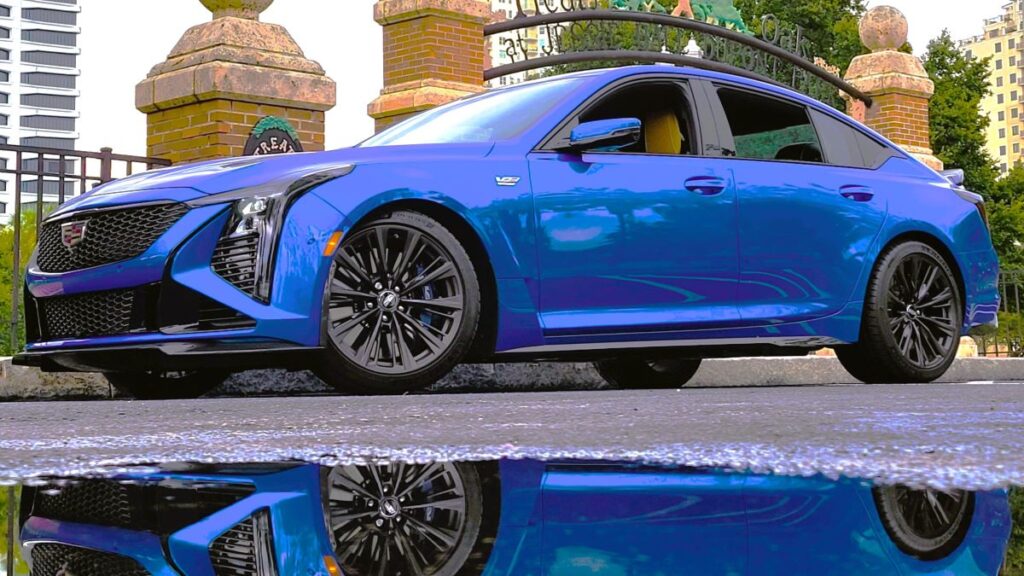
2026 CT5-V Blackwing: Cadillac’s 4-Door ‘Corvette’
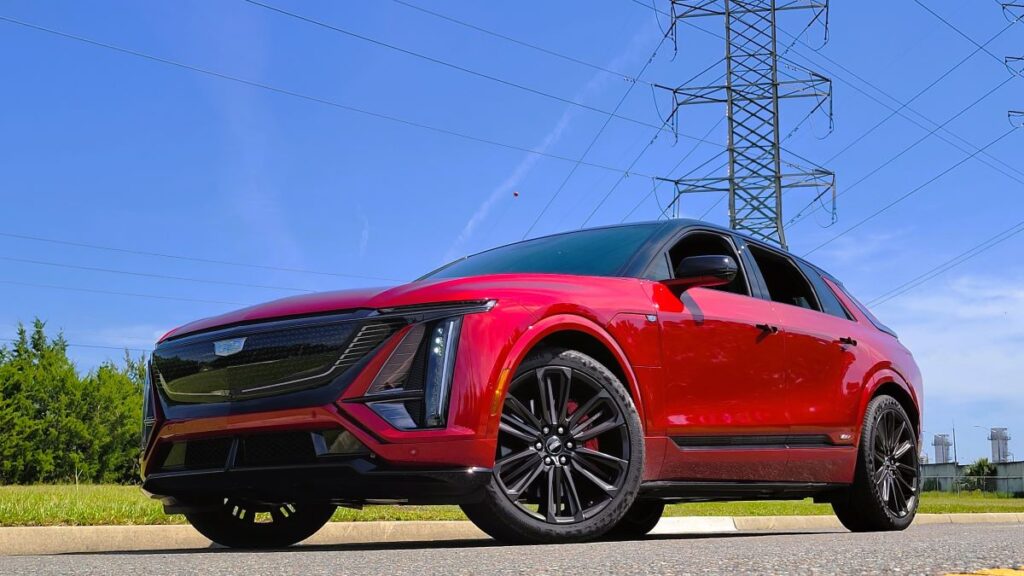
2026 Cadillac Lyriq-V Rips With 615 HP Of Smoothness
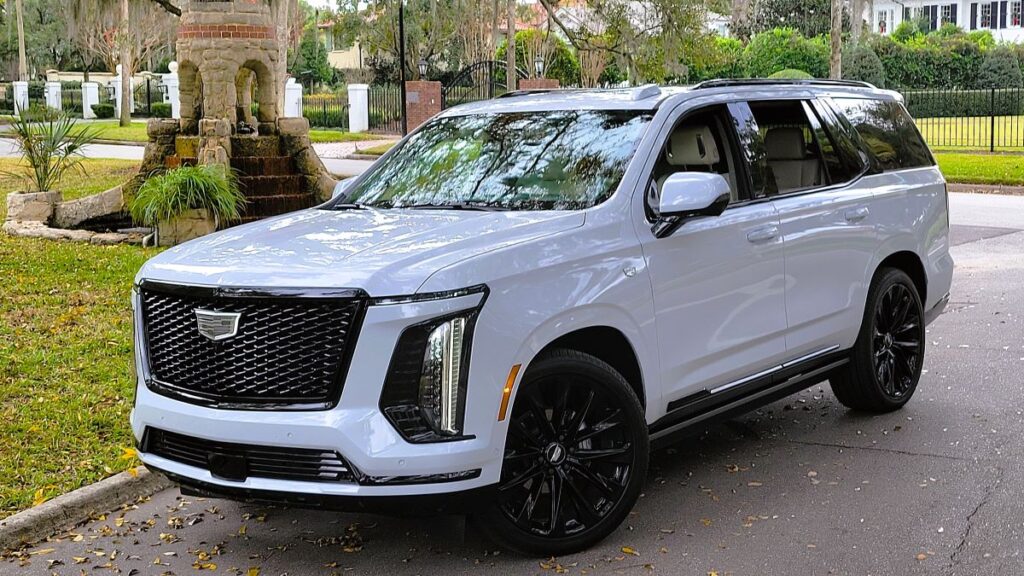
2026 Escalade ESV Platinum Sport Review
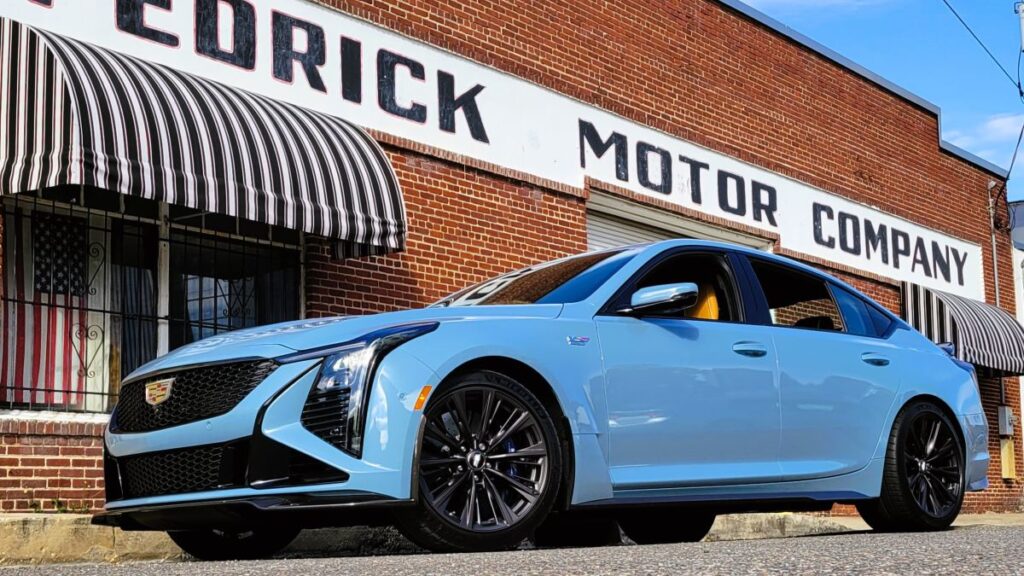
Cadillac With Corvette Heart: 2025 CT5 V Blackwing
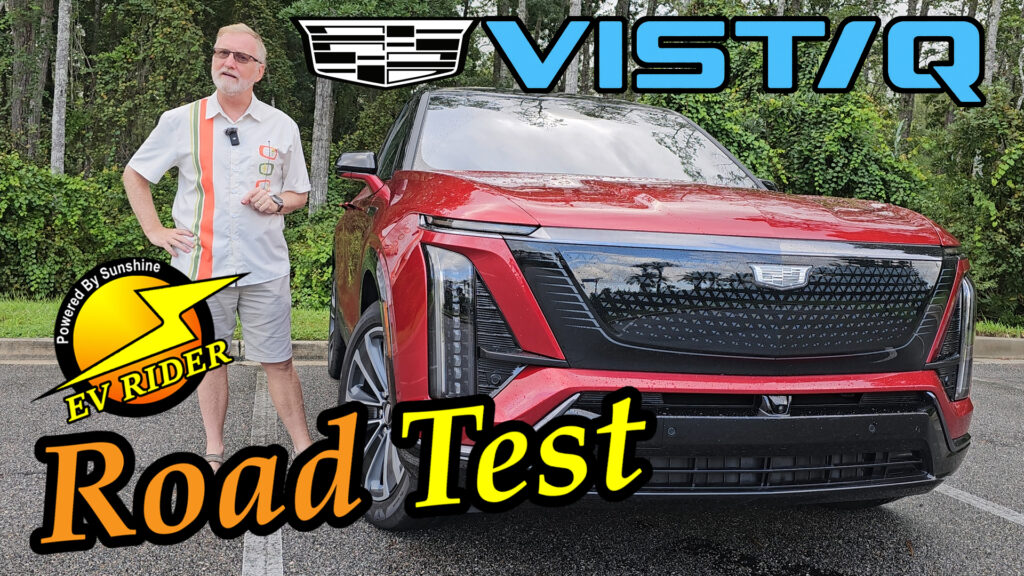
2026 Cadillac Vistiq: Stylish 3-Row Family Hauler
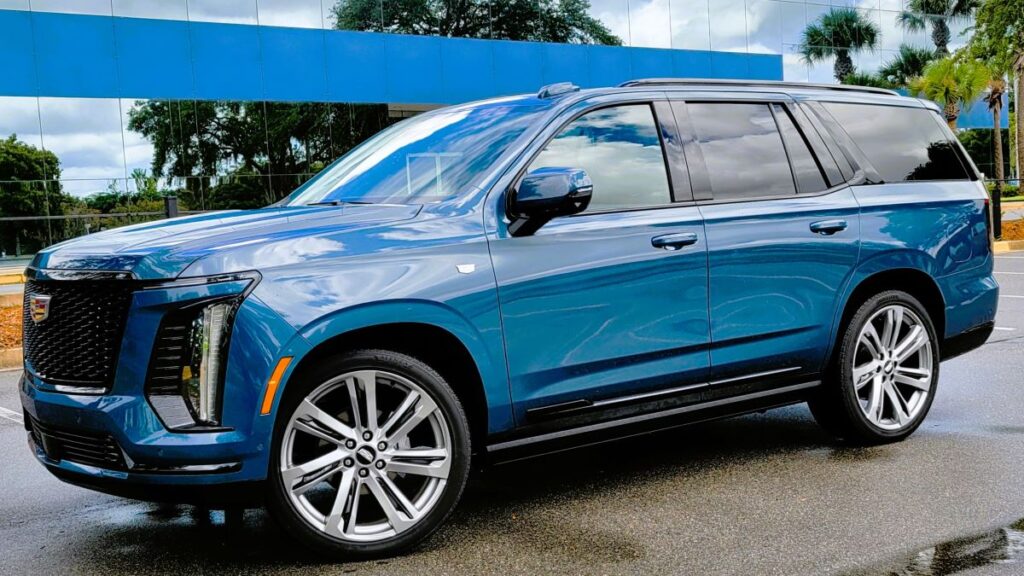
2025 Cadillac Escalade Combines Pace With Grace
Automatic load-leveling saw the Escalade drop down to help load people or stuff, or go higher if you take it off road – we did not. The brake bias controls for a trailer are on a lower-left dash panel, which is about the only interior piece that still looked basic Suburban plastic.
This big rig was well behaved in daily driving, handling corners quite well for its size and height, even in rear-wheel-drive, where we could feel a hint of power oversteer if we pushed, caught quick by stability control. Slipped into auto AWD, its electronic limited-slip differential directed torque to the wheel with the most traction for a neutral feel and no understeer in corners. Push harder in steady-state cornering – and we got almost no understeer again, which was very reassuring. There was solid traction in the rain in AWD-auto. The brake pedal has decent high-up bite with minimum nosedive and no brake fade after hard use.
Hands-free Super Cruise maintained speed and distance in highway traffic, stopping when others do. There’s full lane-keep, but it did waver in lane sometimes. And the system did shut off sometimes, only to resume a few hundred feet later. The auto-lane change can be set to happen when you want, with the tap of the turn signal, and not when it “thinks” it should, like some others. It even worked on the state highways we tried.
Other driving aids include blind spot cameras that display in the center screen; seat-bottom buzzers to alert you to things closer than they look in the mirrors; and front/rear/side camera views at the tap of a button to see what’s around you. The rear-view mirror is a wide-screen display; the gauge display shows that night vision or wide-screen nose camera image.
A base rear-wheel-drive Cadillac Escalade starts at $93,995; our 4-wheel-drive 2026 Escalade Platinum Sport started at $123,400 with so much standard. The only options: $1,800 for the 24-inch wheels, and $725 for the Deep Sea Metallic paint. Our total was $128,820.
Bottom line: If you don’t need an SUV limo, this Escalade has spacious luxury, serious tech, some cool luxury touches, and still not much to remind you there’s a Suburban under there.
2026 Cadillac Escalade Platinum Sport Specifications
Vehicle type – 7-passenger four-wheel-drive luxury sports utility vehicle
Base price $123,400 ($128,820 as tested)
Engine type – OHV 16-valve aluminum V-8
Displacement – 6.2-liter
Horsepower (net) – 420 @ 5,600 rpm
Torque (lb-ft) – 460 @ 4,100 rpm
Transmission – 10-speed automatic
Wheelbase – 120.9 inches
Overall length – 211.9 inches
Overall width – 85 inches
Height – 76.3 inches
Front headroom – 44.5 inches
Front legroom – 38.2 inches
Second row headroom – 38.9 inches
Second row legroom – 41.7 inches
Third row headroom – 38.2 inches
Third row legroom – 34.9 inches
Cargo capacity – 25.5 cu. ft./72.9 w/3rd row folded/121 w/2nd and 3rd row folded
Towing capacity – up to 8,100 lbs.
Curb weight – 6,014 lbs.
Fuel capacity – 24 gallons
Mileage rating – 14-mpg city/18-mpg highway