


The average price of a gallon of gas as I write this now is $4.26 per gallon in my Florida county, and $5.90 in California.
That means a local 18-gallon fill-up on a 2026 Subaru Outback could cost about $76 for about 486 miles of travel based on an average 27 mpg.
By comparison, its new EV sibling – the Subaru Trailseeker – can travel about 260 miles on a charge. If you can charge at home, the fuel savings will add up pretty fast (depending on where you live).
Here in Jacksonville it costs $10.40 to charge the Trailseeker from 0-100%. That’s based on the current residential rate of 14 cents per kWh, once taxes and fees are included. Looking at the residential national average of about 17.4 kWh, it would cost $12.90 to fully charge the Trailseeker.
Join the discussion. Post your Trailseeker thoughts in the YouTube comments.
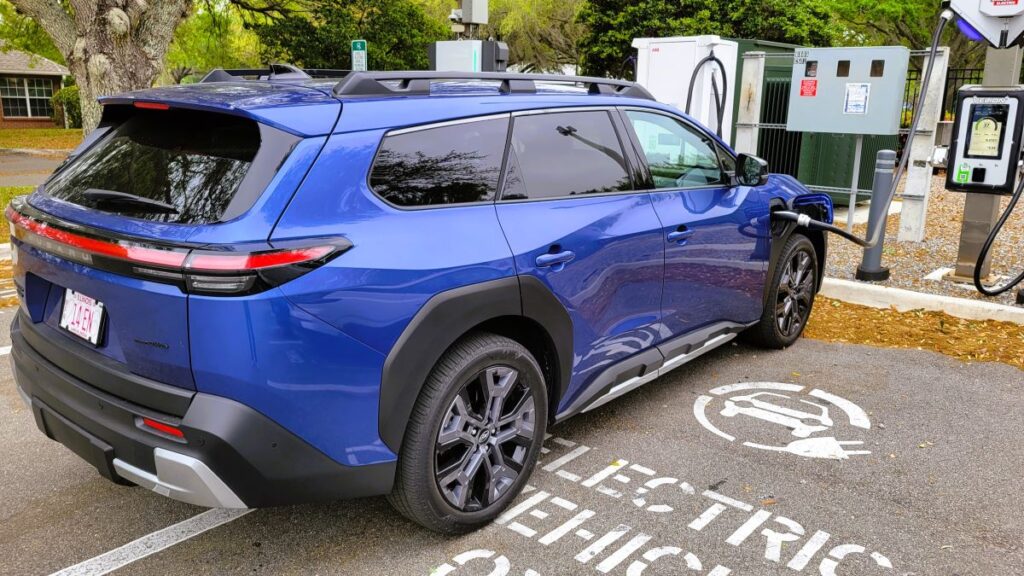
When DC charging, I got 115 miles of range, going from 36% to 81% in 25 minutes – for $17 at a commercial charger. In ideal conditions Subaru says the Trailseeker can charge from 10 to 80% in 28 minutes.
So as Subaru expands its range of EVs in 2026 (we just tested the compact Solterra crossover) there is an EV alternative that could fit the same bill as an Outback – the midsize Trailseeker.
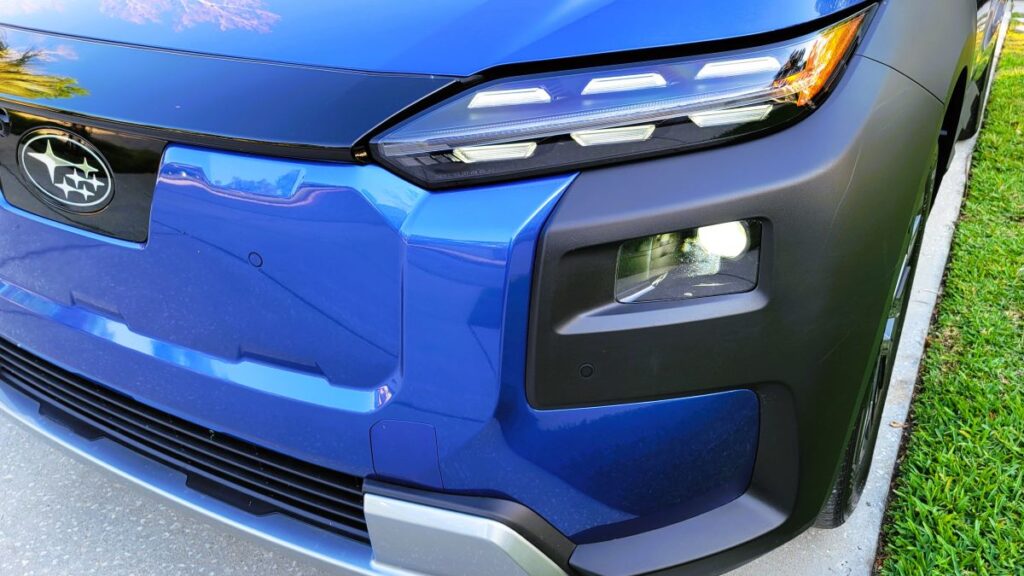
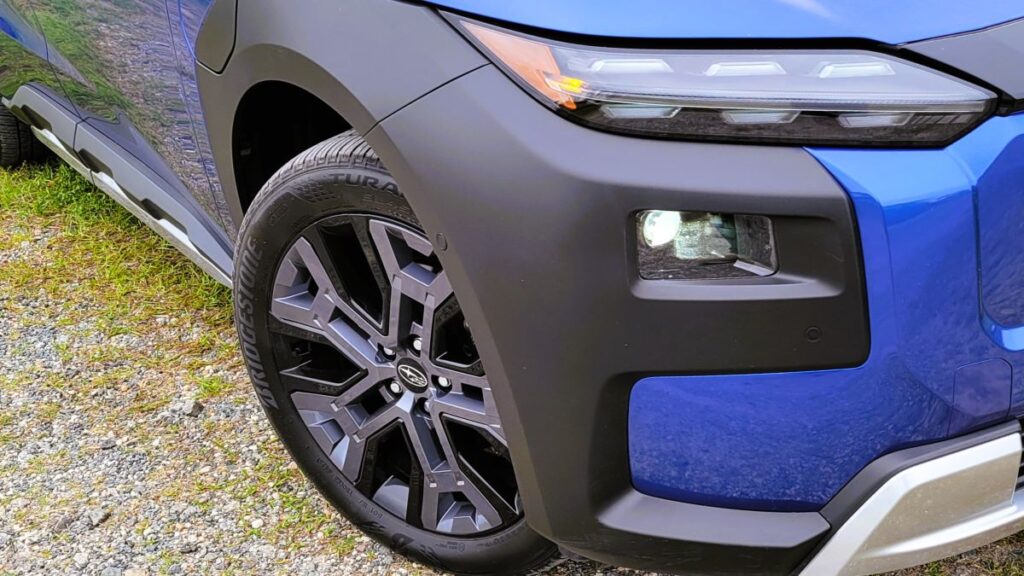
Subaru calls the Trailseeker “our most adventurous EV,” with 375-hp and 8.5 inches of ground clearance. This Indiana-built Subaru shows an aggressive face, starting with a flat nose with body-colored “U” accent, topped with a slim gloss black nose cap along with a big Subaru star logo, dead center. Three slim LED DRL units bisected by lit accent lines flare off each side of the grille. The lower center intake for battery and motor cooling is framed in silver, some of which flows under the nose as a skid plate.
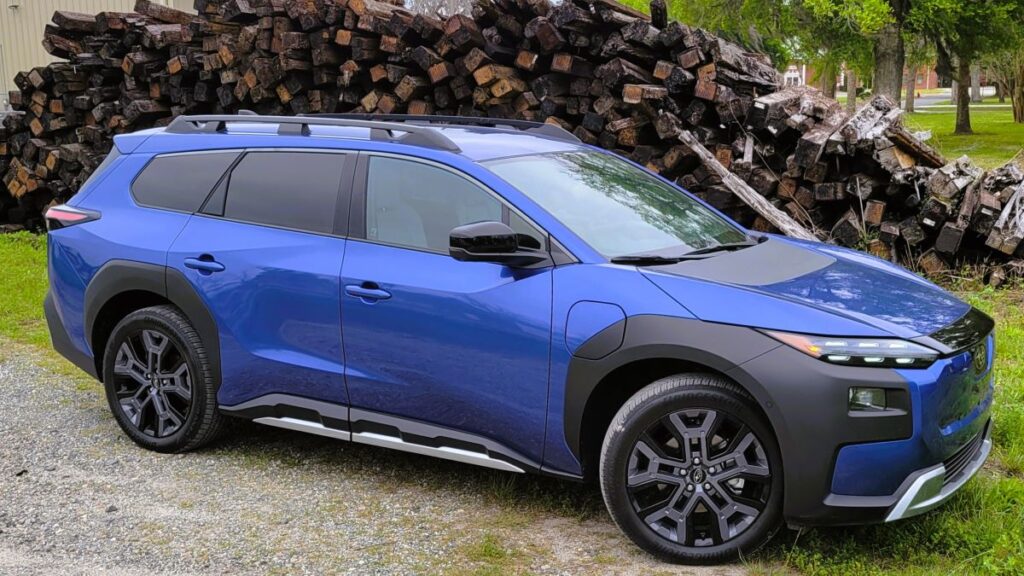
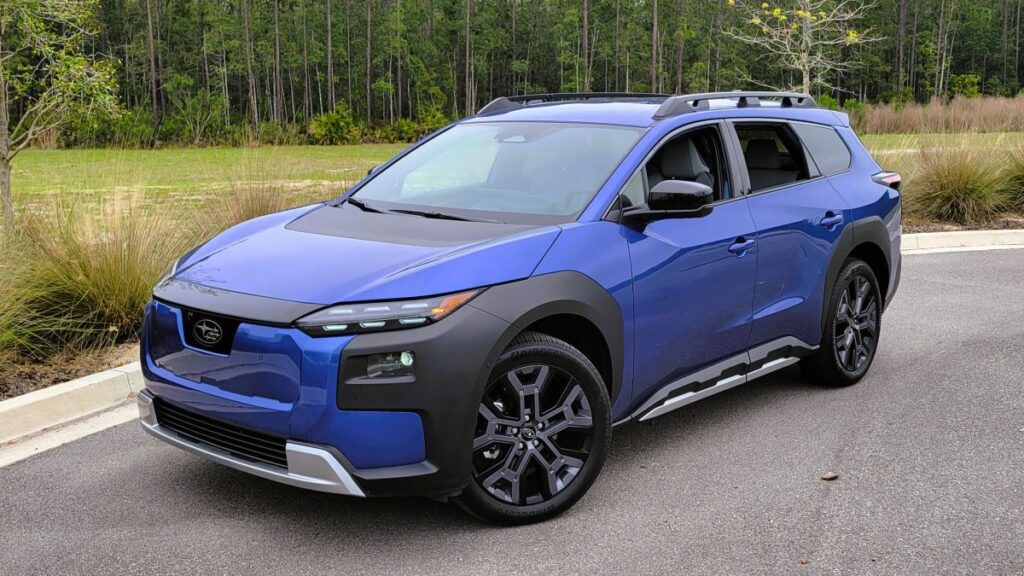
Like most macho crossovers with off-road desires, more black plastic frames front and rear tires. It has 20-inch silver alloy wheels with black aero covers clad in somewhat street-biased Bridgestone Turanza rubber.
Like most Subarus with off-road aspirations, the lower sills are geometric silver and black cladding under angular body lines that flare into slightly broad-shouldered rear fenders. The clamshell hood gets black trim ahead of the raked windshield for looks and to cut glare. The chunky black roof racks can handle 700 pounds of stuff. The black accents continue with the side window pillars and mirrors.
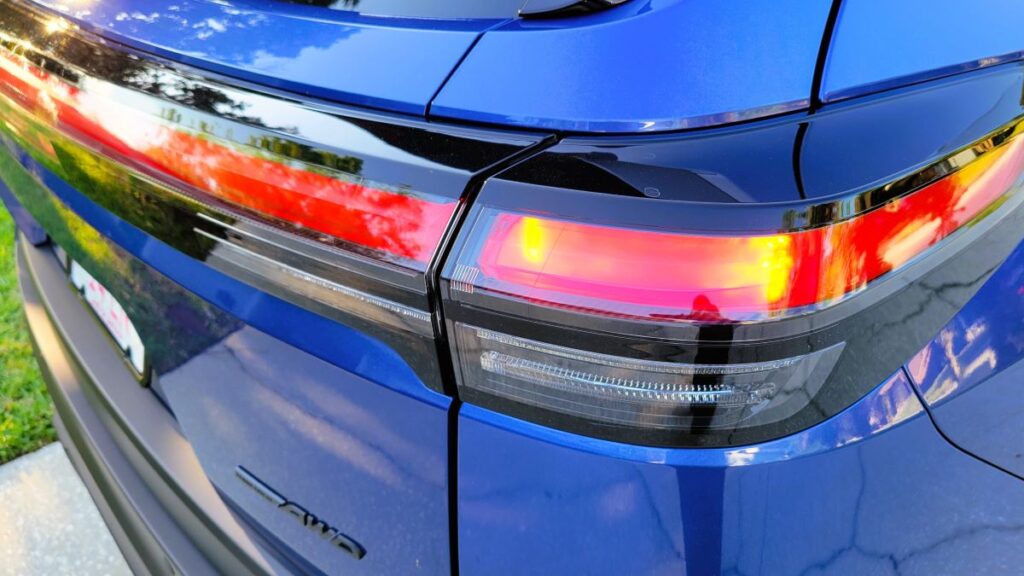
Slim taillights wrap around the tailgate, connected by a lit LED bar over “SUBARU” under clear plastic. The power tailgate opens high enough to clear my head. Its tinted glass is framed by a shade/spoiler. The chunky bumper is in black and silver, covering a trailer hitch, which has a towing capacity of up to 3,500 pounds.
The Trailseeker has Subaru’s familiar Outback-style SUV-like shape, with a grille-less EV face. It’s a blunter, more SUV-like visage than Subaru’s Solterra EV, which is sleeker.
Yet Trailseeker gets some sleekness in its rear fender and sloping roofline design, combined with the Outback’s new grille and headlight shape. The Trailseeker is handsome, but blends in when parked in a supermarket lot full of other Subies and crossovers.
2026 Trailseeker Limited EV Includes High-Tech Interior
That 8.5 inches of ground clearance makes it so easy to slide into the black and gray Star-Tex pleather seats, the driver getting power adjustments and dual memory presets and facing a leather-wrapped squircle steering wheel, which is a squared-off circle. That’s when you notice how high-tech the rest of the interior is with its two digital screens. There are a small number of physical controls and a funky transmission controller on a floating center console with storage space underneath.
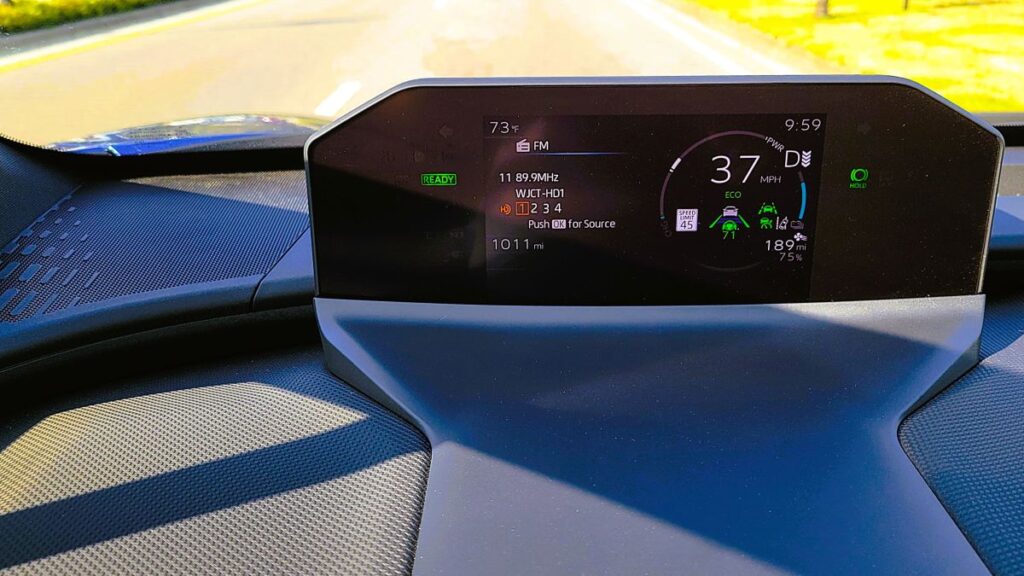
First, the instrument display isn’t visible through the steering wheel, but above and beyond it. It’s placed roughly where a head-up display would go on the padded, textured dashtop. Its configurable to show digital speed alone; that plus a navigation map; or audio, EV status, smart cruise and safety systems. It’s right where it needs to be to be seen quickly while driving.
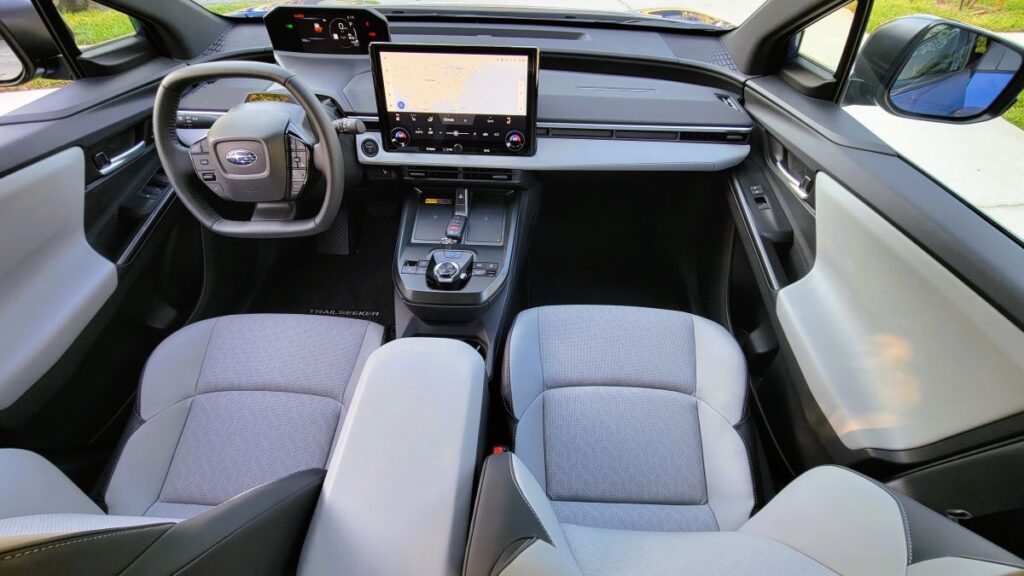
Then there’s the 14-inch Subaru Multimedia System with touchscreen, available cloud-based navigation, wireless Apple CarPlay and Android Auto. The big central screen keeps a handy volume knob, plus dual-zone temperature-adjust dials with integrated degree displays.
There is one significant feature missing from the Trailseeker’s native navigation system. It doesn’t include native route planning with suggested charging stops and automatic battery preconditioning. Many EVs include this feature. To achieve similar functionality Subaru owners will need to install a third party app, with A Better Route Planner being one option, and use the car’s manual precondition function to achieve the same results.
Battery preconditioning heats or cools a battery in advance of arriving at a charging station to ensure the car is at an optimal charging temperature when the driver plugs it in.
I appreciated the climate control touch-buttons in between for fan speed, heated seats and vent adjustment, as well as the left-side main menu tabs for phone, audio and the like.
The dual inductive chargers at the head of the floating center console are handy and rubberized to hold on to cellphones, yet mine slid out on a turn. The push-to-select transmission knob behind it works fine. It just takes a few taps and twists to get familiar. It’s flanked by Drive Mode and X-Mode selector buttons, plus other driving and safety systems. There are USB-C and 12-volt outlets with the storage space underneath, plus good center armrest capacity.
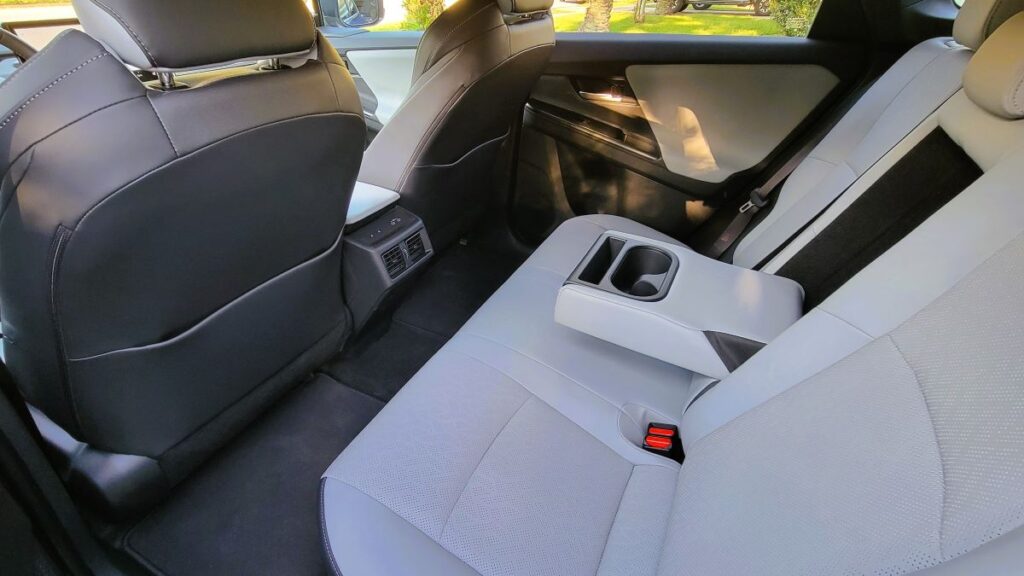
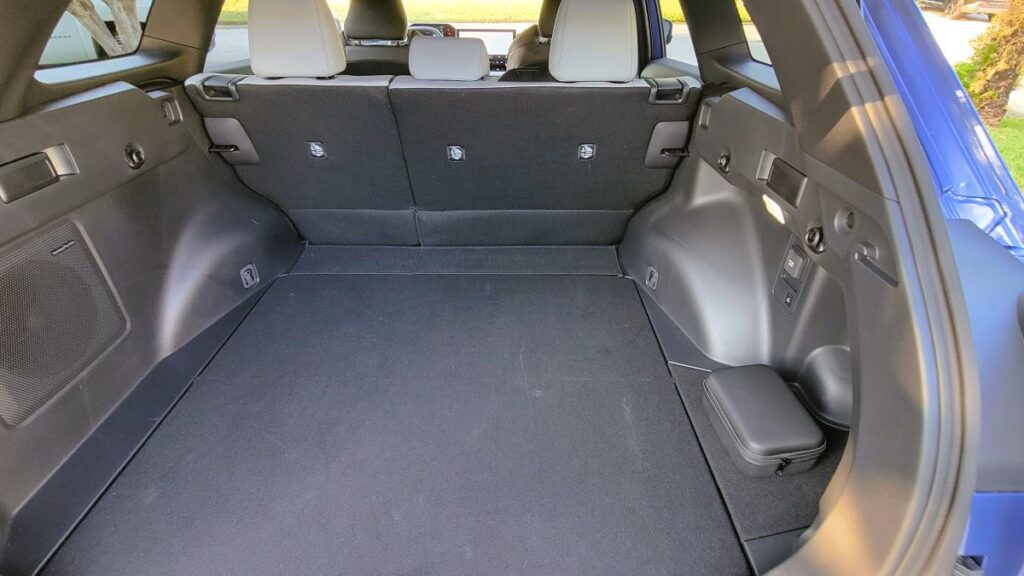
Back seat access is good through wide-opening doors, with great leg and head room as well as a slightly higher seating position. Those in back get rear vents and an armrest as well as heated outboard seats and more USB-C ports. Rear seatbacks split 60/40 and fold to expand a boxy rear cargo area with remote seatback drop controls. The security cover fits neatly in the under-floor storage area.
Other features in our Limited trim include a Harman Kardon audio system, heated steering wheel, hands-free foot-activated power tailgate and 120-volt cargo area power outlet. While the front hood opens, there’s motor electronics underneath – no frunk.
Comparing The Trailseeker With Subaru’s Solterra EV
The Solterra is 184.6 inches long on a 112.2-inch wheelbase, with 8.3 inches of ground clearance. It’s 4,499 lbs., with an estimated 278 miles of range and 338-hp from dual motors. Our Trailseeker is 190.8-inches long, also on a 112.2-inch wheelbase with 8.5 inches of ground clearance. It’s 4,475 lbs., with an estimated 274 miles of range and 375-hp from two motors.
As you can see from the numbers, the Trailseeker is a tad bigger, a bit lighter, and a bit less powerful. It has an integrated transaxle at front and rear axles for all wheel drive that you can monitor via a center screen, with 74.7-kWh high-capacity lithium-ion battery. And with Eco, Normal and Power drive modes, we had our choice of quick-yet-frugal, quicker-and almost frugal and quickest-and not so-frugal.
2026 Subaru Trailseeker Limited’s Power Mode Suprises Off The Line
We spent a lot of time in Eco mode, which launches slowly, then builds its power flow to keep up with traffic. It quickly hit 60 mph in a near-silent (no gearbox, just direct drive) 5.5 seconds, with all four tires putting equal power to the pavement. One annoyance – the Trailseeker doesn’t stay in Eco, but resets to Normal with each ignition off. In Normal mode, the launch is quicker. It’s my favorite mode for daily driving, with good off-the-line speed and passing power.
The real surprise was Power mode. Our 1,100-mile-old crossover leaped off the line a bit abruptly, with a hint of front wheelspin, hitting 60 mph in a quick 4.3 seconds. Those are times no Brat or Legacy ever dreamed of that. And again, near silence except for a muted electric motor whir, some tire and wind whisper, and no drama. The all-wheel-drive just grabbed and went.
We started our drive with 212 miles of range from a 90% charged battery. We drove 138 miles over two days. The last part was in windy, 50-degree temperatures, leaving us with 94 miles of range in a battery with 36% charge left. Since Subaru has adopted the North American Charging Standard (NACS) we can use V3 and higher Tesla Superchargers charger, with no adapter needed, although now drivers will need to use the included CCS or J1772 adapters at many non-Tesla stations.
We used full regenerative braking all the time. It doesn’t bring the Trailseeker to a stop, but allows the motors to turn into generators, slowing us down quickly, and nudging power back into the batteries. It worked so well that the daily work commute would put a few miles back in the battery. We stayed near 200 miles estimated range during a round trip commute. I just wish this battery could recharge to that 300-mile mark.
Four-wheel independent suspension with stabilizer bars, plus good ground clearance gave the Trailseeker a taut yet comfortable ride. It neatly handled speed bumps and potholes with no issues. But that 8.5 inches of ground clearance does reveal some body roll in cornering, although the all-wheel-drive keeps it neutral in exit ramps under power, and near neutral in basic cornering. Push it in a skid pad and there’s understeer washing out the fronts under power, but no drama.
That squircle steering wheel and electric-assist steering gave us a direct feel in Eco mode, and a bit more (slightly artificial) feel in Power mode. The four-wheel disc brakes had a precise pedal feel and good stopping power, although there was a hint of nose dive and some ABS chatter under heavier use from 60 mph. There was no fade after repeated use.
2026 Trailseeker Includes Subaru’s Famous X-MODE
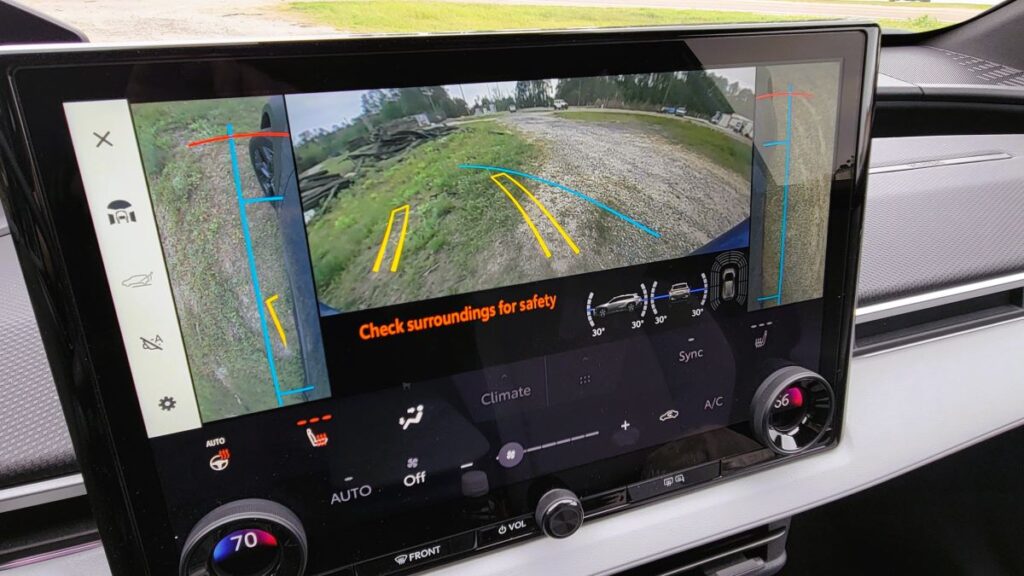
OK, here’s a Subaru that echoes its Outback brother with good ground clearance, all-wheel-drive and some macho cladding, plus X-MODE that sets up drivetrain and all-wheel-drive for snow/dirt, or deep snow/mud. Fire up either mode – only possible under 15 mph – and you get a panoramic view monitor of what’s ahead from a widescreen nose camera, and side views too.
See the video at the top of this post for more Trailseeker vs. Outback comparisons
We tackled a deeply-rutted gravel road and dirt trail, and the independent suspension just ate it up with comfortable rebound. Tapping on the all-wheel-drive split screen, we saw all four tires got power as needed, and we made it through the gravel and dirt, with nothing scaping underneath.
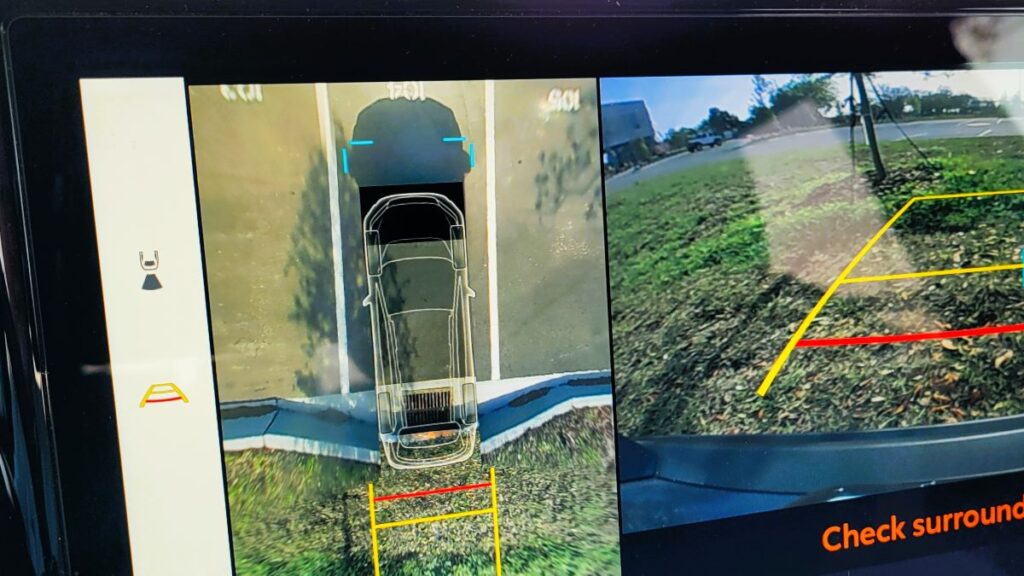
The Trailseeker has a suite of EyeSight safety systems that includes alerts when traffic crosses in front, plus hill-start assist, dynamic radar cruise control, and a simulated overhead image of the Trailseeker when reversing that showed what’s underneath.
Our Trailseeker Limited starts at $43,995, its Daybreak Blue Pearl paint an extra $395, making a final with destination of $45,849. It was not available for sale yet as we wrote this. And FYI – the Trailseeker shares powerplant and infrastructure with Toyota’s bZ Woodland EV crossover, with nose and tail design differences, but basically the same interior.
Bottom line: A Subaru in design, function and family-friendliness, with decent EV range and good power – even does a bit of off-road.
EV Rider’s Bill Bortzfield contributed to this report.
2026 Subaru Trailseeker Limited Specifications
Vehicle type – 4-door, 5-seat all-wheel-drive EV sports utility wagon
Base price – $43,995 ($45,849 as tested)
Powertrain – Front and rear synchronous AC motors
Horsepower (combined) – 375
Battery pack – Lithium-ion
Transmission – Direct drive front and rear w/integral transaxles
Wheelbase – 112.2 inches
Height – 65.9 inches
Overall length – 190.8 inches
Overall width – 73.2 inches
Ground clearance – 8.5 inches
Front headroom – 38.8 inches
Front legroom – 42.1 inches
Rear headroom – 38 inches
Rear legroom – 35.3 inches
Cargo capacity – 31.3 cu. ft./74 w/seats folded
Towing capacity: up to 3,500 lbs.
Curb weight – 4,499 lbs.
Range: Claimed 274 miles