


It’s a truck I’ve waited to test since I saw the first spy shots online.
Even more than the HUMMER EV, I wanted to check out the sleek (for a pickup) Chevrolet Silverado EV, with its aerodynamic nose, seemingly lower greenhouse, flowing roofline, and Max Range battery.
It’s also the Trail Boss.
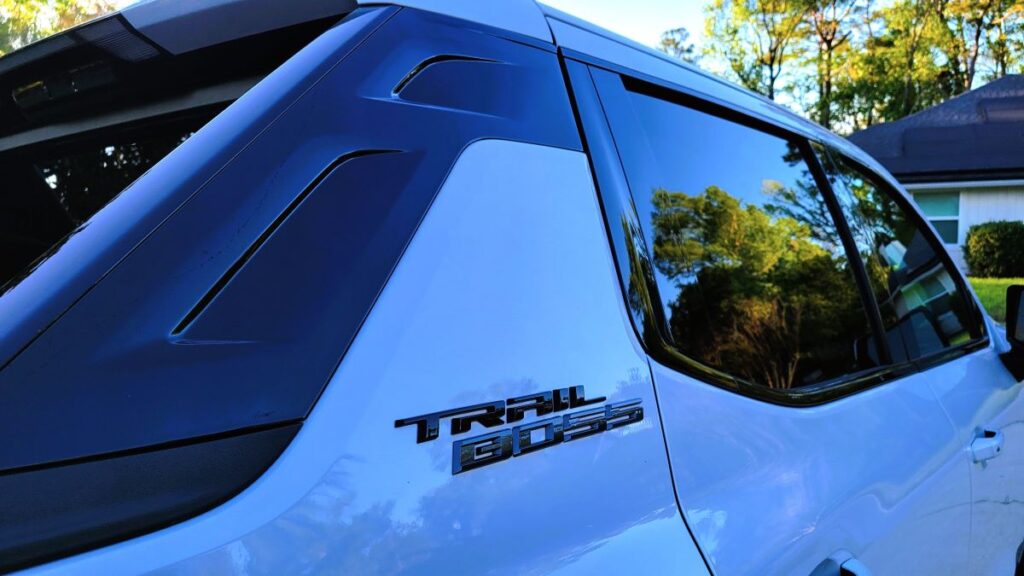
EV Chevy Trail Boss Surpasses Gas Sibling In Some Respects
This Chevrolet Silverado EV went on sale in the 2024 model year. But it’s not just a redesigned ICE Silverado. Nope – it is built on General Motors’ dedicated Ultium platform – a modular, flexible electric-only architecture used for smaller crossovers to bigger trucks, like the Cadillac Lyriq, Chevrolet Blazer/Equinox, and GMC Hummer EV. It’s also a lighter, tighter basis for a full-size pickup. Our 233-inch-long Silverado EV rides on a 145.7-inch wheelbase, while the 241.3-inch-long gas Silverado on a 157-inch wheelbase.
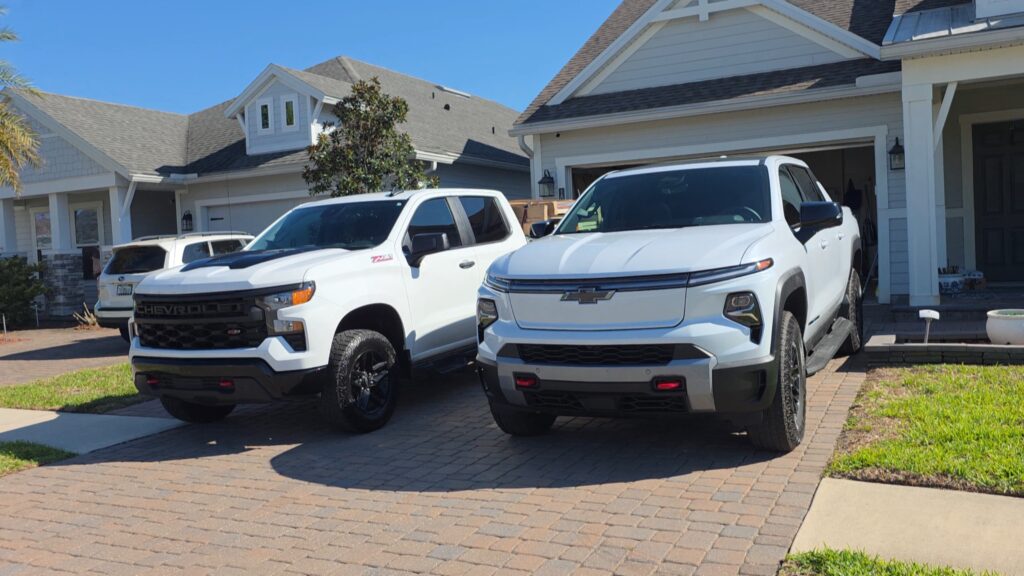
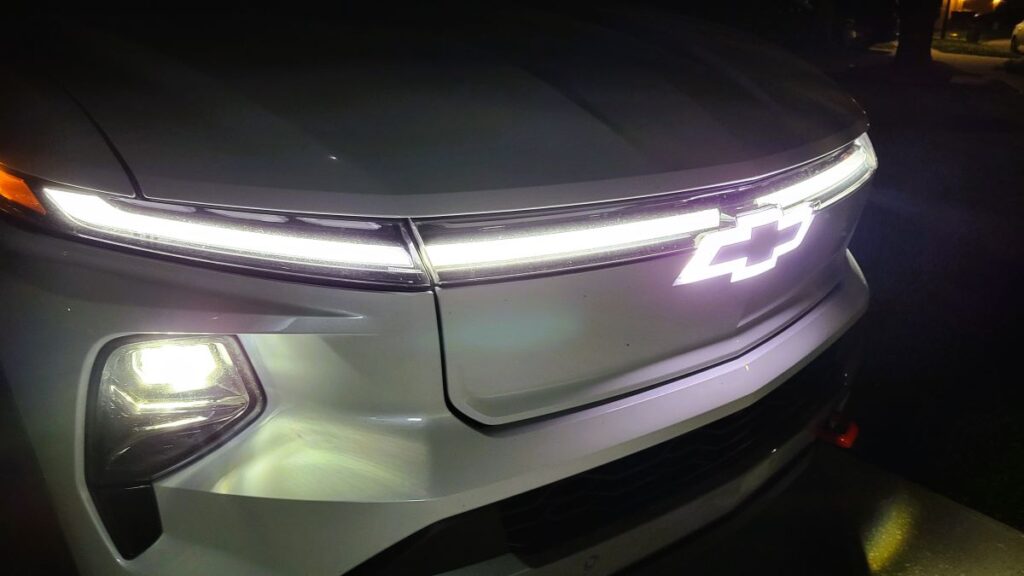
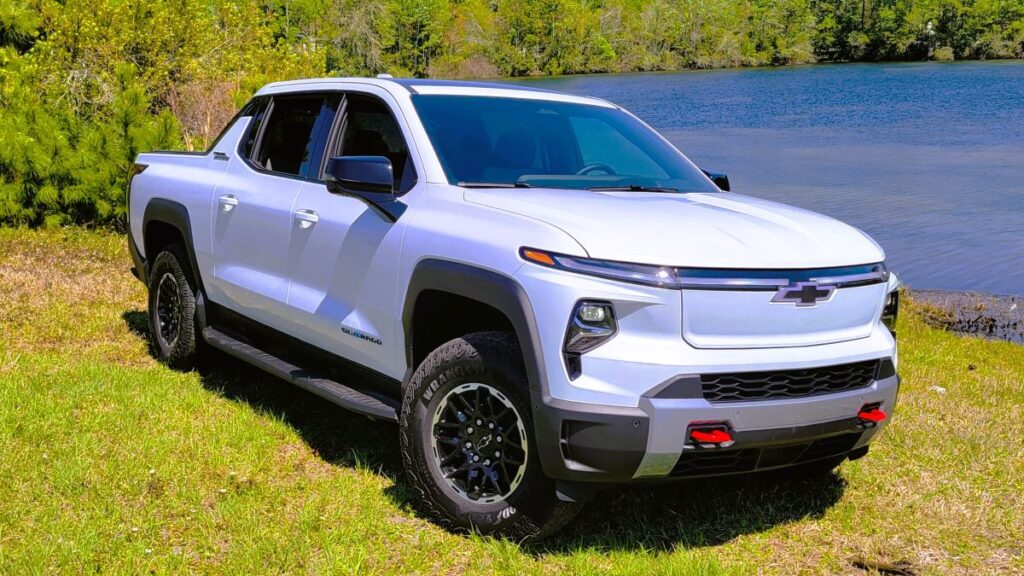
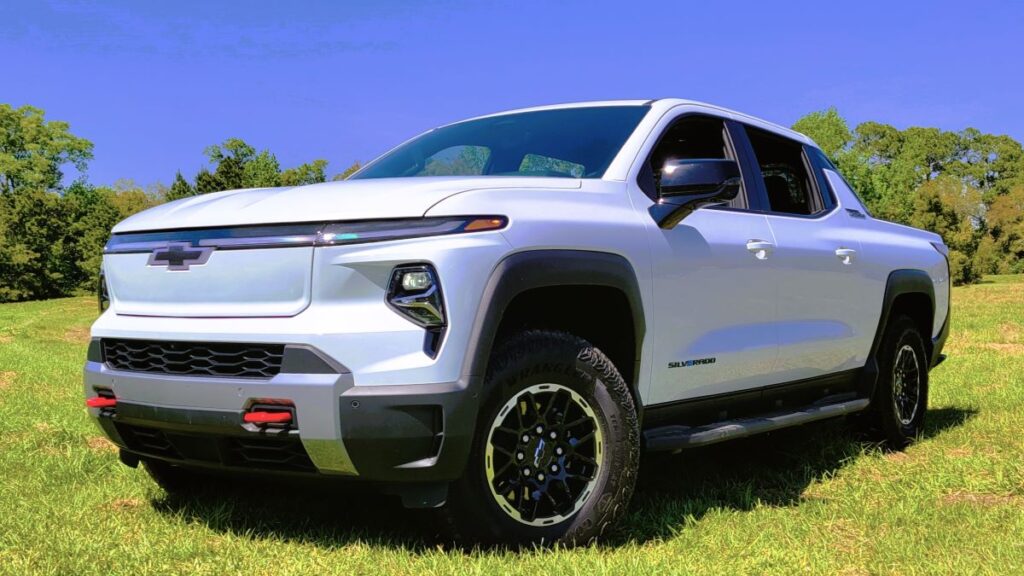
As an EV, it needs no big grille, so there’s a rounded nose with sleek wraparound light bar on top with LED DRLs. Projector headlights are on the curved corners below, while the Chevy emblem lights up – cool
The frunk opens to the front bumper line, its lower lip just above a slim intake to cool batteries and motors. There are two red tow hooks over a skid plate with a pewter center bumper accent. Flat black accents the lower corners with squared-off fender flares and side sills that include steps.
Flanks get gentle sculpting, while side windows seem shallower under a low roof with sweptback C-pillar.
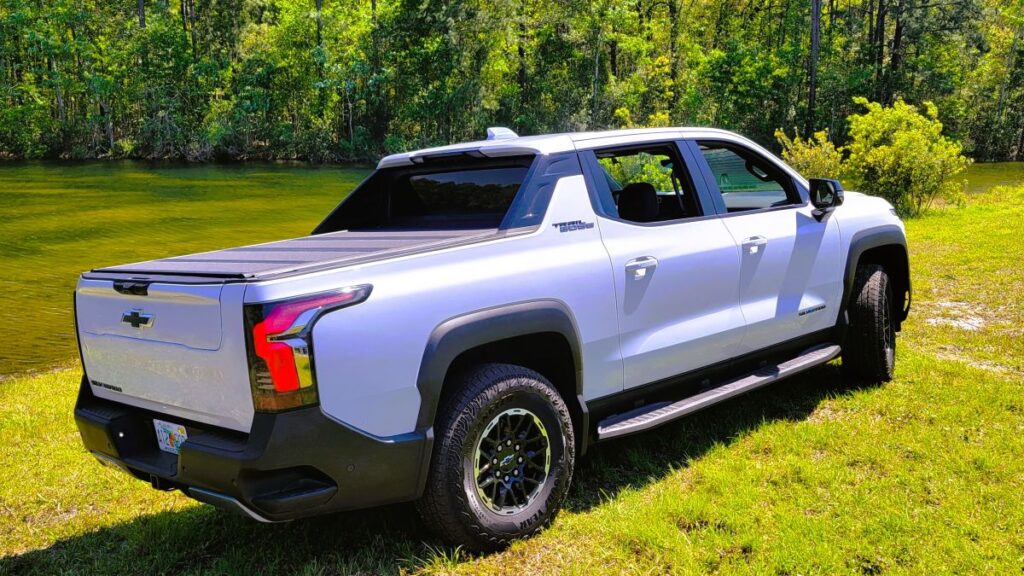
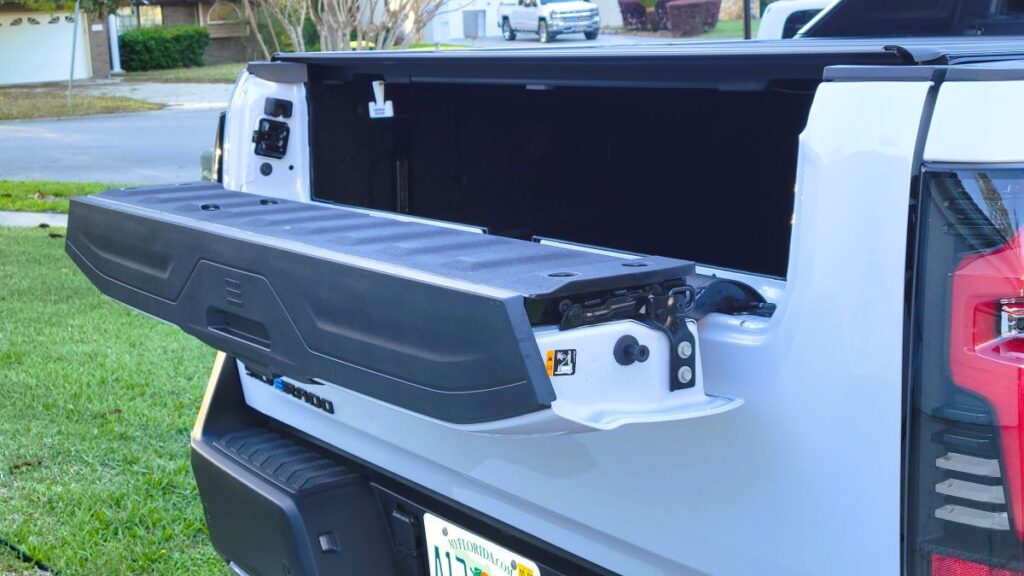
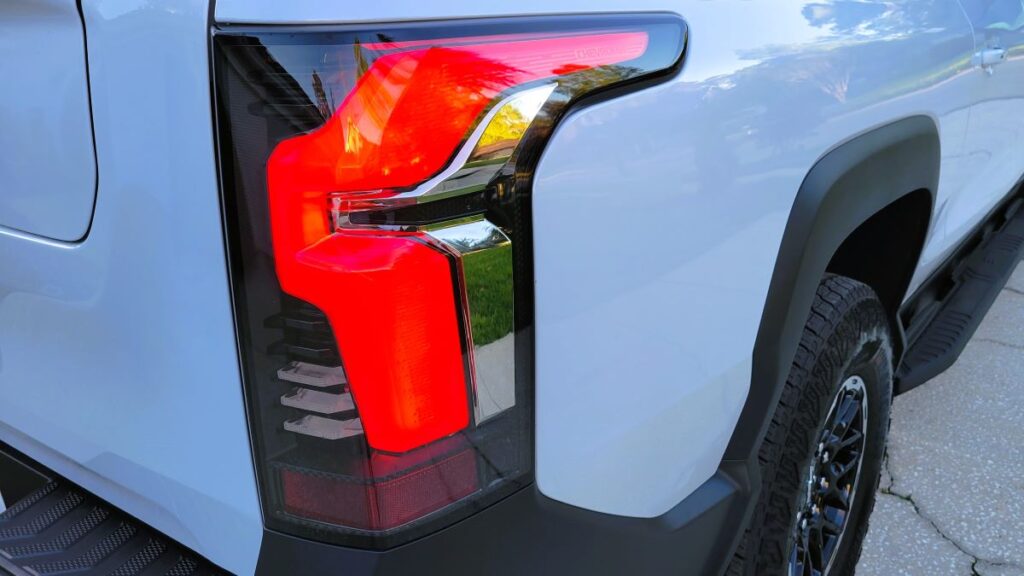
Since this is not a body-on-frame design, the 5-foot-11-inch long cargo bed is flush with the body – very smooth. There are straight rear fender shoulder lines that flow into leading edges of sculpted taillights and black rear bumper.Like many big GM pickups, the MultiPro tailgate gets a dropdown upper section that becomes a work table, or unfolds a step when lowered to get in. You’ll probably use that step quite a bit since the Trail Boss’s 2-inch factory lift offers 24% higher ground clearance than the base Silverado EV.
2026 Chevy Silverado Trail Boss EV Interior
Those running boards, which do not retract, are handy to help get inside. I just wish the driver’s windshield pillar had a grab handle, like the others do. But once in the black and gray leather seats, the driver sees a big change from gas Silverados – a 17.7-inch-diagonal infotainment screen that starts with a configurable digital gauge package that flows past a big audio knob to a widescreen display that can be changed to show EV charging, navigation, audio and more.
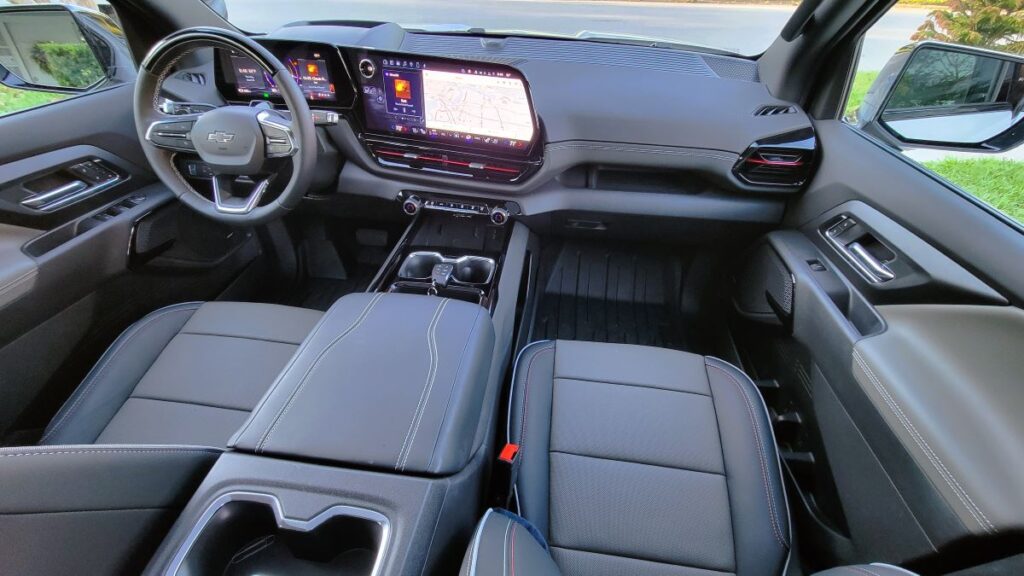
Below the volume knob is a touch icon to access the headlight control – I wish there was a button. The majority of needed climate control buttons are icons along the bottom of the center screen. Seat heat/cooling, fan speed, dual-zone temperature and others are controlled by touch. There are also real buttons below it for fan speed, defrost and more.
The glove box gets a rubberized shelf above it under a stitched faux leather dashboard panel. Dashtop and doortops get a soft-touch textured black rubber, with padded gray inserts. The padded, stitched leather steering wheel power tilts and telescopes, the usual controls in front and one small paddle shifter behind for full regenerative braking like the old Volt used to – it brings the Silverado to a complete stop.
Front bucket seats are a bit flat, but comfortable, the driver’s getting dual memory presets. The wide center console starts with a rubberized inductive phone charger with USB ports and cup holders, then lots of room under the center armrest. The 7-speaker Bose sound system is solid, with a 5G Wi-Fi hotspot, wireless Android Auto/Apple CarPlay, and Google built-in, but no HD Radio.
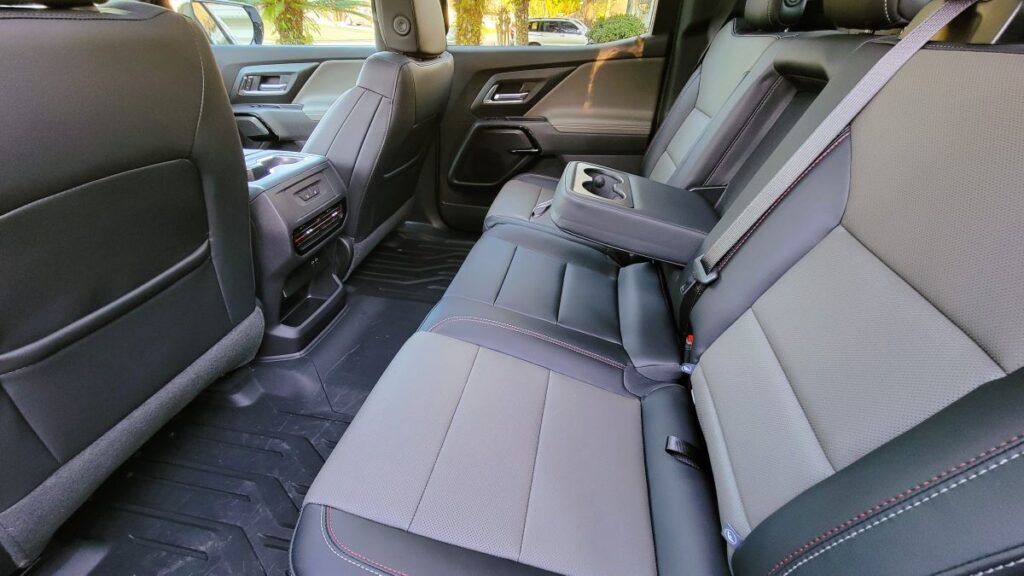
Despite a shorter wheelbase than the gas Silverado, the back seat is roomy, with good adult head and leg room and even enough space for a third in between.
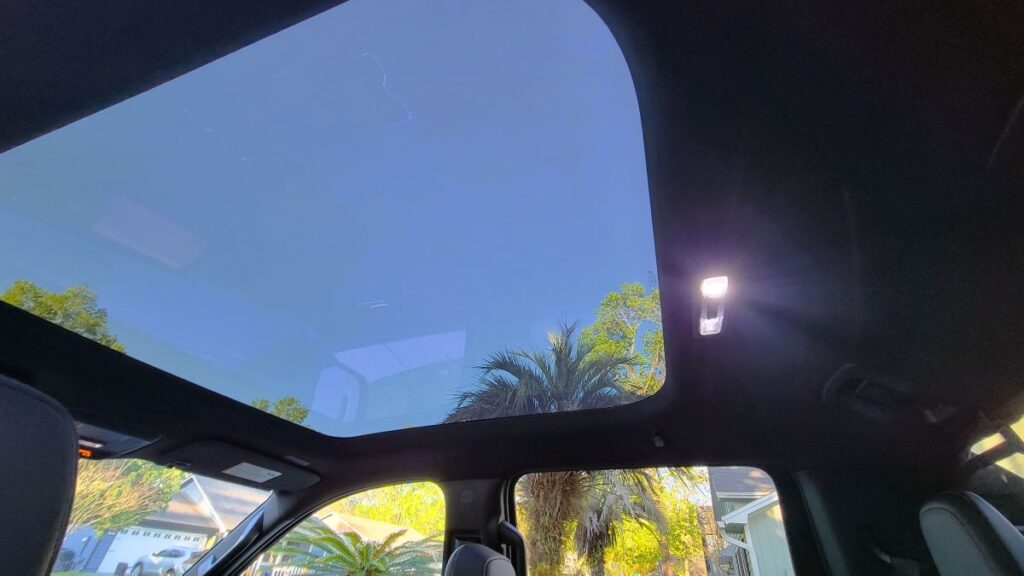
Outboard positions get heat; there’s rear a/c vents and USB ports, and a panoramic fixed glass moonroof that is so well tinted that the Florida sun didn’t cause warming issues. There’s a lightweight sunshade if needed.
2026 Chevy Silverado Trail Boss EV Bed Is Very Versatile
Split 60/40 rear seat bottoms flip up, or forward for more storage, allowing seatbacks to flip forward to also hold stuff. And shades of the 2010-2013 Chevy Avalanche – the Multi-Flex Midgate under the rear window splits and folds to expand the 5-foot-11-inch (57.3-cu-ft) cargo bed (with retractable cover) to over 9 feet.
The rear window can be removed for a nice open air feel. There are cut-out steps in the rear bumper corners to get into the bed. Once you drop the tailgate, stuff over 10 feet in length can be tied down and carried with midgates down.
You can watch a demonstration of how it works in the video at the top of this post.
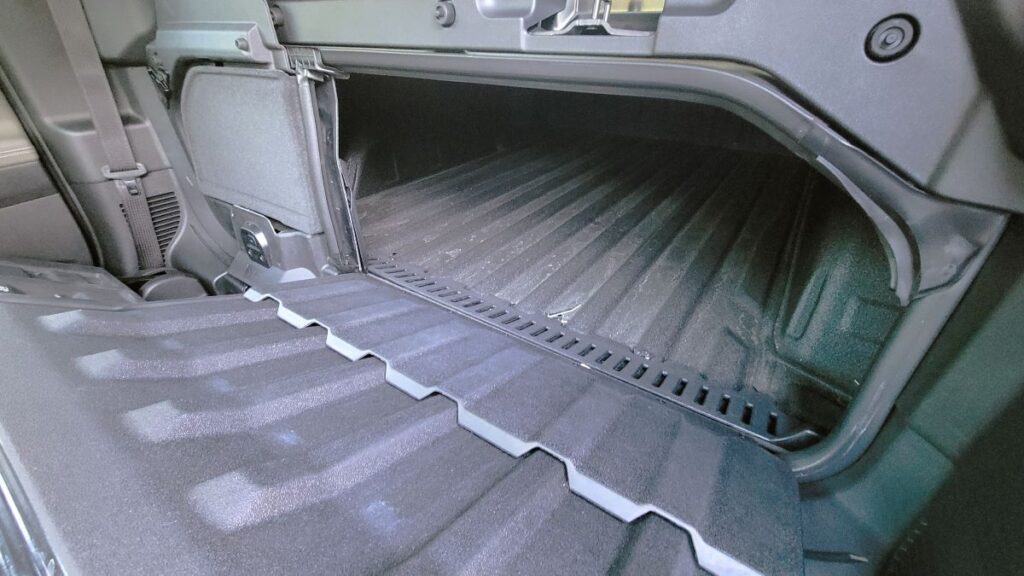
There’s a usable 10.7-cubic-foot frunk with power bonnet. This EV can haul up to a 12,500-lb. trailer, although experts said that cuts its spectacular driving range almost in half, to about 220 miles depending on load, aerodynamics, and speed. That is better than published reports on a Ford Lightning EV hauling the average trailer.
One Silverado EV oddity – the passenger-side mirror isn’t convex to get a wider view of traffic. But this Silverado has left and right blind-spot cameras activated by the turn signal, displayed on the center screen. The rearview mirror can also flip to become a video screen with a wide rear camera view.
This truck is so slick, literally, that my sandwich shop guy gushed about how cool it looked when I quietly rolled up. And it got some glances at a recent car show I parked at. Gas-loving as many of those folks were, they admired this EV’s all-wheel-drive from front and rear motors, 205-kWh lithium-ion battery, and 725-hp and 775 lb-ft of torque. They also loved that there’s no start/stop button – get in with the keyfob and it turns on, then lift off the brake and open the door to shut it off.
Here’s the breakdown:
The Silverado EV is aerodynamic, with a drag coefficient of approximately .331. The current 2025 Chevy Silverado 1500 (gas) has a drag coefficient of around .38.
2026 Chevy Silverado Trail Boss EV Range, Power, Fuel Cost
A 2026 Chevrolet Silverado EV Trail Boss with the Max Range NCMA (Nickel, Cobalt, Manganese, Aluminum) battery pack, which we had, has a GM-estimated range of up to 478 miles on a full charge from a massive 205 kWh battery pack and a 350kW charging speed. Real-world estimates seem to be 430 to 470 miles, compared to the 240 to 300 miles we have gotten in recent Lightning tests. I hear that the Ultium battery can go from 5 to 80 percent charge in under 50 minutes on a DC fast charger, and gain a GM-estimated 100 miles in 10 minutes.
There’s a NACS adapter so you can plug into a Tesla Supercharger for a recharge, giving you about 25,000 additional charging locations across the U.S. Plugging in for a 10-80% charge (about 140-160 kWh) at a commercial Level 3 station can cost up to $120, experts say. GM also estimated 37 miles of range per hour if you use a Level 2 charger, which isn’t bad.
To compare: a turbodiesel Silverado gets a claimed 600 to 700 miles on a full tank. As this was written, diesel cost $5.20 or more a gallon in Florida, or over $120 for a full tank. A Silverado with the 6.2-liter gas V-8 seems to offer 350 to 450 miles on a full 24-gallon tank of premium gas – about $112 for a full tank now.
But the real savings happens when charging at home. Here in Jacksonville, FL, a kWh costs 14 cents, meaning a full charge at home costs $28.70. Residential electric prices across the country tend to be much cheaper than gas or what Level 3 DC stations typically charge.
This 8,778-lb. truck has multiple drive modes – Normal, Off-road, Towing, Terrain, and MyMode. That last mode allows you to set the powertrain on Sport, as well as stiffening up steering feel. There’s no change in suspension height or ride quality since the Trail Boss has off-road tuned coil springs and a fixed 2-inch lift.
Set on Normal, our 4,000-mile-old truck launched quickly, hitting 60 mph in a quick 5.5 seconds. Tapped in MyMode with sport selected, this EV reared up a bit as all four tires dug in, and we hit 60 mph rapidly in 4.9 seconds. We tried a few of these rapid launches one after another, with no diminution of launch torque, nor range diminishing too quickly. And acceleration from a stoplight, or to pass, was great – no drama, it just did it.
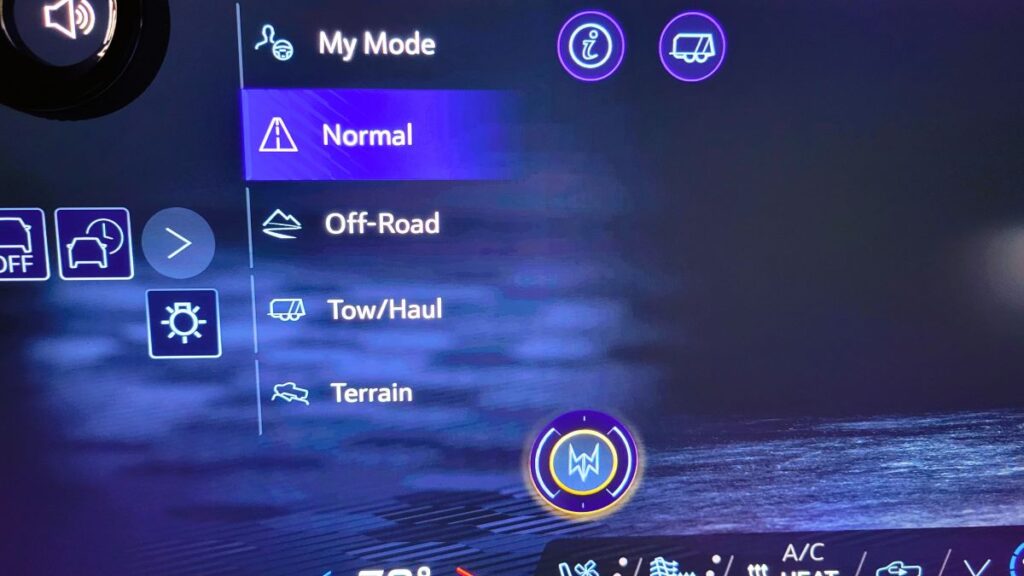
Then there’s the W.O.W. factor – Wide Open Watts – a back-to-back lightning bolt touch icon on the drive mode page. Tap it and the speakers exude a serious electronic growl as the powertrain goes for maximum propulsion. We got front wheelspin as this big EV launched very fast to 60 mph in 4 seconds flat, the turbine soundtrack rising in intensity as you go – W.O.W.! It responds to throttle VERY quickly – but it will reduce the range, and it will not function when the vehicle battery is low.
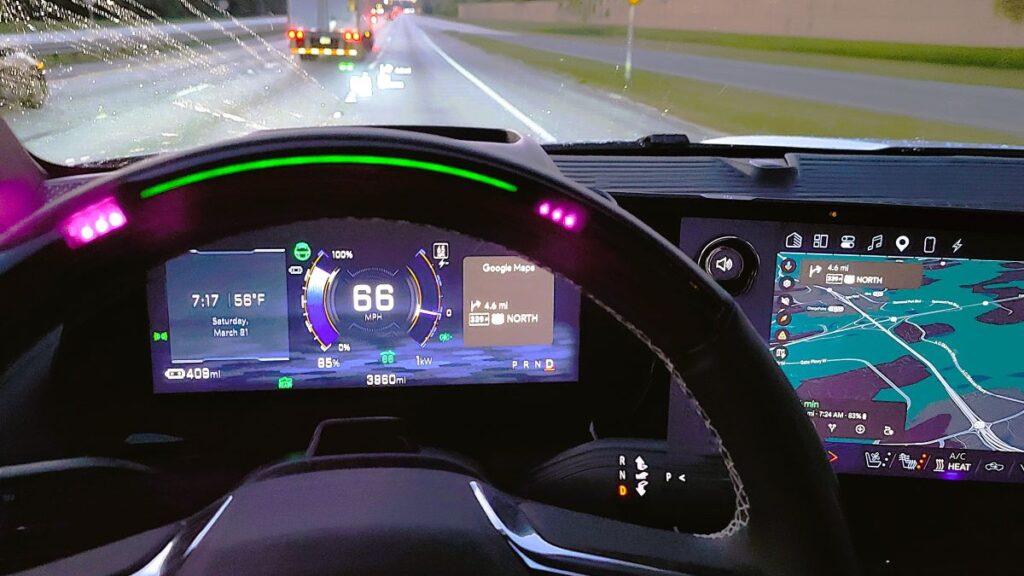
This is the first EV I’ve tested that never gave me range anxiety. Starting with 451 miles estimated range and 93% battery charge, I went about my business for three days and still had 365 miles of estimated range left, and a 76% battery charge. And we still had about 260 miles when the week ended with 4,150 miles on the clock and 59% charge. Regenerative braking gained a few miles of range on the fly, via that small paddle on the steering wheel, or one-pedal driving. You can adjust the regen amount off a center display menu. Both bring you to a stop.
This truck has a fully independent coil suspension with a hydraulic rebound control system. Add in tall sidewalls and the on-road ride is very comfortable, swallowing speed bumps with a one after-bounce.
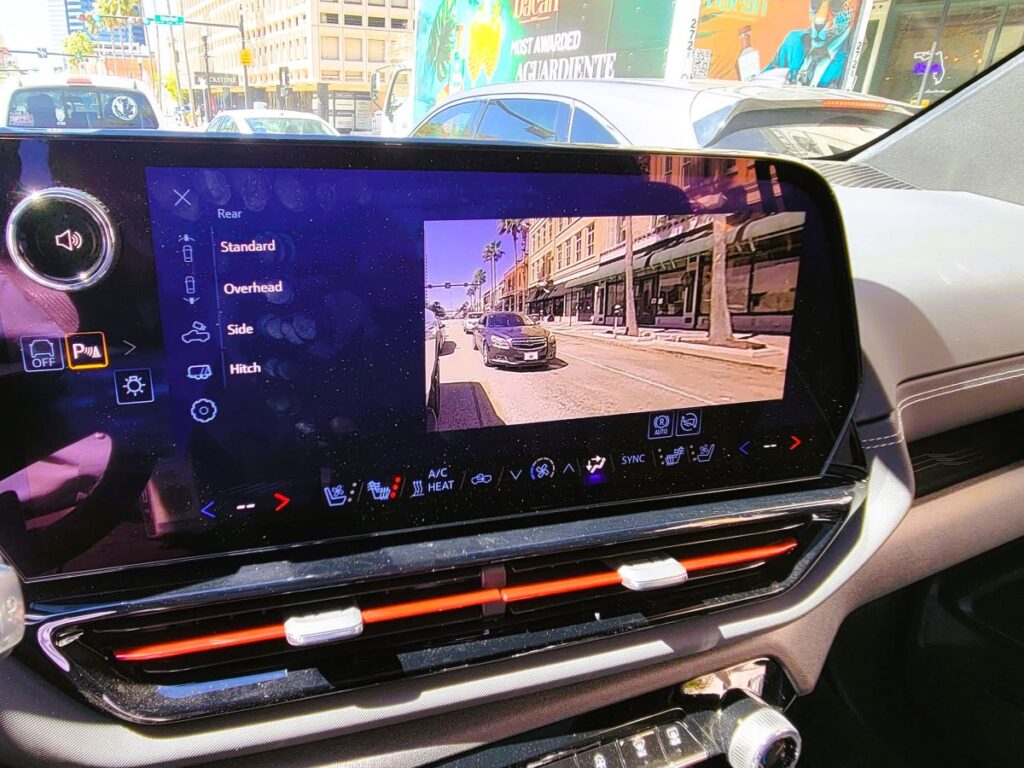
With all-wheel-drive, this EV was neutral around exit ramps, with minimal lean and not a lot of feel that we were cornering in a 4-ton EV with 2-inch lift. The electric power steering loaded up nicely, if feeling a bit artificial. The big guy was more agile in commuting than a gas Silverado. Just like a gas truck, it had a bit of understeer in our skidpad, all-wheel-drive not aiding much. And with 14-inch discs all-round, the Silverado EV had a nice initial bite to the pedal, not too abrupt, with decent stops with plenty of ABS action and a bit of nose dive. There was no fade after repeated hard stops.
Having Trail Boss trim offers more ground clearance and off-road rubber, plus Terrain and Off-road drive modes. I tapped in Off-road and hit a grassy lakefront slope, and the EV absorbed bumps beautifully, with great wet grass traction, all-wheel-steering giving us a very tight (42.2-foot) turning radius to turn on a tight shoreline. I dove into a lumpy, mowed grass field with lots of ruts and bumps – and it also did fine. It clawed its way up and down hillocks and divots with no issues. Rear-wheel-steer helped get around stuff easily.
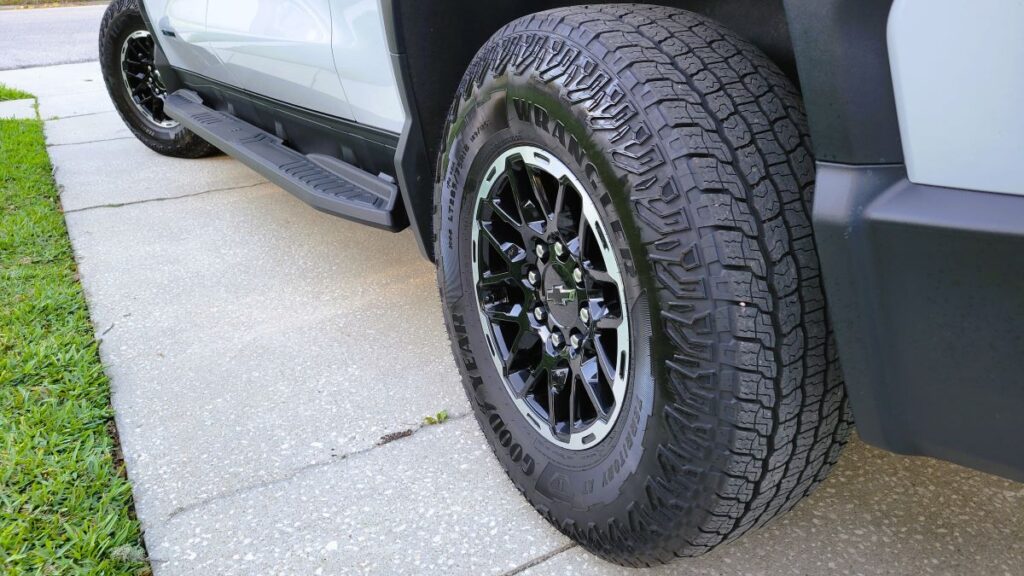
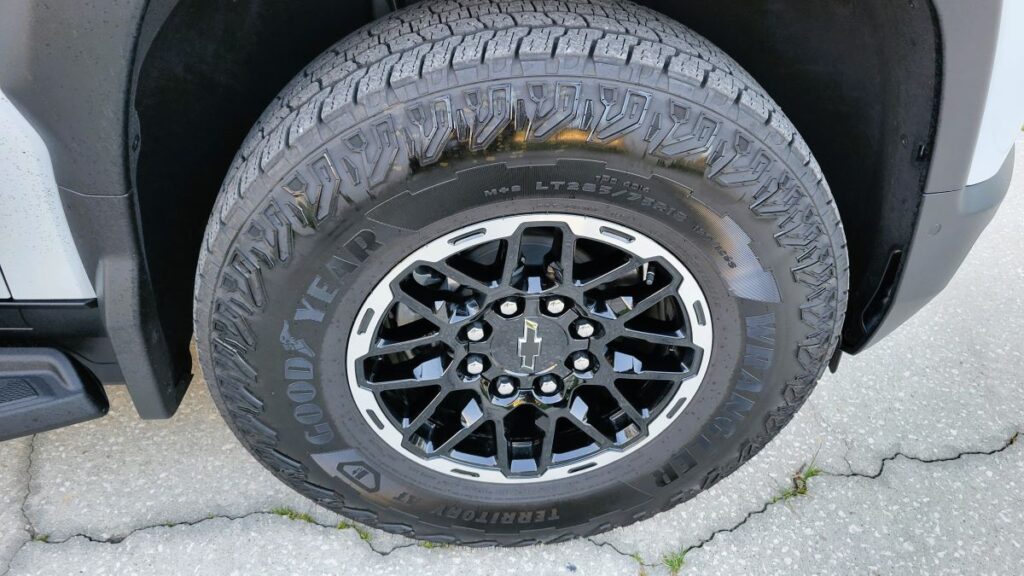
The EV Trail Boss has a solid 10 inches of ground clearance, vs. the gas version’s 11 inches. But the gas version has gnarlier Goodyear Wrangler off-road rubber and front underbody, oil pan, and transfer case skid plates, vs. the EV’s all-season, all-terrain light truck/SUV rubber, its only underside protection from one front skid plate.
When the Silverado EV was in that bumpy, grassy field, it wasn’t as sure-footed as I’d hoped, with some wheelspin as a front tire spun under power in Offroad mode. It got through it all, but not as well as the GMC Sierra 1500 4WD Crew Cab AT4X AEV I just tested, the sister to the gas Chevrolet Silverado Trail Boss.
Four-wheel steering effectively shortens this Silverado’s wheelbase, making turning corners easier to tackle, and U-turns almost within its own length.
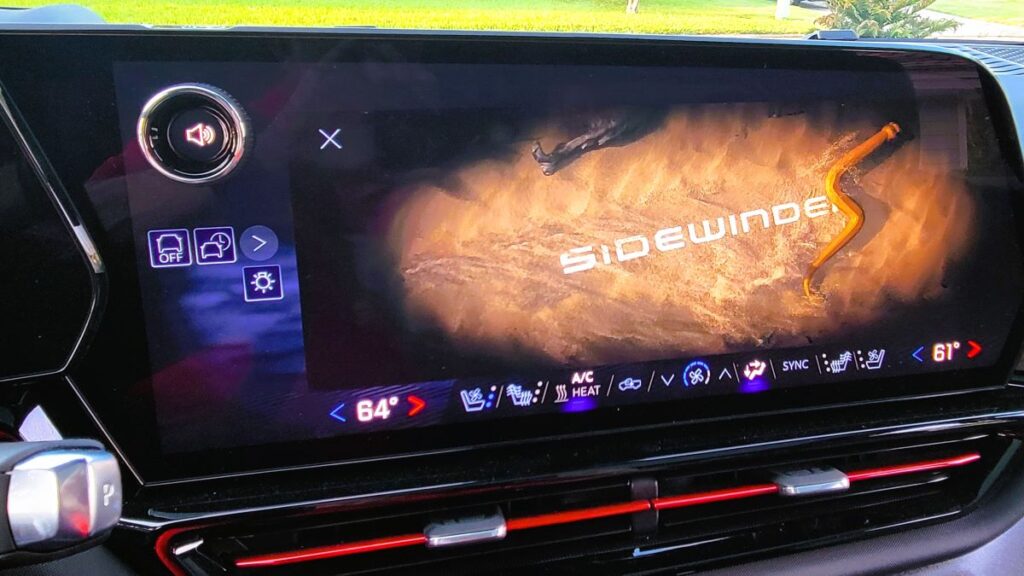
Then there’s Sidewinder (Think Hummer EV CrabWalk) mode – rear tires turn with the fronts, and you “slide” around a root or rock on a trail. But it does take a dedicated tap or two in a screen menu to activate, and one time it did not shut off quickly.
Super Cruise gave us autonomous driving on many federal and state highway. It stayed mostly in lane hands-free. This is also a very quiet truck. The only time I heard the motors (outside of the W.O.W. setting) was when the midgate was open and the rear motor’s turbine sound came through.
How much? A gas-powered 5,421-lb. Silverado Trail Boss is about $61,000. It can tow up to 13,000 pounds, and hits 60 mph in just under 5.5 seconds. A base Silverado EV Work Truck, with 286 miles estimated range from a standard 205-kWh battery pack battery pack, 22-kW charging speed and 510 hp, starts at $54,895. Our 8,900-lb. Silverado EV Trail Boss can tow 12,500 pounds, and hit 60 mph in 4.2 seconds. Our Silverado EV Trail Boss added $5,285 in options, from $1,950 folding bed cover; $1,500 panoramic glass roof; $995 pearl white paint, and a few more items for a total $93,980.
Bottom line: Quick, agile on-road and acceptable off, with a slick look and a really well-developed EV platform with great range – but a tad expensive to buy and commercially charge, and biggish.
2026 Chevrolet Silverado EV Trail Boss Specifications
Vehicle type – full-size 5-passenger crew cab all-wheel-drive electric pickup
Base price – $86,600 ($93,980 as tested)
Powertrain type – dual-motor w/electronic 4WD and torque vectoring, and 205 kWh battery pack
Horsepower (net) – 725
Torque – 775
Transmission – 1-speed transmission
Wheelbase – 146.7 inches
Overall length – 233 inches
Overall width – 83.8 inches w/o mirrors
Height – 79.9 inches
Front headroom – 43.9 inches
Front leg room – 44.8 inches
Rear headroom – 38.7 inches
Rear legroom – 44.3 inches
Cargo bed – 5-foot, 11-inches/57.3 cu. ft. volume
Payload/towing – up to 2,100 pounds/12,500 pounds
Weight – 8,778 lbs.
Range – 478 miles (GM-estimated w/Max Range battery)