



One of the most exciting and risky EV startups out there is Aptera, thanks to its unusual value proposition; which is a uniquely styled 2-seat, 3-wheel EV filled with solar panels that can travel up to 40 miles a day on sunshine alone or up to 400 miles when fully charged.
Aptera has been trying to get beyond the dream stage for almost 20 years. The original company went out of business in 2011 and was re-founded in 2019.
A significant financial move to turn that dream into reality was debuting as a publicly traded stock on the NASDAQ in October.
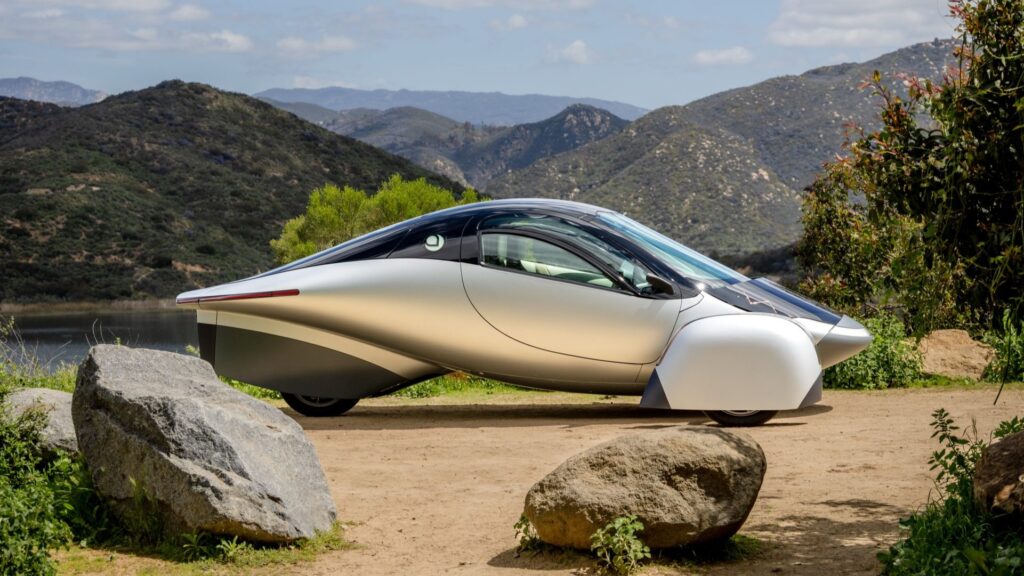
Aptera fans already know every square inch of the EV’s specs, so this video and post is concentrating more on the financials than the autocycle itself, but I’ll mention a few nuggets here and there along the way.
One of the things that makes the Aptera fairly unique is that until its recent NASDAQ listing, it’s been a crowdfunded company. Even the listing is unusual in that didn’t debut as an initial public offering (IPO).
Instead, it did a direct listing, which means there was no big capital raise. When a stock is direct-listed on the NASDAQ existing shares by current stakeholders are sold to the public.
Aptera said shortly before the listing it had $75 million of committed equity financing from New Circle Principal Investments LLC. Whether that’s enough money to get the EV into production remains to be seen.
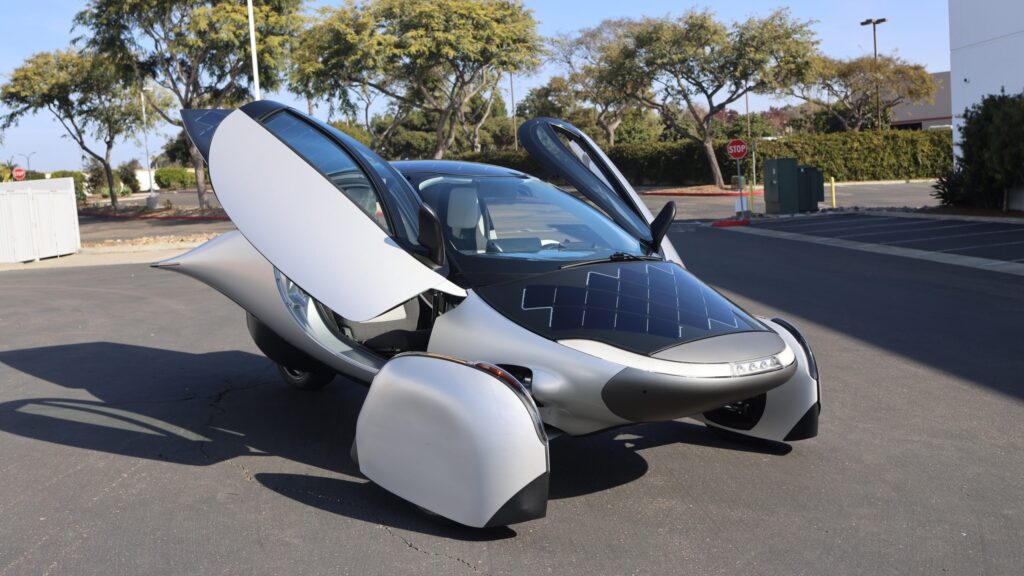
Aptera listed itself as a Public Benefit Corporation under Delaware law, which means it is legally required to consider the interests of all stakeholders and its public mission, which it lists as advancing solar mobility.
Aperta lost nearly $23 million in the first half of 2025 and in June only had $13.1 million in cash on hand, according to Electrek. So that additional $75 million is a much-needed lifeline.
After a brief peak of $9.81, Aptera stock has struggled to stay above $8 a share. At the time this post was written, the stock was sitting below $8.
Now that Aptera has joined the NASDAQ, the real financial test will likely come sometime in mid-to-late January when it’s expected release its quarterly and year-end report.
The reformed Aptera originally planned to get its EV into production in 2021. Investors will be watching for additional capital and any signs that production goals might slip again.
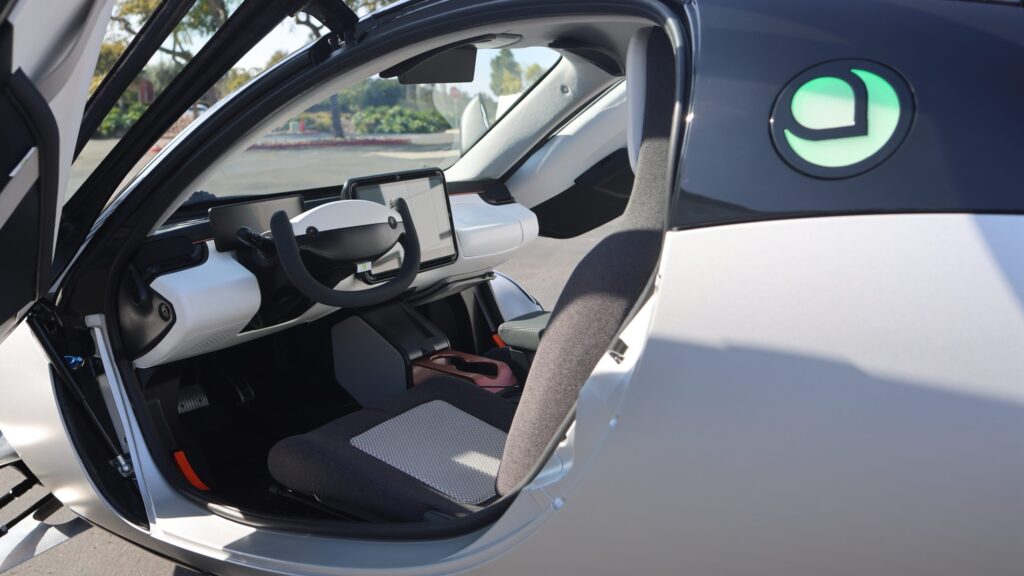
At last report, Aptera was shooting for limited production in 2026, according to Inside EVs, but at the time of this video’s posting, Aptera’s website wasn’t making any promises; saying production would begin “as soon as possible.”
Price is going to be another challenge. Right now the launch vehicle is expected to cost $40,000, which is more than EVs like the redesigned Chevy Bolt and Nissan Leaf. Aptera is also skipping traditional dealers. Instead it plans to sell online and establish regional service centers for maintenance.
While Aptera hopes to sell its solar EVs worldwide, the company says that won’t happen until it hits its U.S. production goals. Aptera plans to start with delivering 60 launch vehicles, then ramp production to 20,000 EVs a year, building the autocycles in Carlsbad, California. By the way, autocycle’s are three-wheeled vehicles. A current high-volume example of an autocycle is the Polaris Slingshot 2-seater.
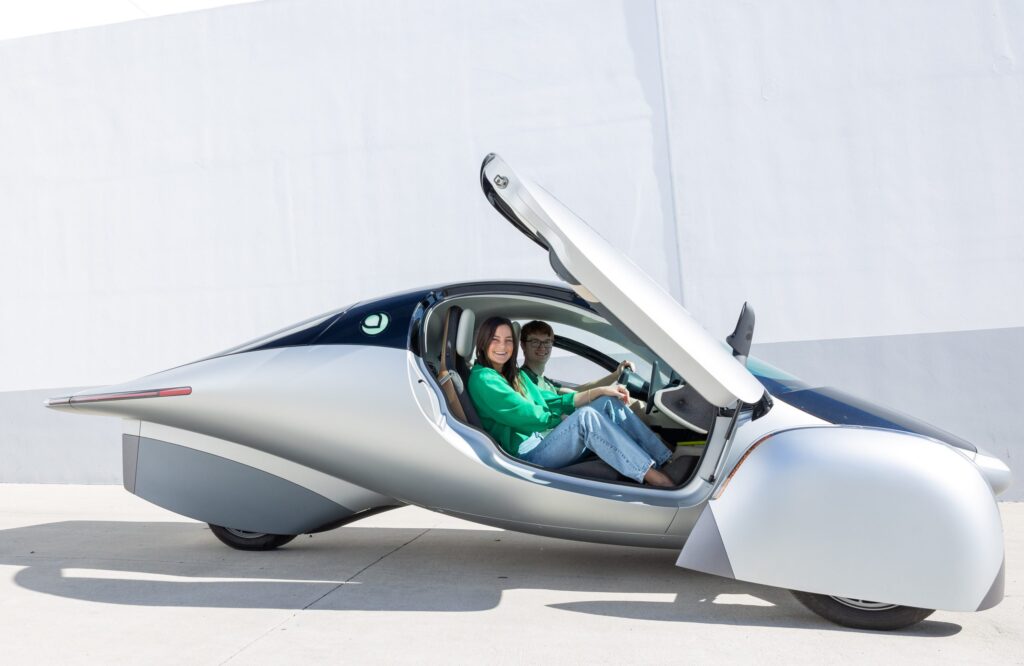
Apteras are eventually planned to have a wide-range of specs and prices with batteries as small as 25 kWh or as large as 100 kWh, with a starting range of 250 miles and going all the way up to 1,000 miles per charge, depending on the battery size. Under ideal conditions, the solar panels on the Aptera are expected to provide up to 700 watts of power per hour.