
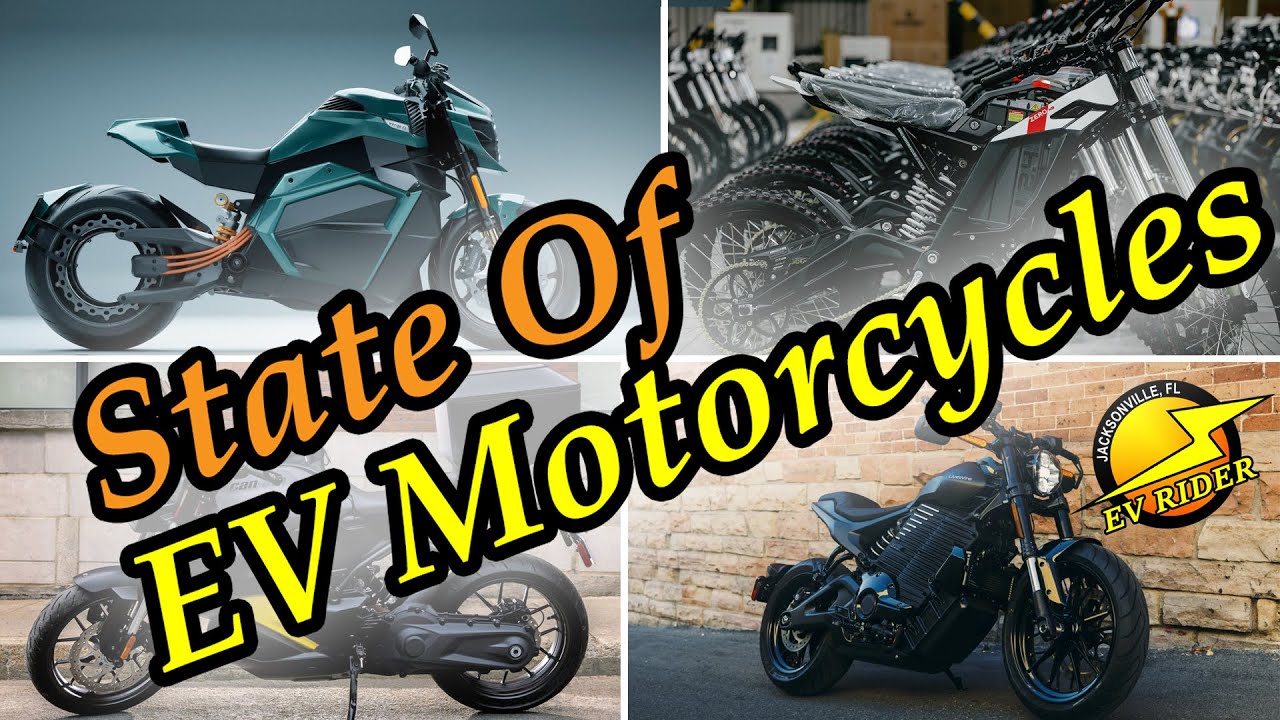


A lot has happened in the EV motorcycling industry over the past year. While a good number of new models have been introduced, it hasn’t been all sunshine and rainbows.
It’s time for EV Rider’s 2025 look at the state of the EV motorcycle industry.
Zero Focuses On Affordable Motorcycles For 2025
As this episode was being uploaded, deliveries were about to begin for the two new Zero Motorcycles models introduced for the 2025 model year, the XB and XE.
They are at the low-end of the EV motorcycle market, which seems to be where most of the action is this year.
While it’s great to see the XB and XE finally in production, they really are more along the lines of beginner bikes than motorcycles. For starters, they aren’t street legal here in the states, meaning they’re pretty much limited to private land and dirt bike trails.

The XB and XE be taking on the popular Sur-Rons, which are a step above electric bicycles, but are also limited to off-road use.
LiveWire Expands Lineup
LiveWire, which is owned by Harley-Davidson, has filled out its line with the recently introduced S2 Alpinista, which it describes as a sport bike standard. It’s very similar to its S2 Del Mar and Mulholland siblings.
I’ve personally ridden more than a hundred miles on the Mulholland and came away impressed with the build quality, handling and acceleration, but all three have small 10.5 kWh batteries so LiveWire fans that like to get out of town on the weekends will probably instead look at the LiveWire One, which has a 15.5 kWh hour battery and DC fast charging.
However, if they want the most range currently available in the EV motorcycling space with a somewhat affordable price tag, then Zero is the brand to look at here in the the U.S. We’ll get to Zero’s long-range offerings in a bit.
Verge TS EV Motorcycles

The EV company perhaps making the most waves this year is Verge Motorcycles, which has finally gotten its TS bikes on roads.
Verge is unique in that it uses a futuristic-looking hub rim motor design and offers what is currently the industry’s largest battery pack available in the U.S., checking in at 21.8 kWh.
Energica was the previous record holder with a 22.5 kWh battery but unfortunately that Italian motorcycle maker declared bankruptcy last year and is currently being liquidated.
Verge’s bikes feature a big touchscreen where a gas tank would normally go and the Ultra model has six cameras for a full 360-degree view along with front and rear radar, bringing automotive-like blind spot safety features to motorcycles.
Verge’s bikes also accel at charging with a peek DC charging speed of up to 25 kW and 3.5 kW when using Level 2 AC chargers.
While Verge’s bikes are exciting, here in the U.S. there are only two stores in the entire country, one in Los Angeles, the other in Santa Clara, CA. Pricing is also out of reach for most riders with the TS Ultra checking in at more than $45,000 once taxes and fees are added.
That leaves Zero to carry the biggest chunk of the EV touring torch here in the U.S. with its SR/F, SR/S and DSR/X lineups.
Those motorcycles currently have 17.3 kWh batteries while a second 3.6 kWh battery can also be added, bringing the total capacity to 20.9 kWh.
Zeros with an optional AC Rapid Charger can reach a peak charging speed of 12.6 kW. The extra battery or Rapid Charger goes in the same location so you can only opt or one or the other – not both.
For long distance touring the other option is the LiveWire One with its smaller 15.5 kWh battery but faster DC charging that peaks at 25 kW in ideal conditions.
There are other new entries in the shorter distance per charge end of the market.
Cam-Am Gets Back Into Motorcycle Business

Can-Am is in the process of rolling out its Origin and Pulse EV motorcycles, which marks its return to building motorcycles after exiting the market in 1987. From a pricing and range standpoint they’ll be competing primarily with the LiveWire S2 models.
The Pulse streetbike is the cheaper of the two at $14,000. They look to be atractive urban commuters but their batteries are even smaller than the LiveWire S2 models, checking in at just 8.9 kWh.
Then there’s Kawasaki’s Ninja e-1 ABS an Z e-1 ABS with an estimated range of just 41 miles, which is less than some electric bicycles. And forget about taking them on the interstate. The Ninja e-1’s top speed is just 65 miles per hour while the Z e-l manages 63 mph. In both cases that’s using e-boost mode. The sustained top speeds without e-boost modes engaged are 55 mph for the Ninja e-1 and 53 mph for the Z e-1.
Also expected to enter the U.S. market sometime in 2026 is Royal Enfield’s Flying Flea C6 and S6 EV lineup. Final specs haven’t been announced but all signs point to it being yet another urban commuter with a battery size that’s likely to be under 10 kWh.
There is a ton of other stuff out there but most of it isn’t available in the U.S. and this video is sticking with motorcycles – no scooters, no e-bicycles and no vaporware like Damon.
EV Motorcycle Cottage Industry
The last category is the cottage industry, which is the extremely low volume stuff like Lightning and Curtiss Motorcycles. They exist but probably aren’t making more than a few dozen bikes a year – if that.
Finally there’s Shandoka, which is converting old Japanese motorcycles to EVs. EV Rider got to try out one of Shandoka’s conversions last year. You’ll find a link to that video at the end of this one.
And that sums up the state of the EV motorcycle industry here in the U.S. in 2025. If I missed anything let me know in the EV Rider YouTube comments section.