


As summer settles in, people in some parts of the country are worrying about the possibility of power outages due to severe weather like heatwaves, hurricanes or tornadoes.
But what if we could all help each other avoid power outages while at the same time decentralizing our power supplies to make them less vulnerable to mother nature?
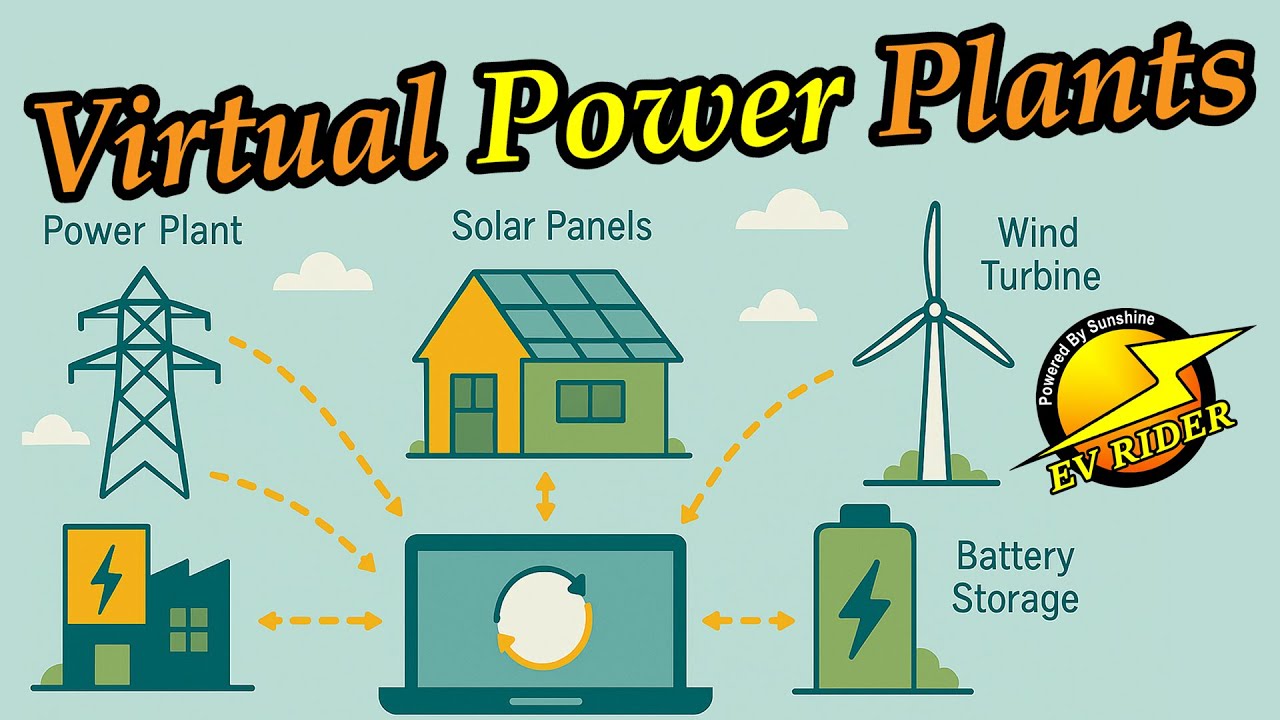
It’s already happening, at least on a small scale, thanks to residential wind, solar and battery storage systems.
Since you’re reading or watching this EV Rider story you probably already know many homeowners with rooftop solar send the excess power they don’t use back to their utilities to be redistributed, but what you might not realize is the technology also exists for utilities to be able to pull power from home battery storage systems when needed.
PG&E, Tesla Team Up To Create Virtual Power Plant Program
Such a system is already in place in California through a partnership between PG&E and Tesla.
They are called virtual power plants and are as simple as a home solar or wind generation system with batteries that are tied into a utility’s grid
When PG&E needs extra power it can tap home batteries that are being filled up by the sun – with the owner’s permission of course.
It works via a Tesla app with homeowners being paid for the power they send back when the grid needs it.
Utilities across the country do something similar with net metering, where they buy excess power generated by home solar and wind.
But virtual power plants are different in that they allow utilities to actually pull power when there’s extra demand during something like a heatwave that might otherwise trigger a brownout or even a blackout.
According to Tesla’s support page, on average, PG&E customers that participate can earn $350 per Powerwall during the summer.
Solar Installations With Battery Storage Are Growing

Home battery systems are quickly growing in popularity. The U.S. Energy Information Administration found in April of 2024 over 50% of new residential solar systems in California were paired with batteries, while nationwide over 28% of new residential solar installations were paired with battery storage.
Vehicle To Grid (V2G)
As electric vehicles grow in popularity what’s known as Vehicle to Grid (V2G) may also one day become a big help to both homeowners and utilities.
The bottom line is home solar, wind and battery storage have the potential to lead to a more reliable grid for all of us.