


Way back in the dark ages, Subaru decided to make its all-wheel-drive station wagon a bit more macho, and voila. Some body cladding made it the Outback in 1995.
Fast forward 31 years later, and cladding on a Subaru denotes a far more serious offroad-capable model, as the boxier new 2026 Outback shows.
But now Subaru ups the ante with its latest Forester Wilderness, which has more than just some angular cladding. It gets some copper jewelry to jazz up the chunky design.
2026 Subaru Forester Wilderness Has 9.3 Inches Of Ground Clearance
This is the sixth-generation Forester, specifically what Subaru calls “the most rugged Forester Wilderness yet.” It lives at the top of the 2026 Subaru Forester food chain, which starts with the Base and Premium trim levels.
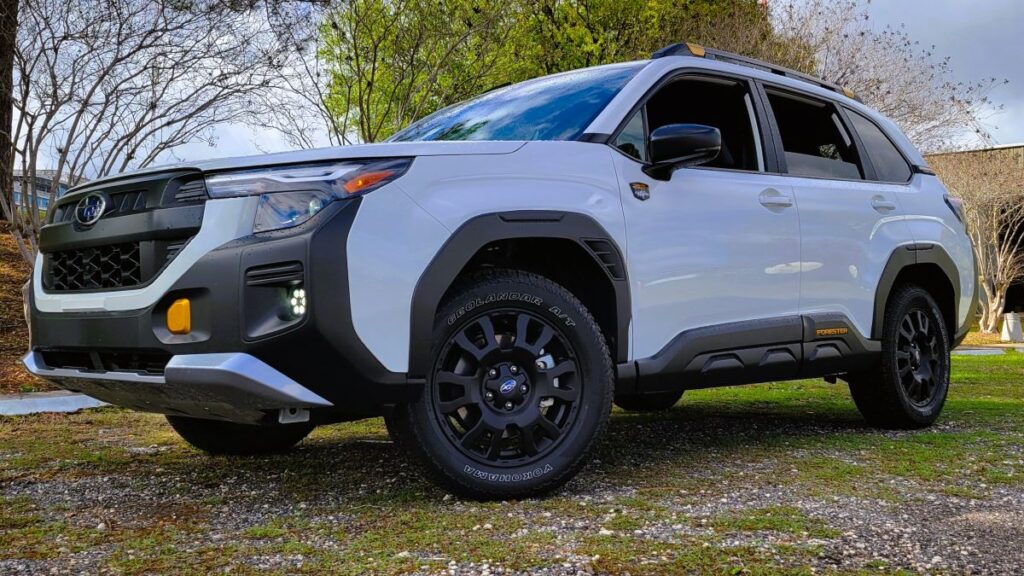
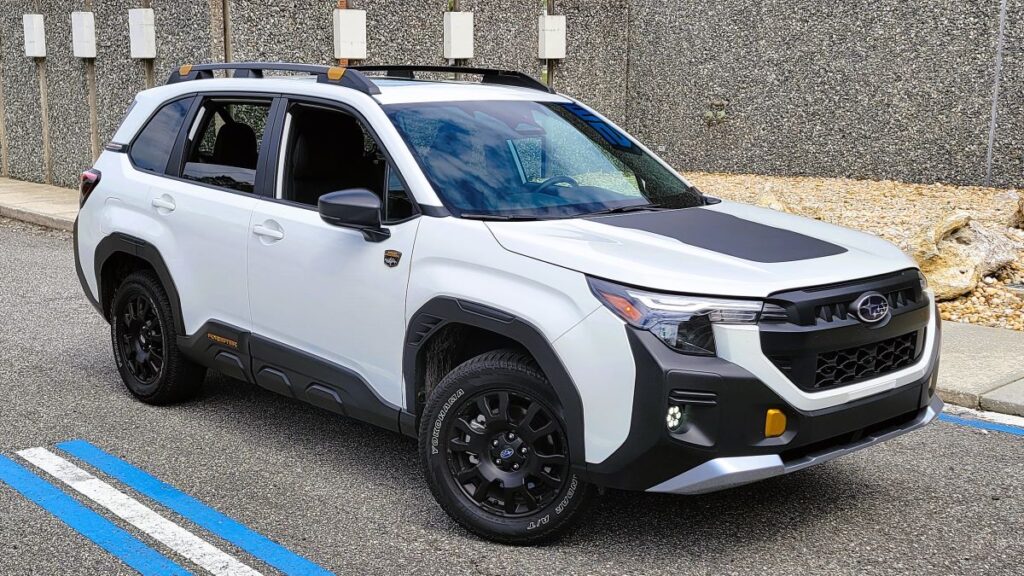
Immediately evident is its 9.3 inches of ground clearance, a bit more than the fifth-gen predecessor. The same bold black grille remains on our pearl white warrior, but with a bit more angular sculpting and less honeycomb. It digs deeper into the chunky bumper cladding, with copper accents.
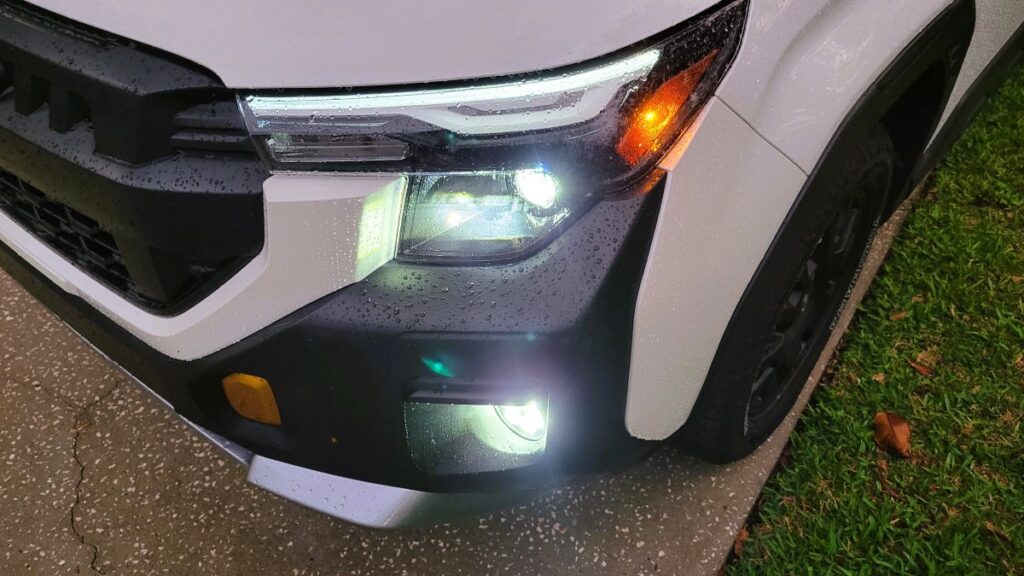
The headlights and DRL shape is slimmer than before, above LED fog lights indented into faux side vents in chunky black. Below the slim lower center intake lives a serious looking silver skid plate. The angular black fender flare accents are thinner, with functional rear vents for aerodynamics on the front set. There’s a big hands-width of room between flare and treads on the 17-inch Yokohama Geolander A/T rubber on matte black spoked alloy wheels. The added ground clearance is due to suspension mods and taller off-road rubber.
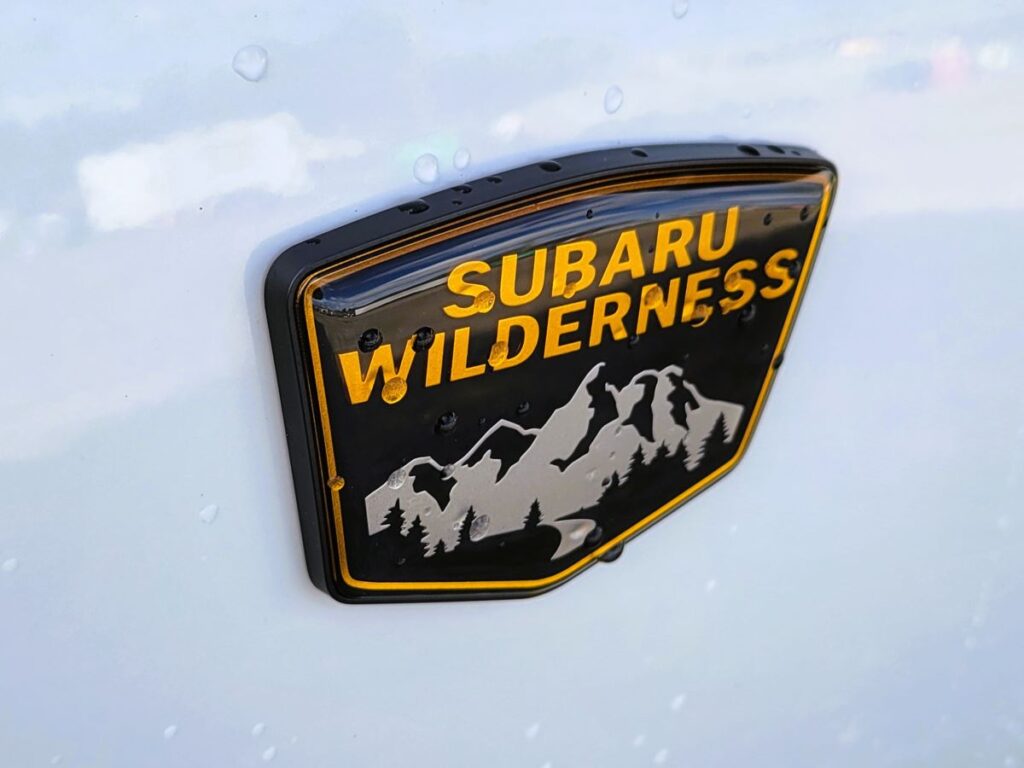
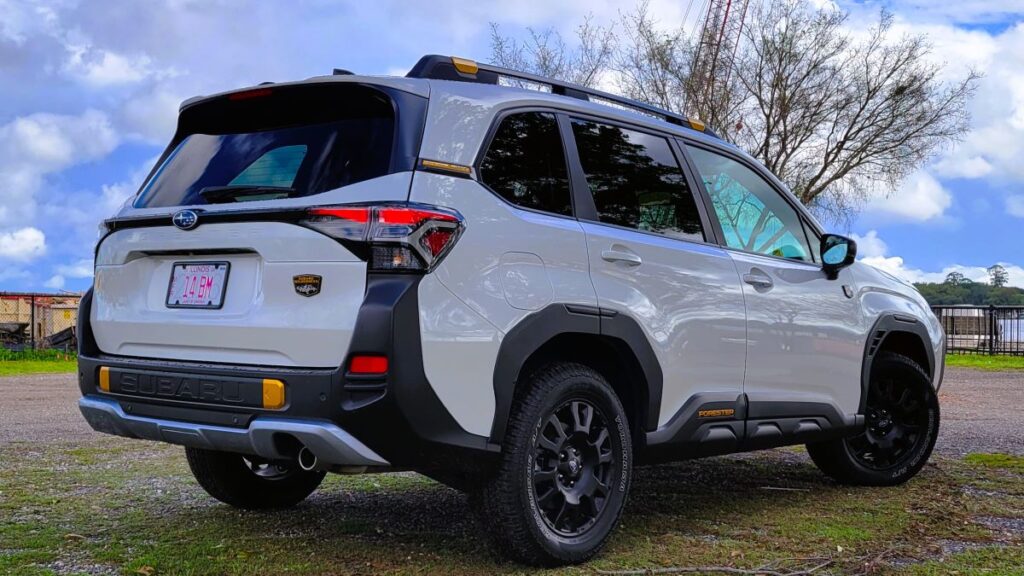
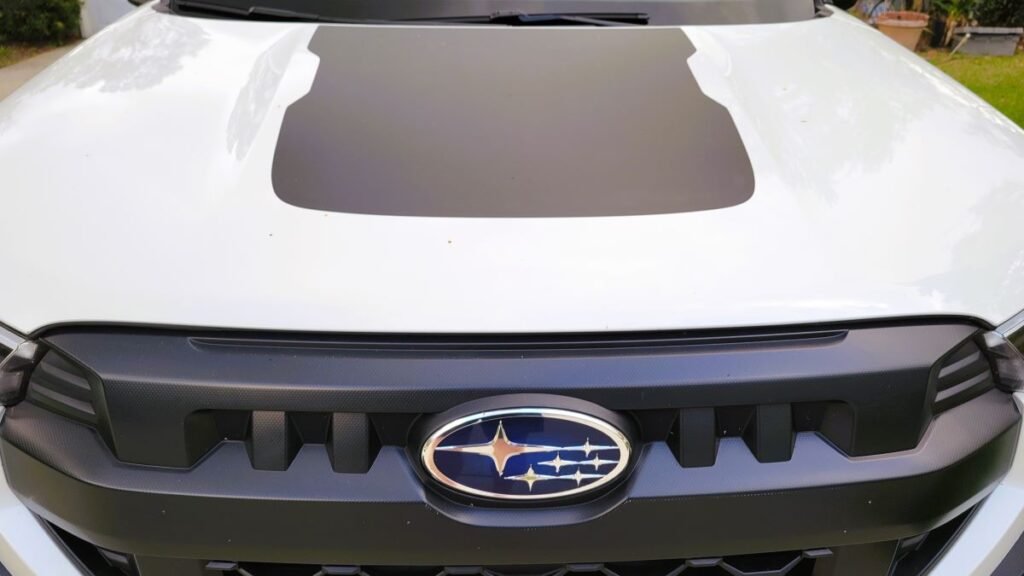
There are “Subaru Wilderness” badges with mountain range on each front door, and a bronze badge proclaiming “FORESTER” on each sculpted black sill accent. The rear of the Wilderness gets the same attitude as the face, including black bands flowing from smoother, bigger taillights to a slim lower bumper with more bronze accents and a buffer lower skid plate in silver under imprinted “SUBARU.” The hatchback window gets a long white and black spoiler/shade. There’s a chunky, usable roof rack. And let’s not forget the matte black hood decal, a nod to rally and race cars to reduce glare.
The latest Wilderness has improved approach, departure, and breakover angles, compared to the rest of the sixth-generation Forester lineup. The approach angle has been extended to 23.5 degrees compared to 19 degrees. The ramp breakover improves up to 21 degrees compared to 19.6 degrees; and the departure angle edges up to 25.5 degrees compared to 24.6 degrees.
2026 Subaru Forester’s Interior Headlined By 11.6-Inch Touchscreen
Our sixth-gen Forester lives atop the Subaru Global Platform that underlies most of its car-like, and more SUV-like siblings, such as the Outback.
It’s easy to slide into the Forester Wilderness’ dark gray buckets seats, done in supple StarTex pleather with heat and power adjustments for the driver. There are embossed “Subaru Wilderness” logos on head restraints. The dark interior is made up of lots of hard plastic, with some pleather accents edged in bright copper stitching. There’s also a carbon fiber-like copper accent under the faceted plastic passenger dash, also edged in stitched pleather. The adjustable steering wheel has a thick stitched leather rim, with copper accent on the lower spoke. Small plastic paddle shifters in back work eight simulated gears on the CVT, while a button up front shifts drive modes.
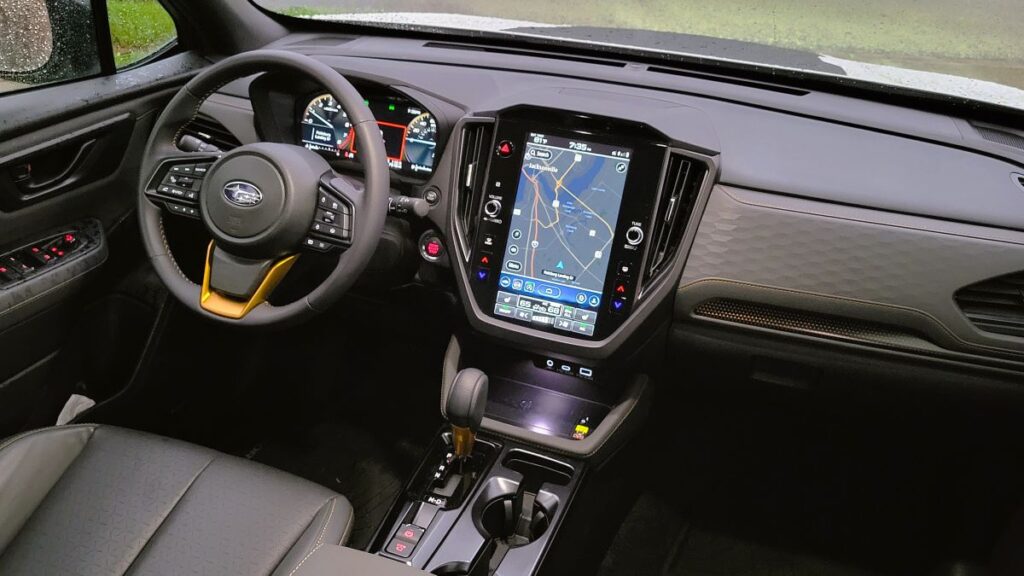
The sixth-gen Forester’s comprehensive interior redesign is centered around a big 11.6-inch touchscreen as part of a higher-mounted dashboard for increased space. The fifth-gen’s climate control knobs, plus some other physical switches, are now integrated as touchscreen controls into the tall display with mixed results.
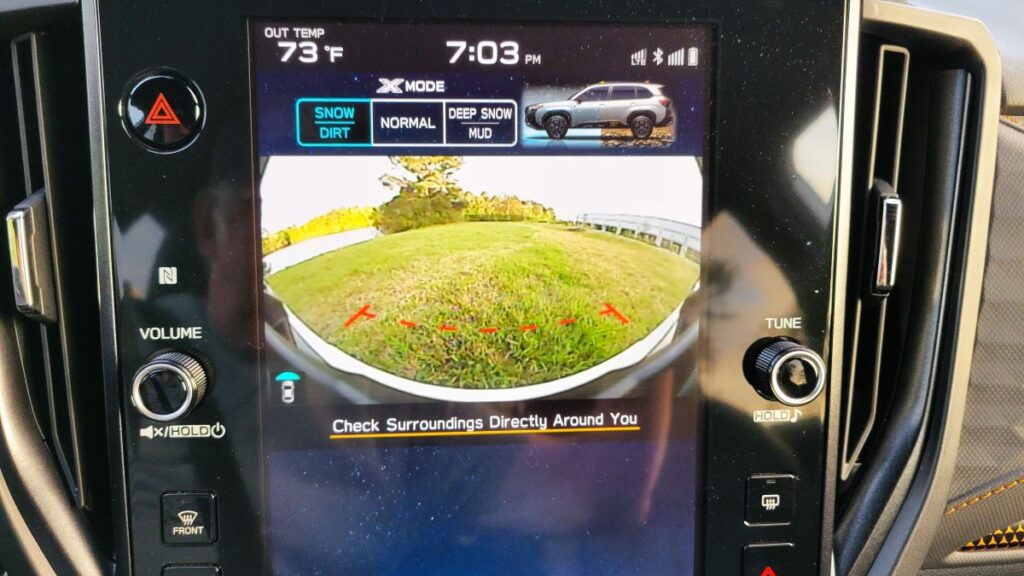
Audio tuning and volume knobs remain, as do dual-zone temperature and defroster buttons. Fan speed, seat heat and a/c controls are now touchscreen icons. To activate safety systems like lane-keep, you need to tap the “car” icon, then work that menu. X-Mode, which activates off-road and snow settings, can be accessed by sliding the main screen’s upper info screens. Or by tapping the “car” icon again, you can select Snow/Dirt or Deep Snow/Mud on the screen. That’s twice as much to do as with a dedicated button. But really handy – the center screen can show a nose camera video of what you are driving over, or you can switch it to show all-wheel-drive status, roll and dive angle and steering articulation, with climate controls still active below.
More Subaru Coverage (story continues below)
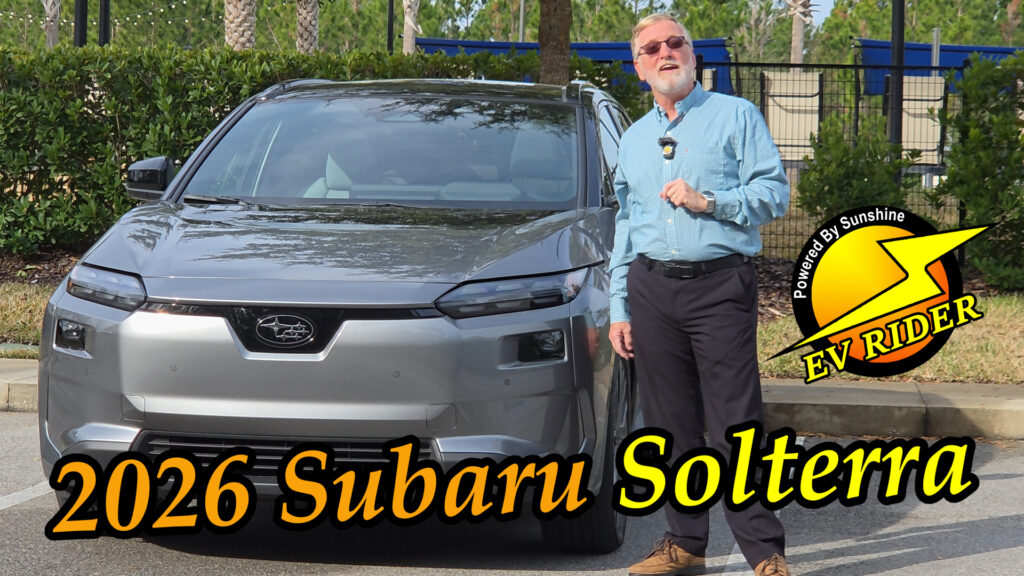
Subaru Solterra Gets Substancial Overhaul For 2026
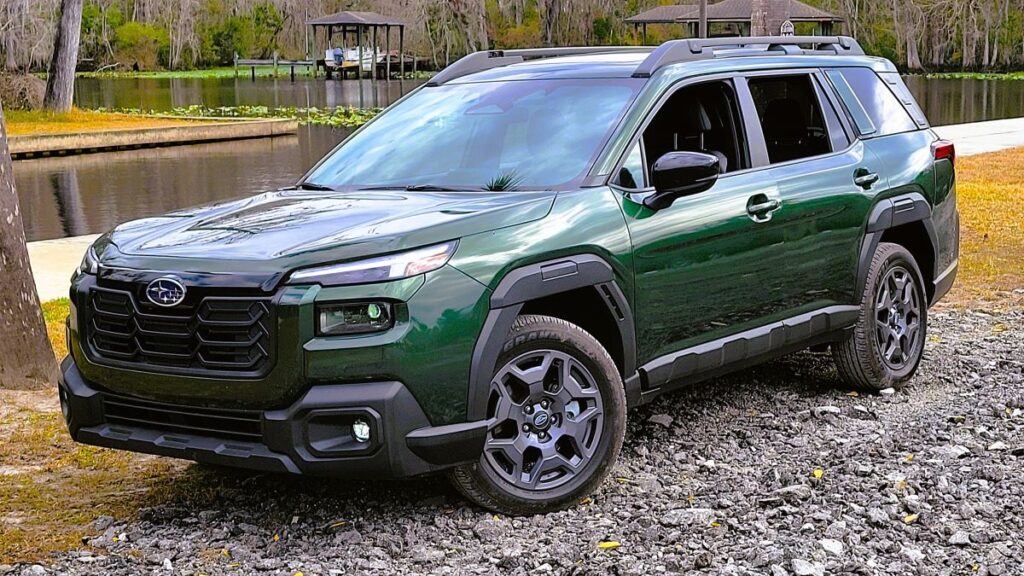
Subaru Outback Premium Updated For 2026
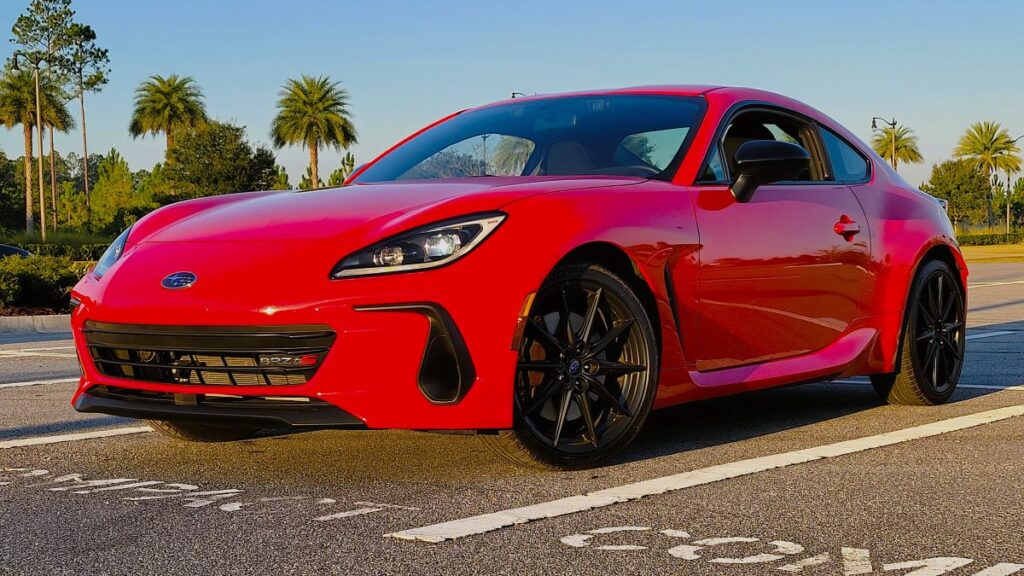
2025 Subaru BRZ tS Keeps The Manual Flame Alive
As nice and concise as that center screen is, it took up to a minute to boot up all functions like navigation and audio when we started it. And voice-recognition didn’t always understand our instructions. That said, we had HD Radio, plus wireless Apple CarPlay and Android Auto technology to run functions through my smartphone. And we had an inductive charger for phones, although mine slid a bit when driving.
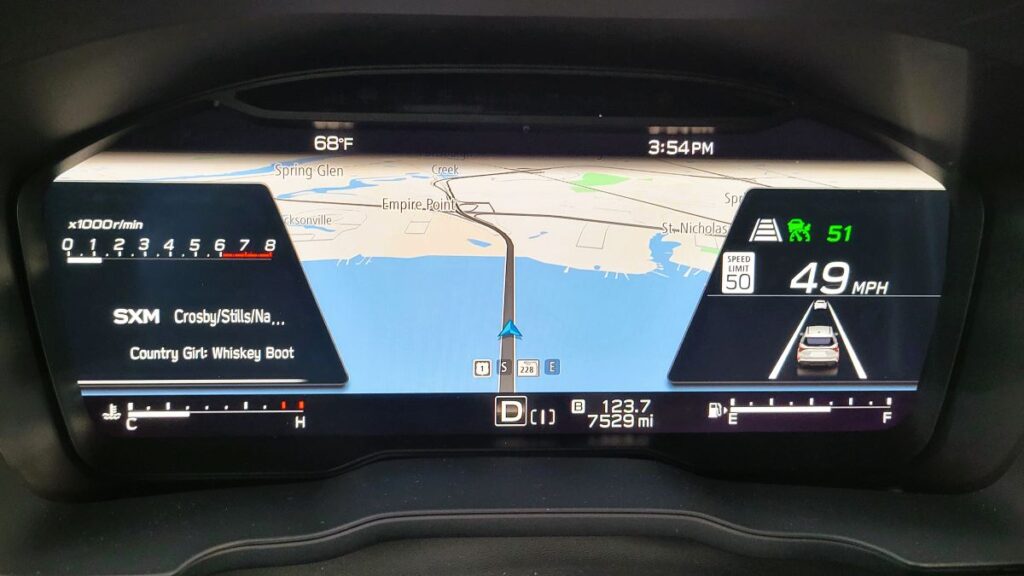
The digital revolution continues inside a hooded gauge. Its screen has an 8,000-rpm tach display (configurable info inset) paired with a 160-mph speedometer. In the middle, a digital speedo joined by the EyeSight safety system screen showing vehicles in front, behind and in the blind spots, plus posted speed and other safety info. You can also pop the navigation map in the middle, or just cue up turn-by-turn directions in the tachometer info window.
The center console gets USB slots over that phone charger, cup holders, copper-accented shifter and a button to pop on surround-view cameras. The padded center armrest hides some decent storage.
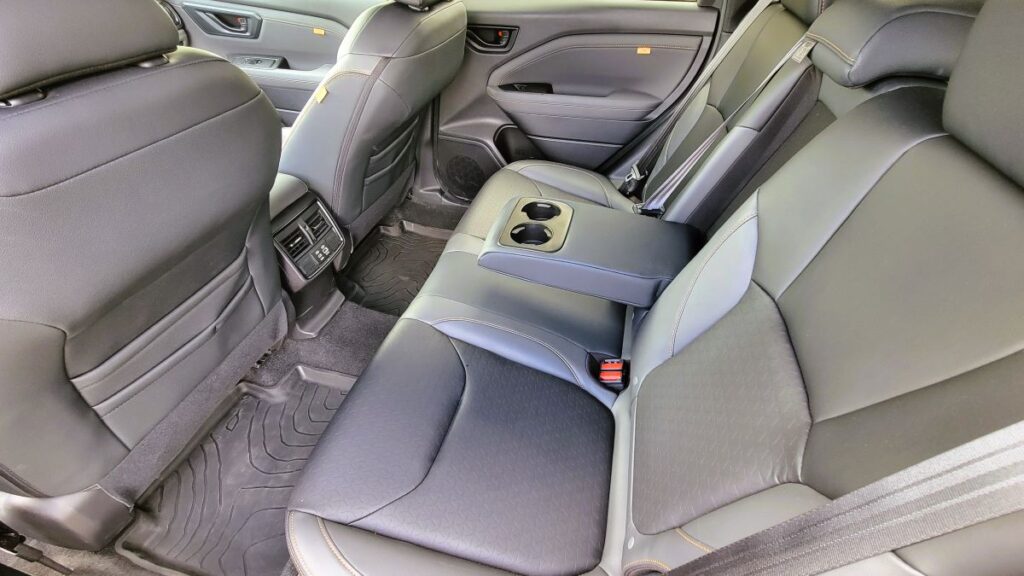
Head aft, and while the rear wheel-wells do intrude a bit, the back doors open to a roomy bench seat within a 104.9-inch wheelbase. It sits high, with lots of leg and head room, air vents and more USB points.
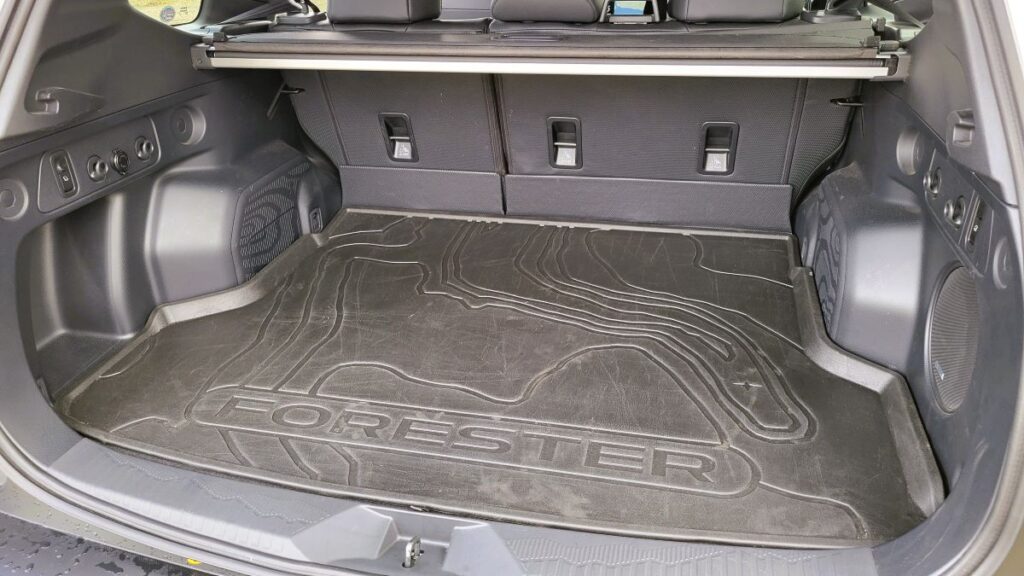
The rear cargo area is under a power hatch that rises high. It’s boxy and very usable with textured rubber mat. The floor mats are spill-catching rubber. There are outboard grocery bag hooks and a remote mechanism to drop the 60/40 rear seatbacks. All in all, practical and comfy.
Subaru Forester Boxer Engine Continues For 2026
Subaru has long adopted a different mode of propulsion for its vehicles, namely a horizontally-opposed Boxer (like an old VW Beetle, only water-cooled). For 2026, the familiar 2.5-liter four-cylinder that makes 180 hp and 178 lb-ft of torque feeds power through a continuously-variable automatic (belts and pulley vs. gears), with an 8-speed “manual” mode that you can “shift” via paddle shifters. An uprated transmission cooler offers an increased towing capacity of 3,500 pounds, up 500 from the past and the highest towing capacity ever offered on a Forester, Subaru said.
It is all-wheel-drive, with Intelligent (fuel efficient) and Sport modes for pavement driving.
Our 7,500-mile-old Boxer four gives off a sweet chuffing exhaust note under load, and is sprightly in response, more than enough power for commuting purposes. The CVT does a nice job of mimicking an 8-speed automatic most times, up- and down-shifting as demand ebbs and flows. But when we launched hard from a stop in Intelligent mode, the engine revved to 5,800 rpm, then mostly held there as the CVT’s belt and pulley changed ratios – we hit 60 mph in 8.5 seconds. In Sport mode, it launched a bit quicker, with a sportier exhaust snarl. But as speed climbed, the CVT hit about 6,000 rpm as it again worked its ratios, 60 mph in 8.5 seconds. In mixed driving modes, we saw just about 21 mpg on regular.
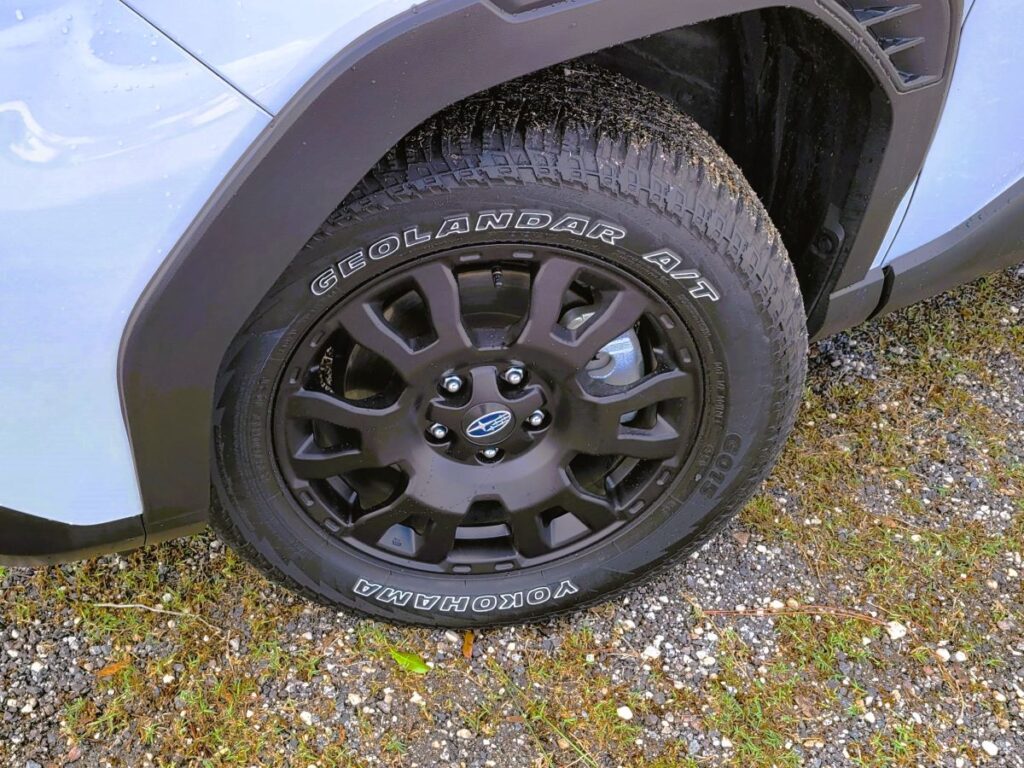
With taller off-road rubber and fully independent coil spring suspension (double wishbone in back) retuned in 2025 for a nicer ride, the Forester Wilderness’ all-wheel-drive system now has a faster center differential lockup and reduced wheelspin when off-roading, and incorporates steering angle data for better stability at turn-in and cornering on higher-speed roads, Subaru says. It also has Dual-Function X-MODE – Snow/Dirt for slippery surfaces like gravel or snow, or Deep Snow/Mud for that stuff, allowing more wheelspin to maintain momentum. Subaru also installs underside skid plates for when you cruise off-road.
So we went off road, tackling a grassy lakefront shoreline, where we found the suspension nicely handled bumps and divots with no harsh rebound or head tossing. Set in X-Mode Snow/Dirt – you can only do that up to about 20 mph – traction was solid in slippery areas, and if there had been any branches or ant hills, the skid plates would have helped. It also remained sure-footed in dirt and gravel, and we liked the 180-degree view nose-mounted camera to see where we were headed.
On the highway, speed bumps were handled quickly, suspension just taut enough in response to bumps and again, no rebound afterward. The overall ride was quiet and composed, the steering direct in Intelligent, a bit tighter with more feel in Sport. When we tackled some corners it was nimble enough for a slightly tall wagon. It was neutral in an arcing turn with a decent turning radius too.
There’s a bit of understeer when we pushed it harder in our skid pad, but controllable. Our 12.4-inch front/11.8-inch rear disc brakes had a solid pedal feel and decent bite. The auto-engine off does refire the Boxer four with a slight wiggle, but it doesn’t transmit into a drivetrain lurch at a stop.
The new Forester Wilderness looks like it can get into the weeds, and can to a point. But it also does very well as a daily commuter, agile and quick enough to make the drive on- and off-road fine.
The sixth-generation Forester starts at $29,995. Our Wilderness model based at $38,385 with the $2,200 digital gauge display/11.6-inch center display, harmon-kardon audio and power tailgate options. Final price: $42,035.
Bottom line: The Subaru Forester Wilderness is a right size for handling a family, commuting and some gentle off-roading. It’s also got great grip on and off-road, and fairly nimble when it needs to be. I’d love to try it in the snow.
2026 Subaru Forester Wilderness Specifications
Vehicle type – 5-passenger 4-door compact all-wheel-drive SUV
Base price – $38,385 (As tested – 42,035)
Engine type –DOHC, 16-valve Boxer four
Displacement – 2.5 liters
Horsepower (net) – 180 @ 5,800 rpm
Torque (lb-ft) – 178 @ 3,700 rpm
Transmission – 8-speed CVT
Wheelbase – 104.9 inches
Overall length – 182.9 inches
Overall width – 81.2 inches w/mirrors
Height – 69.3 inches
Front headroom – 40 inches
Front legroom – 43.3 inches
Rear headroom – 37.7 inches
Rear legroom – 39.4 inches
Cargo capacity – 27.5 cu. ft./69.1 w/rear seat down
Curb weight – 3,675 lbs.
Fuel capacity – 16.6 gallons
Mileage rating – 24-mpg city/28-mpg highway