
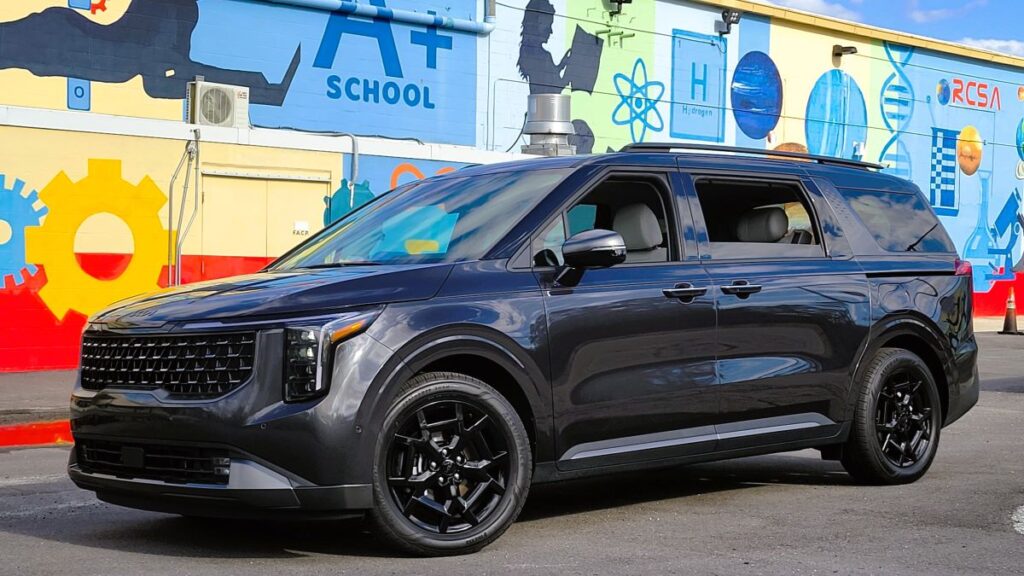


If I say “minivan,” some of you may say “soccer dad,” “mom-mobile,” or just “no way!”
What if I said Kia Carnival? You might say “Looks a bit like an SUV,” or “I might be seen driving that.” What if I said, “This Carnival SX Prestige Hybrid is a family limousine.” Hmmm? Just read on to find out why.
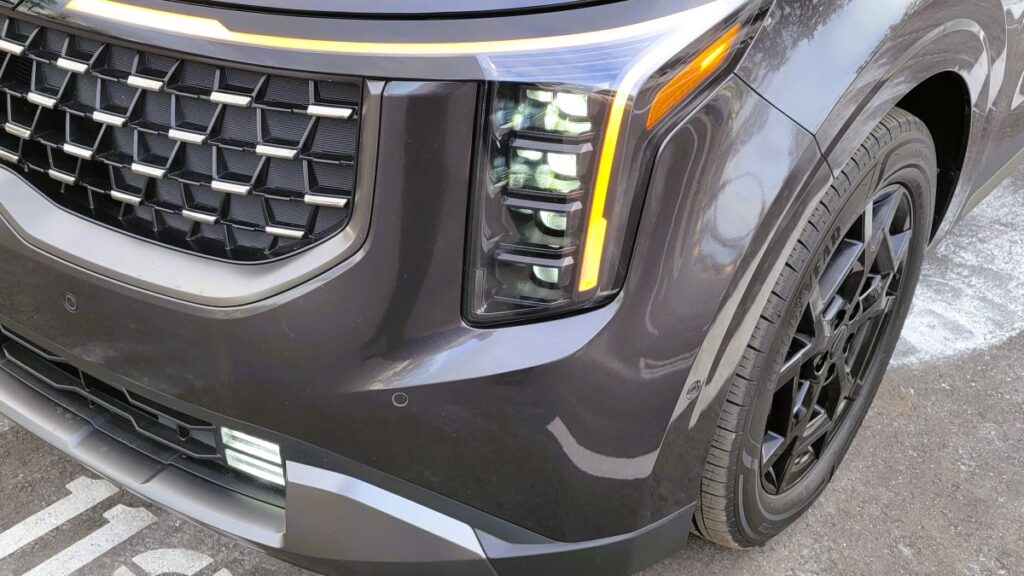
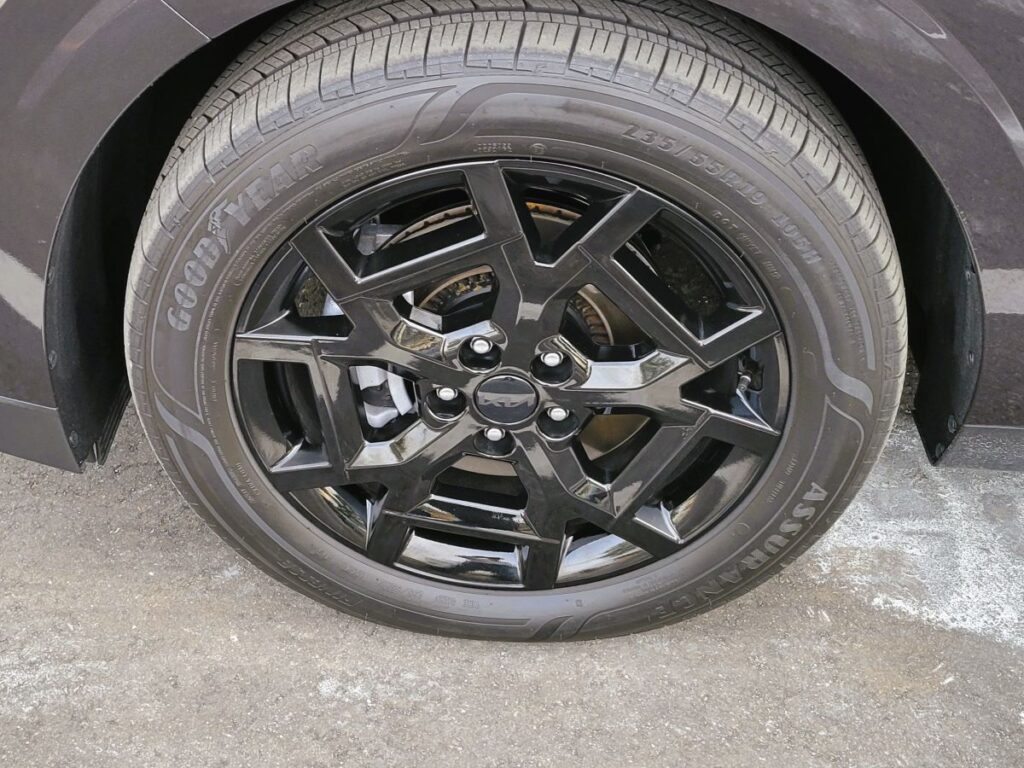
When Kia came out with its fourth-gen minivan in 2020 (it used to be called Sedona), then did a facelift in 2022, the aim was to make its 203-inch-long shape look more SUV-ish. It gave the classic one-box shape a more aggressive nose and squared-off roof – only side rails on back doors reveal a minivan. The nose edges close to the buff Telluride SUV with a smoked chrome grille that includes ingot-like facets in the latest version of Kia’s classic “tiger nose” design. Some are blocked off for aerodynamics in our hybrid. Stacked LED headlights are connected by slim lit amber DRL bars. The lower intake gets a faux brush guard and integrated LED fog lights. Cleaner flared fenders frame gloss black 10-spoke alloys wearing 20-inch Continental rubber.
The clamshell hood’s shutline flows into side design lines that become side door tracks, which slide into L-shaped LED rear lights that mimic DRL bars in front. There’s faceted alloy accents in the C-pillars and under rear side windows, plus silver spears in the lower sills.
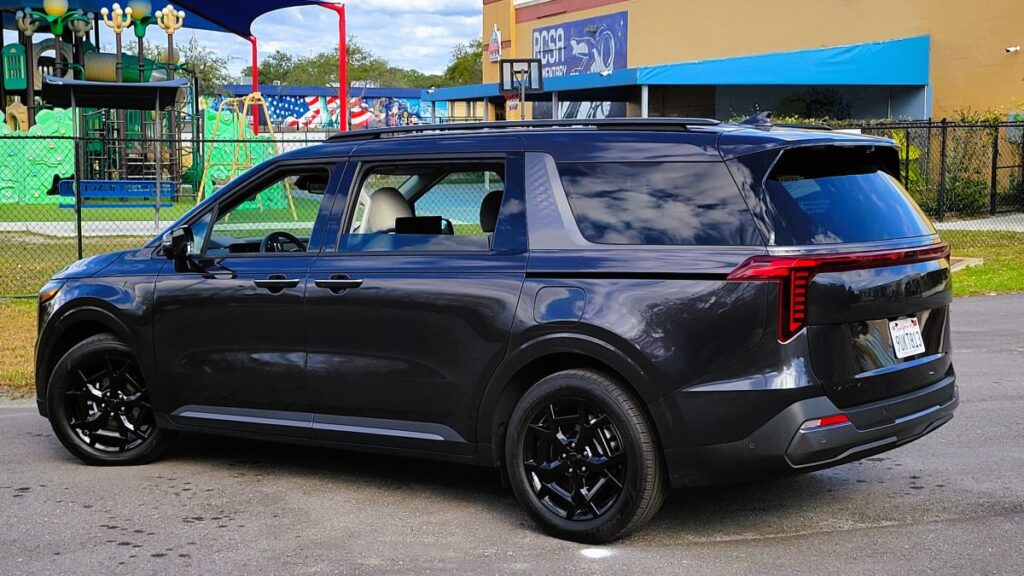
The whole design stands 68.5-inches tall, not counting the black cargo rails. It’s a hint lower than both the Honda Odyssey, and PHEV Chrysler Pacifica. The Carnival looks more aggressive, with a more macho SUV hint than most MPVs. The Panthera Metal paint is cool. It appears metallic gray on cloudy days, with a hint of purple mist in the sun.
The 121.7-inch wheelbase helps give Carnival a longer, wider look, causing at least one person that saw it to think it was an SUV.
Kia Carnival’s Blue-Over-Tan Interior Features Smooth Design
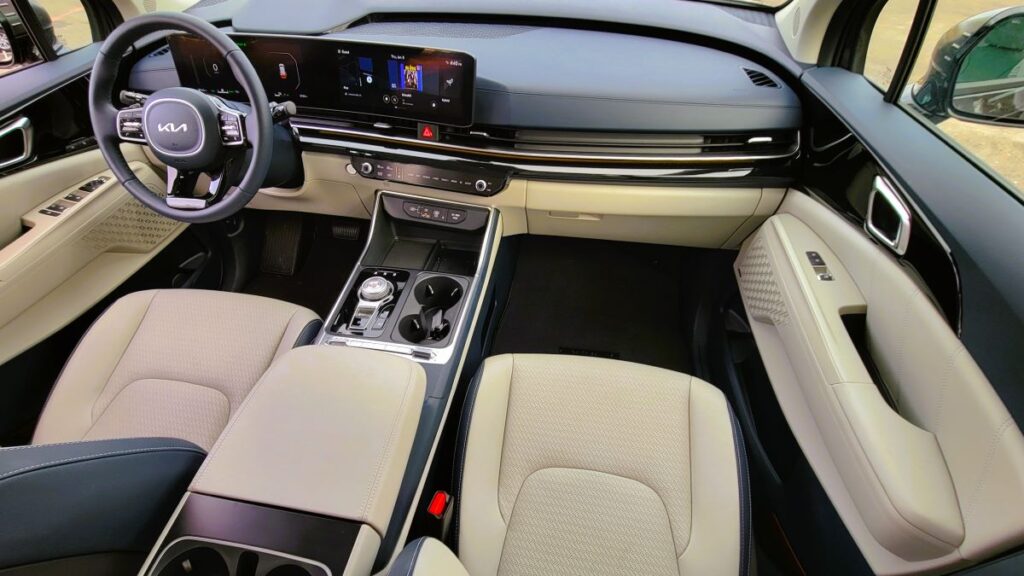
The dashtop isn’t padded, but there’s stitched leatherette in front of the driver and front passenger. There’s a almost 25-inch wide infotainment screen in front of the driver, and audio/main menu panel for the co-pilot.
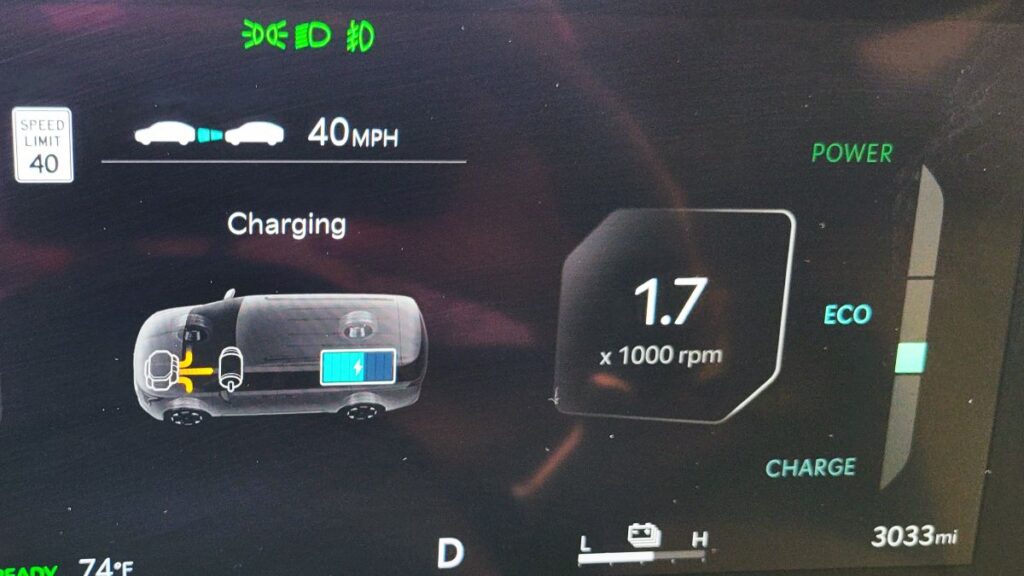
The gauge display gets a digital speedometer and real-time economy graph on the left, along with charge/eco/power use on the right. There are also audio, navigation, settings and trip information in between. Needed info like miles-to-empty, safety systems and mpg are always there. Tach and speedometer become blind spot video views down each side when you activate a turn signal.
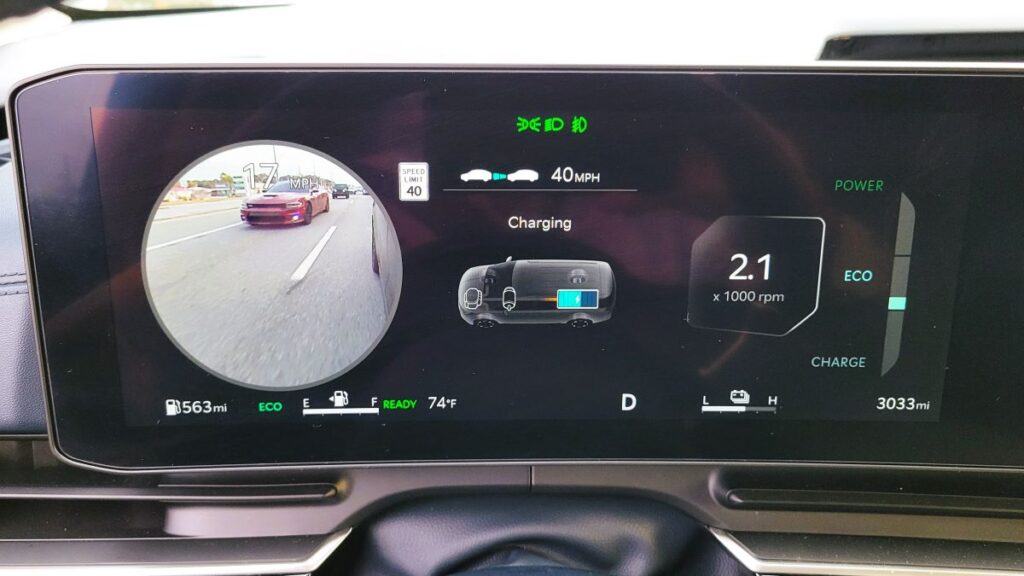
The Bose sound system is good. It includes HD Radio, wireless Android Auto and Apple Car Play.
The touchscreen in the center offers a wide map display, or a slightly smaller one with weather, clock and more on the right. There’s even a back seat video monitor and Passenger Talk to check on the kids.
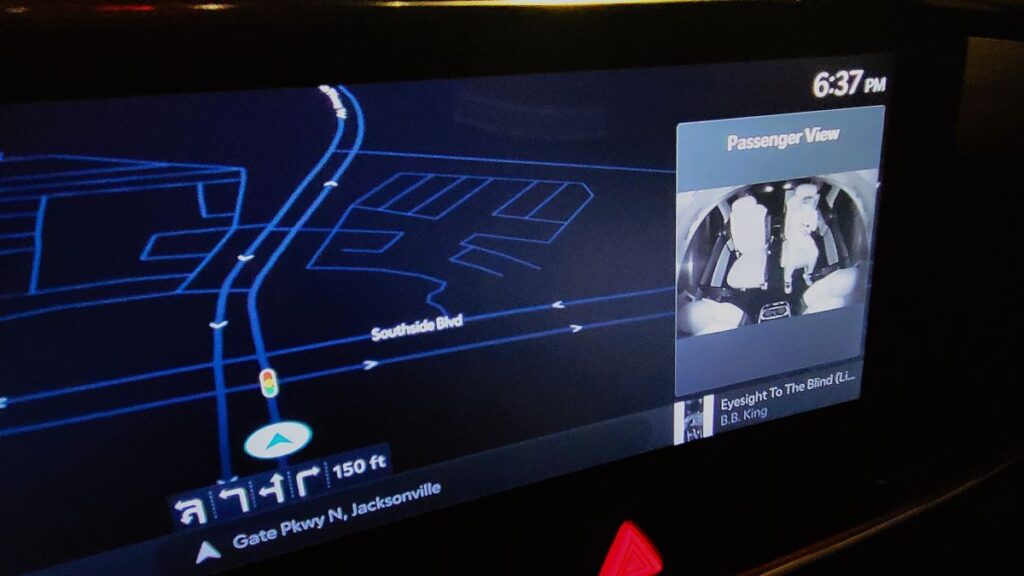
The thick, stitched leather steering wheel manually tilts and telescopes, with paddle shifters in back, and the usual audio/smart cruise/info display buttons in front. The front bucket seats were a bit flat, but comfy, with power adjustment and dual memory preset for the driver. They are also heated and cooled. A gloss black and silver band spans the dashboard with slim air vents and a warm ambient light accent. Then there’s a mini-touchscreen. It features a slim control panel used on other Kias that offers climate controls. Or tap the “arrow” button, and you get the main menu buttons for map, audio, phone, etc.
Unlike its first iteration, the main selection you tap here stays put, versus switching back to the climate control panel in seconds as in earlier iterations. But the icon buttons are small, and not too easy to use on the move. During the switch, temperature knobs become volume and tuning, the latter with handy steering wheel controls as well. There’s a color head-up display and digital rearview mirror.
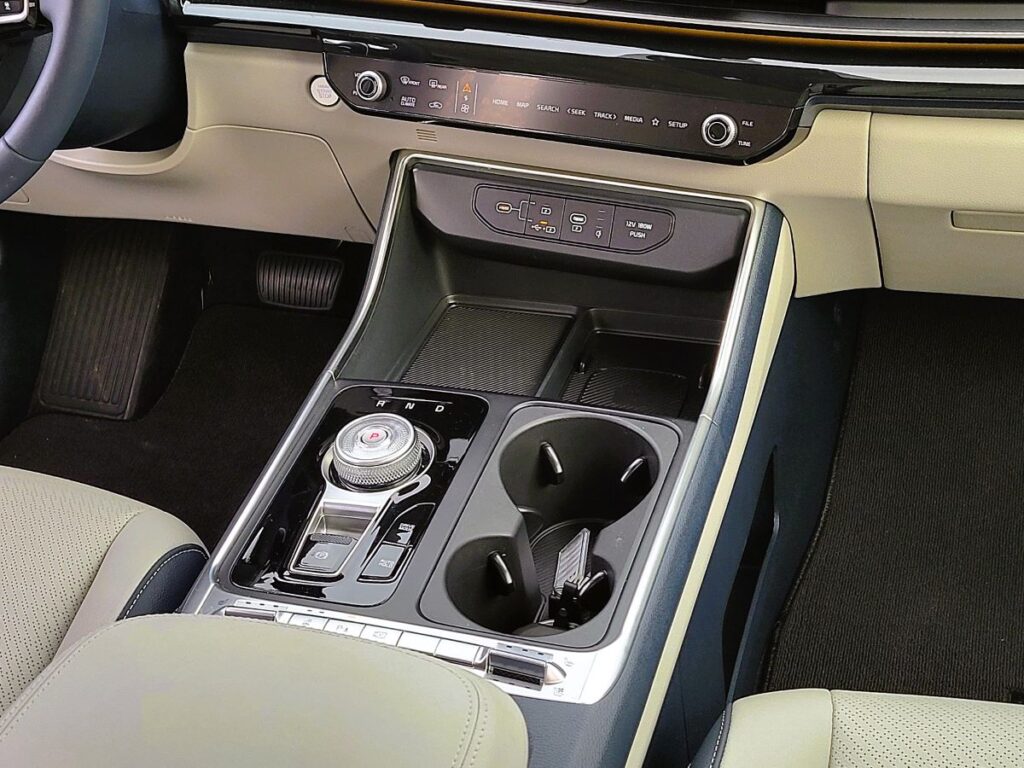
The wide center console includes USB ports and a 12-volt plug, rubberized storage and a recessed inductive charging slot that puts a cellphone out of the way. The gearshift is a simple Drive/Neutral/Reverse knob with “Park” button. Nearby, there are auto-hold buttons along with a electronic parking brake and drive mode selector. Easy-to-use switches behind those control heated/cooled seats, surround-view parking camera, heated steering wheel and park sensors.
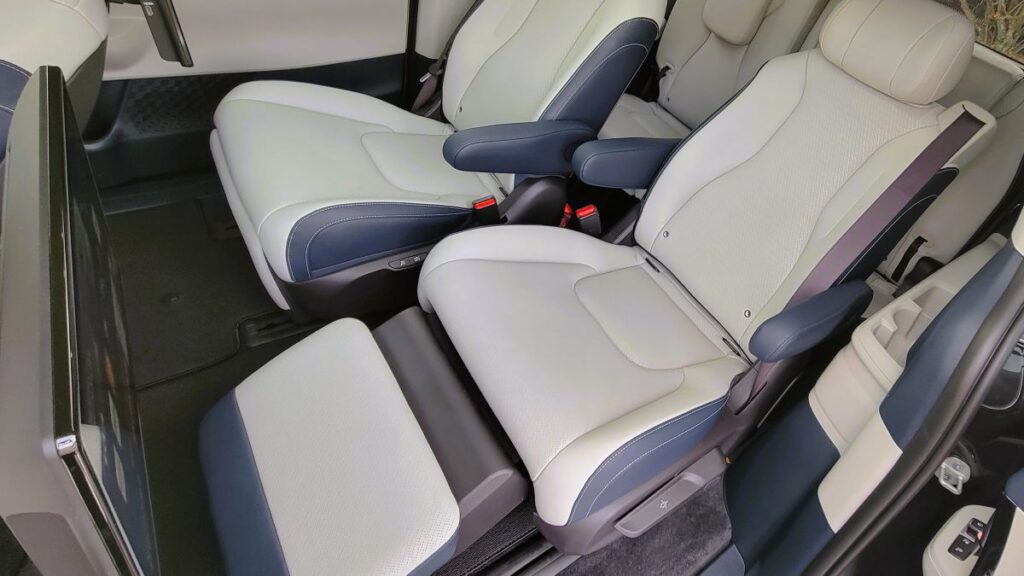
Kia Carnival Includes Limousine-Like Accomodations
Now comes the limousine part. Tap overhead buttons and the sliding side doors (with power windows) power open, accessing two Lounge Chairs that recline, or move in and back for real legroom under a separate moonroof. A button powers out footrests for a nice en-route snooze. Shoulder belts are part of the seat structure for safety. There are A/C vents overhead and video monitors in front. Controls allow the front passenger seat to be moved to free up more leg room when the front seat is unoccupied.
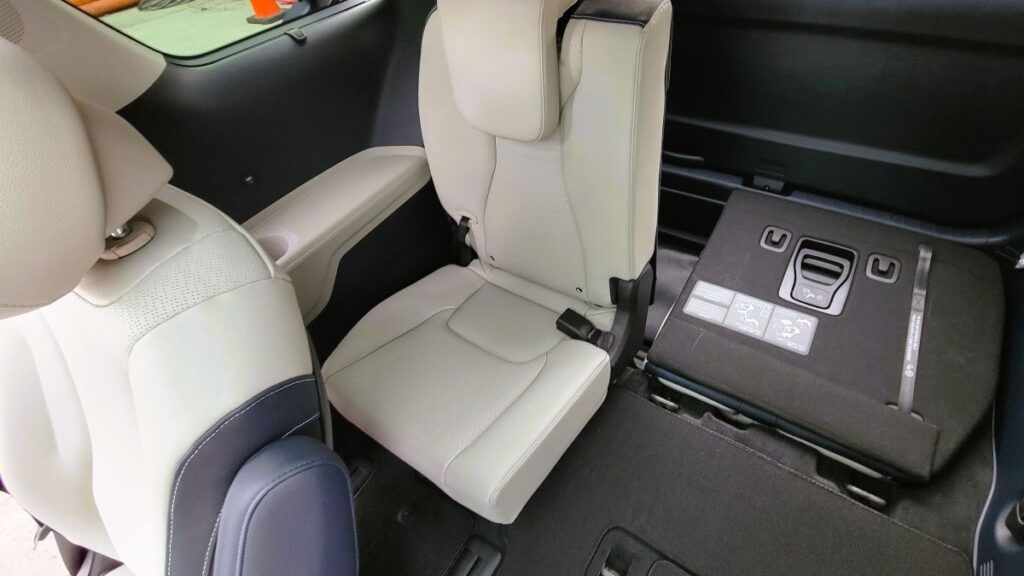
That center row chairs do not flip, fold or even drop seatbacks to expand cargo room in back. But you can easily slide between them to access the third row, where there’s acceptable adult room for two, or three kids. The third row does split, fold and drop into the rear floor, for lots of storage room with third row up or down. The rear hatch powers high enough to clear my head.
Looking at the stats, the Carnival gets almost 30 mpg and has over 500 miles of range on a full tank. It’s powered by a turbocharged 1.6 liter four with 241.7-hp and 270.5 lb.-ft. of torque combined. The 54 kW motor provides 74.4 hp of that from a 270-volt lithium-Ion battery. A 6-speed automatic powers the front wheels, with Eco, Normal and Sport driving modes.
Eco backs off the throttle to save fuel, tapping into a bit more EV propulsion as needed. Torque came quickly online in all modes at pedal tip-in. The motor was quickly followed by the gas engine to help as we had a touch of wheelspin at launch in Eco mode. This 3,400-mile-old minivan quickly upshifted en route to 60 mph in 8.3 seconds. It had sufficient urge in passing power, even in Eco.
Given this is a hybrid and not a full EV, another nice touch is the included three modes of regenerative braking. The highest level really acts like a gentle brake, turning the motor into a generator as soon as you lift off the gas, adding power back to the battery. At its highest setting you can almost 1-pedal drive, with serious regen kicking in as soon as you lift off the gas. It quickly brought the Carnival down to about 5 mph, at which time you have to brake.
Sport mode allows you to paddle shift up and down the gears, and funnels all power – EV and gas – to the front wheels. We had a bit more launch wheelspin en route to 60 mph in 7.9 seconds, with clean upshifts to third gear and a bit sportier exhaust snarl. Passing power was more invigorating. Even when with more aggressive driving it averaged 27 mpg.
In a test a year ago in a less-luxurious Carnival hybrid, Eco mode saw it hit 60 mph in 8.2 seconds. Sport drive mode did it in 7.7 – and we averaged an overall 28 mpg.
Auto-engine off was smooth, never re-engaging abruptly when we launched from a stop. The Carnival transparently slides into full EV mode during sedate suburban driving, and on flat highway stretches. When it had given itself a decent battery charge you could travel in your neighborhood on pure EV power. Sport mode does not allow regen braking levels to be set by paddle shifters, because they become manual shifters. Regen levels are only accessible in Smart or Eco.
The Carnival lives on Kia’s third-generation “N3” platform, used in the Sorento crossover. It has good torsional stiffness with its MacPherson strut front, and a multi-link rear suspension with gas shocks. The result was a comfortably taut ride with bumps absorbed quickly. The impact control was refined at full rebound. It’s soft enough for minivan families, and there’s some body roll in turns. But it was stable and secure in everyday driving. Exit ramps were handled neutrally, while neighborhood corners just swept by.
The instant EV torque did see the inside front wheel spin a bit in turns under acceleration. On our skidpad were was some body roll and understeer when pushed. Stability and traction control quietly helped. I liked to use the full regen setting to help slow down for a corner, then power out – sort of like a downshift, but gentler.
More Kia Coverage
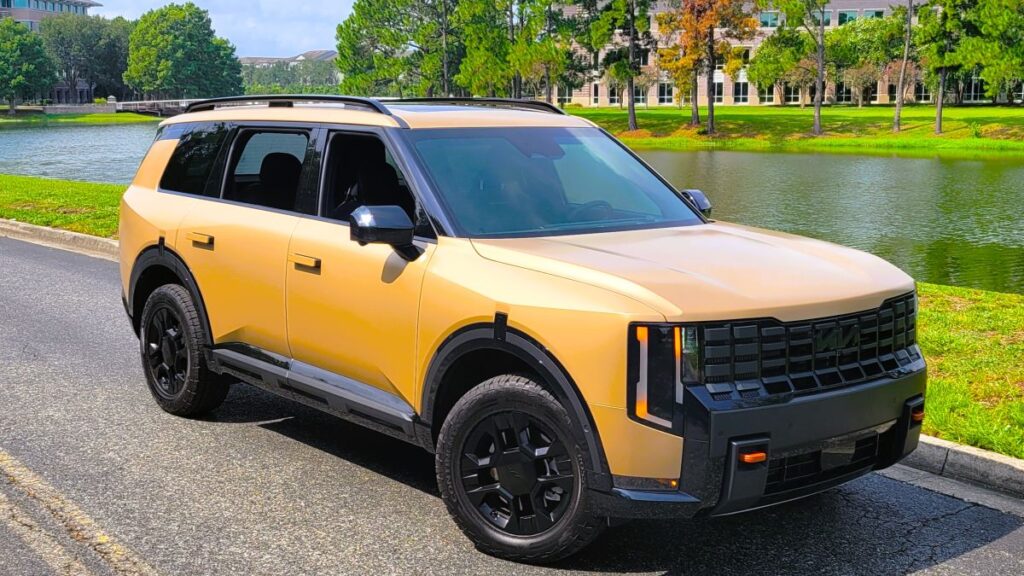
2027 Kia Telluride SX Prestige X-Pro Adds Star Wars Fun
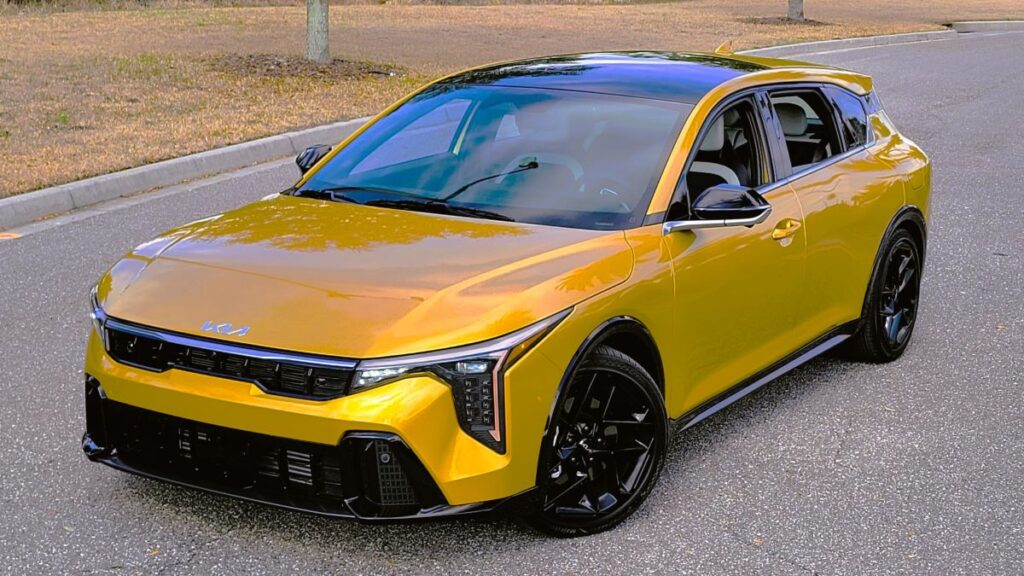
2026 Kia K4 Hatchback GT-Line Turbo Is Affordable Fun
2025 Kia EV6 GT-Line Checks All The Boxes
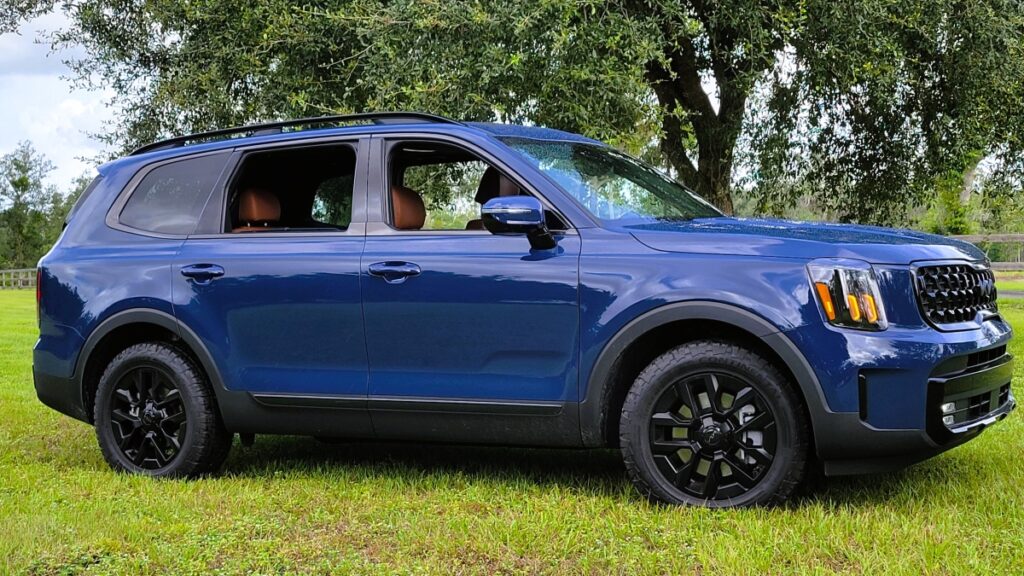
2025 Kia Telluride: Comfortable, Capable Family Hauler
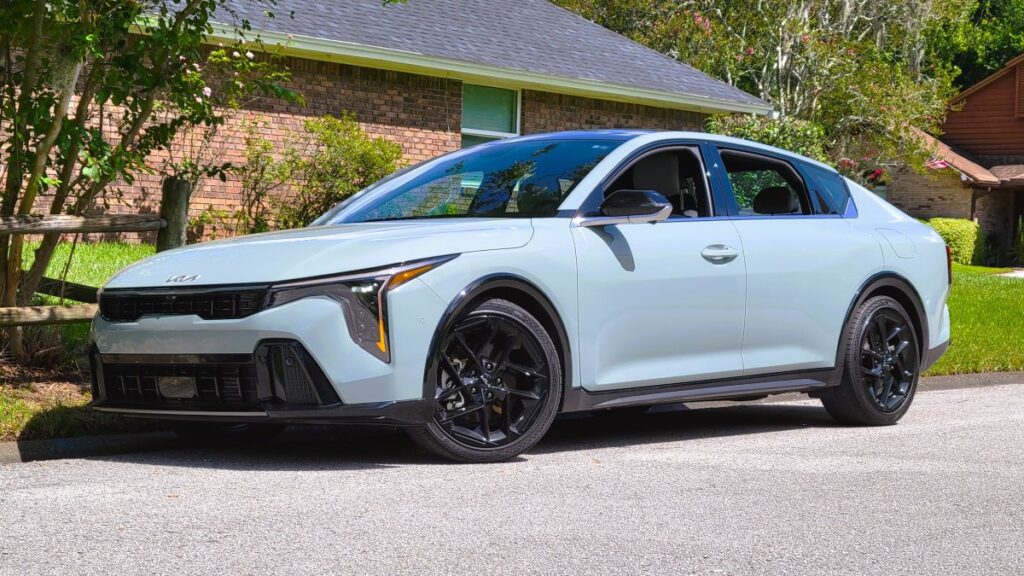
2025 Kia K4 GT-Line Turbo: Stylish & Comfy

Top 10 EV Rider Videos Of 2024
Power steering firms up nicely in Sport mode, becoming very direct with OK feel. The 12.8-inch front and rear discs on our Carnival Hybrid had a quick, slightly abrupt bite up high due to the regen system, then delivered controllable stops with some nose dive and ABS chatter in simulated panic stops from 60 mph. We saw no fade after some repeated hard use.
Carnival also had forward collision-avoidance and rear cross-traffic collision avoidance assist. Lane-keep assist works so well the minivan obediently tracks around turns almost hands-free – and warns you if you try. Smart cruise maintains speed and distance, and resumes with a button or pedal tap.
A base 2026 Carnival starts at $37,390 — our SX Prestige Hybrid starts at $53,090 with everything we had standard, even reclining second row, except rear video ($2,500); carpet mats ($285); and cargo mat ($120) – final price $57,490.
Bottom line: It has lots of room in a macho design with luxurious seating, a great digital dashboard, and hybrid boost that delivers solid gas mileage for a vehicle this large.
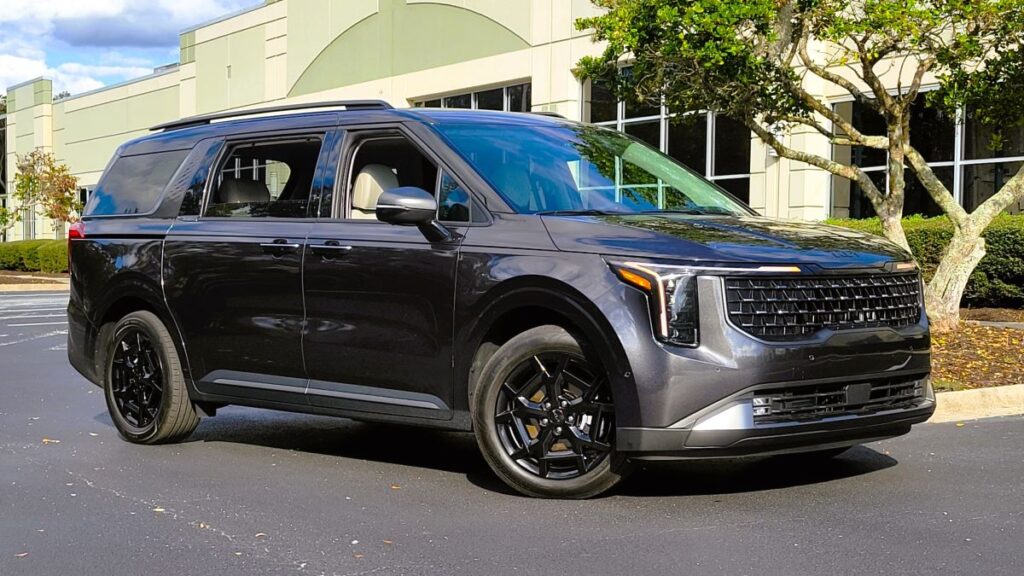
2026 Kia Carnival SX Prestige Hybrid
Vehicle type – 5-door, 7-seat front-wheel-drive minivan
Base price – $53,090 ($57,490as tested)
Engine type –aluminum 16-valve inline 4 w/electric motor and 64kWh Lithium-ion battery
Displacement – 1.6 liters
Combined horsepower (net) – 241.7
Combined torque (lb-ft) – 270.5
Transmission – 6-speed automatic with paddle shifter in Sport mode
Wheelbase – 121.7 inches
Height – 69.9 inches
Overall length – 203 inches
Overall width – 89.2 inches w/mirrors
Ground clearance – 6.8 inches
Front headroom – 40.9 inches
Front legroom – 41.1 inches
Middle headroom – 39.5 inches
Middle legroom – 40.5 inches
Rear headroom – 38.6 inches
Rear legroom – 35.6 inches
Cargo capacity – 40.2 cu. ft./86.9 w/2nd row folded/145.1 w/both folded
Towing capacity: up to 3,500 lbs.
Curb weight – 4,555 lbs.
Fuel capacity – 19 gallons
Mileage rating – 34 mpg city/31 mpg highway