


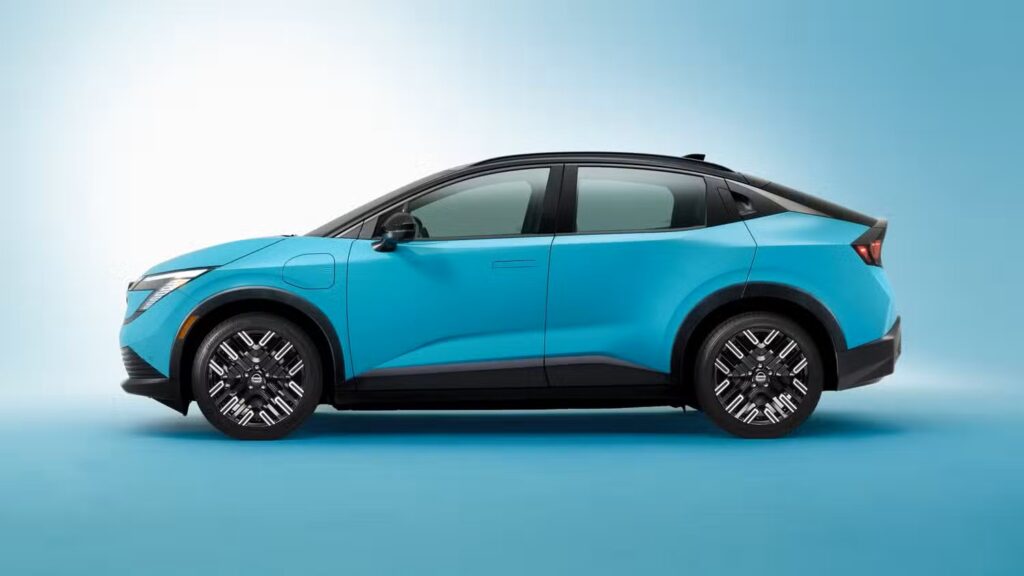
Nissan has officially unveiled the third-generation Leaf, marking a significant transformation in its electric vehicle lineup. The 2026 model embraces a sleek, aerodynamic design with a SUV-like stance, shedding its compact car roots to compete more directly with crossover EVs.
Editor’s Note: The featured video is from Electrifying‘s YouTube channel.
New Design Looks Nothing Like Old Leafs
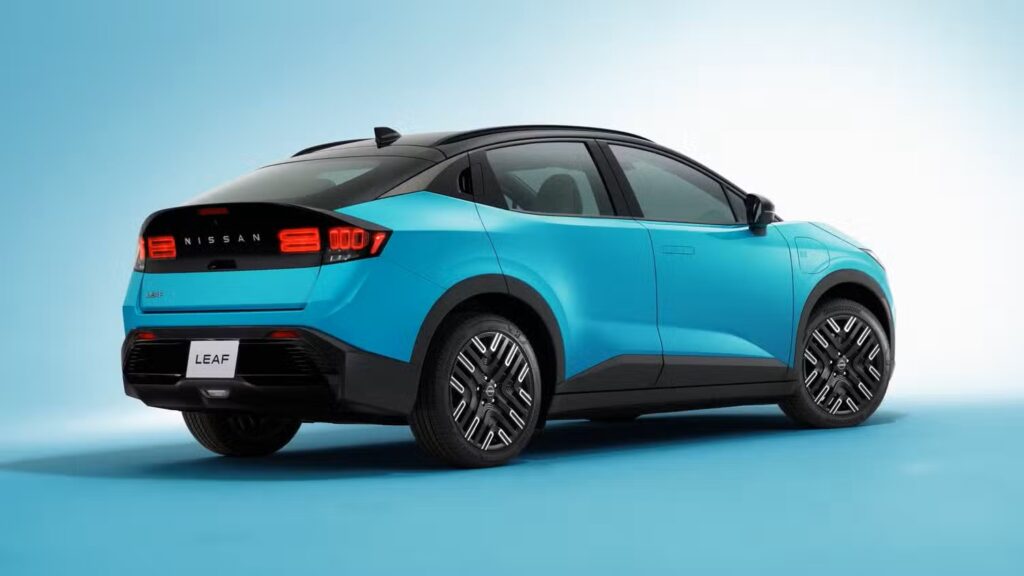
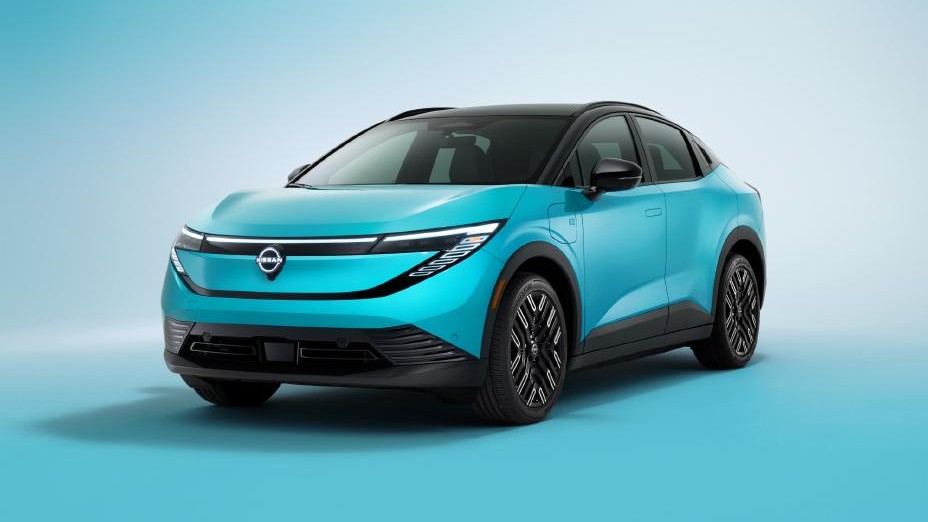
The latest Leaf features a fastback-inspired silhouette, flush door handles for improved aerodynamics, and a black tailgate panel with distinctive 3D holographic taillights arranged in a “ni-san” pattern—paying homage to Nissan’s name. The front fascia is framed by bold daytime running lights, with select trims offering a full-width lightbar above an illuminated Nissan logo.
Inside, the cabin is spacious and minimalist, featuring a floating horizontal instrument panel and a monolith-style display available in dual 12.3-inch or 14.3-inch screens. Nissan has also introduced a dimming panoramic roof with Polymer Dispersed Liquid Crystal (PDLC) technology, allowing occupants to adjust light and heat with the press of a button.

2026 Leaf Powertrain and Performance
The new Leaf is powered by a compact 3-in-1 EV powertrain, integrating the motor, inverter, and reducer into a unit that is 10% smaller than before. Two battery options are available: a 52-kWh pack with a 130 kW motor, and a 72-kWh pack with a 160 kW motor, offering WLTP ranges of 436 km and 604 km, respectively, which will likely translate into EPA estimated ranges of roughly 235 miles for the small battery and 330 miles for the large battery.
Charging has been significantly improved, with a 150 kW DC fast charger enabling a 10% to 80% charge in just 35 minutes. The Leaf also features bi-directional V2X technology, allowing drivers to power their homes, send energy to the grid, or provide power while camping.
It will come standard with the new North American Charging Standard (NACS), allowing it to charge at newer Tesla Superchargers without an adapter.
Industry Analysis: Nissan’s Position in the EV Market
Nissan’s unveiling of the third-generation Leaf comes at a pivotal moment for the company. The automaker has faced challenges in recent years, including a failed merger with Honda and a downsizing effort to cut billions in costs. However, the new Leaf signals a renewed commitment to the EV market, leveraging 15 years of experience and insights from nearly 700,000 global sales.
Nissan’s focus on battery thermal management—capturing wasted heat from the drive motor and onboard charger to warm the battery—should ensure better charging performance in cold weather, a feature that brings it in line with other major EV brands.
2026 Nissan Leaf’s Competition
The Leaf enters a crowded EV market, competing against models like the upcoming 2026 Chevrolet Bolt, Volkswagen ID.4, Hyundai Ioniq 5, and Tesla Model Y. Nissan’s decision to increase range, improve aerodynamics, and enhance charging capabilities puts the Leaf in a better position than the outgoing model, but given pricing hasn’t been announced yet, it’s too soon to say how competitive it will be.
While the styling is sharp, it doesn’t jump to the head of the class based on the announced specifications.
U.S. deliveries are set for Fall 2025. For more details, check out Nissan’s official announcement here.